"AHSS is an entirely new missile," a DEVCOM spokesperson said, according to Aviation Week.
DEVCOM AvMC's early concept: two very different missiles
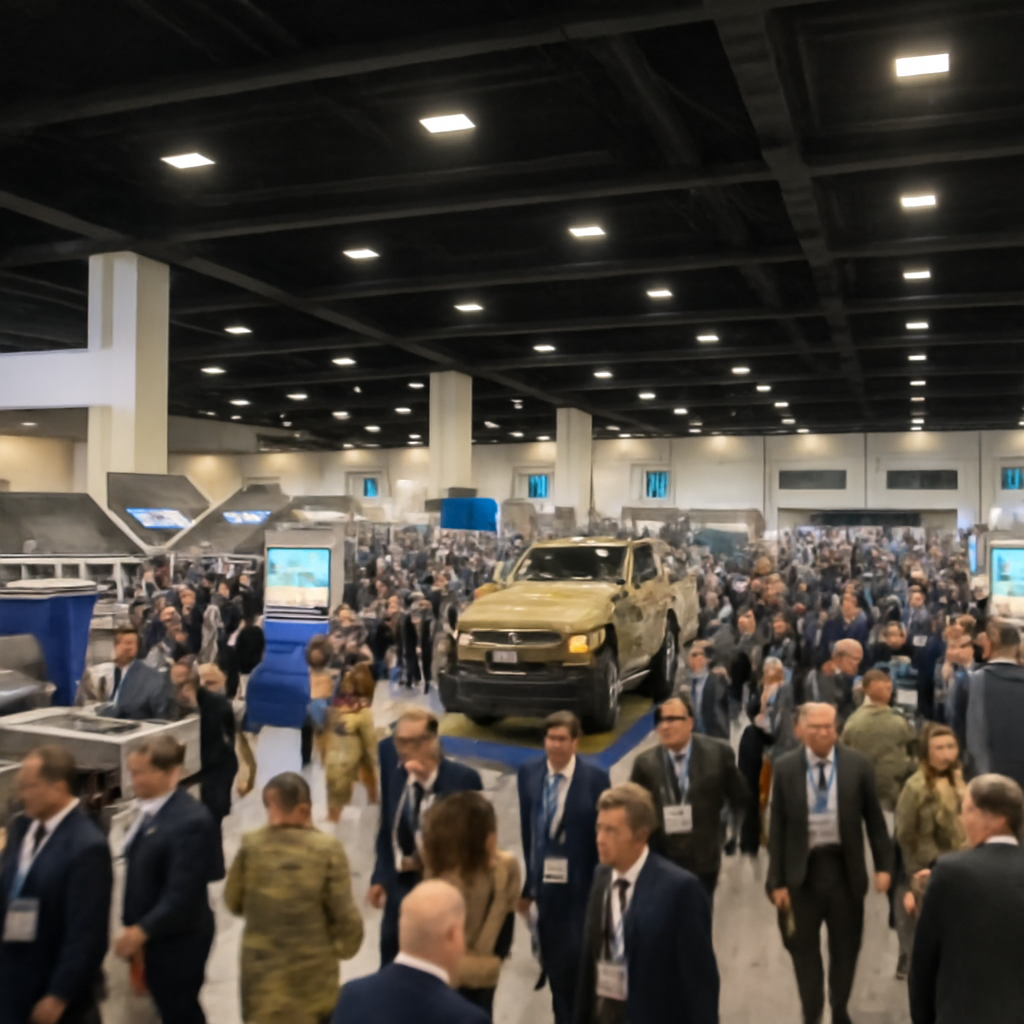
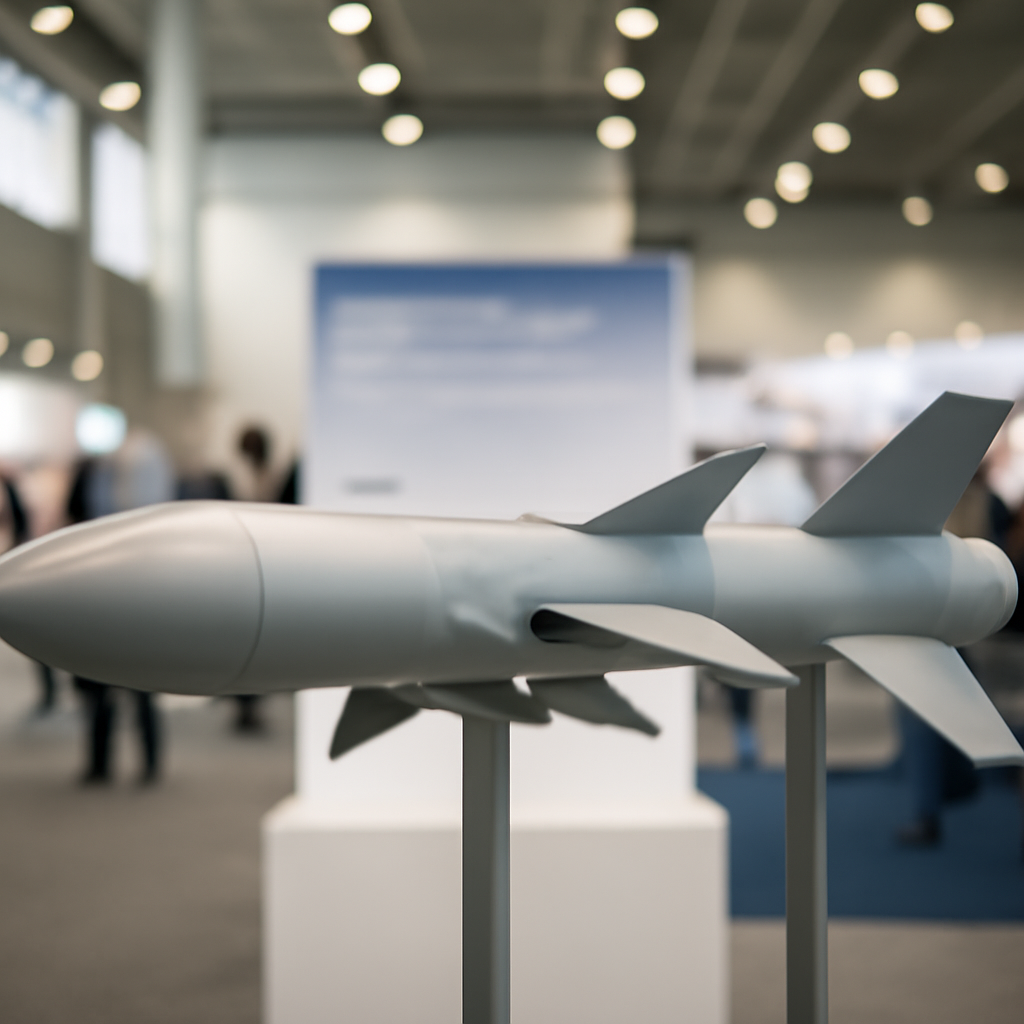
The Army's Combat Capabilities Development Command’s Aviation & Missile Center (DEVCOM AvMC) displayed a notional program called Affordable High Speed Strike (AHSS) at the Space & Missile Defense Symposium in Huntsville, Alabama. DEVCOM presented renderings of two distinct missile concepts under the AHSS heading: one that resembles a traditional ballistic missile with a cruciform tail-fin arrangement, and another that features an air-breathing propulsion intake in the nose — a style commonly associated with ramjets or scramjets — plus a long slender stabilizing strake and a different tail configuration.
The Army has described AHSS as aiming for affordability and a range greater than 621 miles (1,000 kilometers). The program could deliver either a ballistic-type weapon or an air-breathing design and is explicitly described in the Army’s 2027 Fiscal Year budget proposal as supporting "responsive, mobile, deployable, survivable, and sustainable Army conventional theater strike weapons."
Launcher options: HIMARS, CAML, AML and standardized pods
AHSS is envisioned to be fired from both new uncrewed launchers and certain existing crewed launchers. The Army highlighted the possibility of launching AHSS from an M142 High Mobility Artillery Rocket System (HIMARS) — a 6×6 tactical truck-based launcher that fires munitions via standardized ammunition pods — and noted an "option to be launched from a crewed HIMARS," according to Aviation Week’s reporting of DEVCOM’s comments.
The service is separately developing a family of Common Autonomous Multi-Domain Launcher (CAML) vehicles and previously prototyped an Autonomous Multi-Domain Launcher (AML) as a stepping stone. Because HIMARS uses standardized pods, the renderings and commentary imply that other pod-compatible launchers such as the tracked M270 Multiple Launch Rocket System (MLRS) could also be candidates to field AHSS.

Audit-ready is a season. It shouldn't be.
Evidence in spreadsheets, controls drifting between audits, frameworks multiplying on flat headcount. Nubivance runs continuous compliance on Rapid7 Cyber GRC - SOC 2, HIPAA, ISO 27001, PCI, CMMC.
End the scrambleWhere AHSS sits among PrSM, Typhon, Tomahawk, hypersonics and Blackbeard
DEVCOM emphasized AHSS is distinct from other long-range Army efforts, but the graphic at the symposium used the same air-breathing missile render as the planned Increment 4 version of the Precision Strike Missile (PrSM). The baseline PrSM Increment 1 is a short-range ballistic missile able to reach roughly 310 miles (500 kilometers). The Army’s current stated plan for PrSM Increment 4 is to acquire a variant with at least 621 miles/1,000 kilometers of range; the service has discussed a potential Increment 5 with even greater reach.
The Army has already fielded a small number of Typhon systems capable of firing Tomahawk land-attack cruise missiles and Standard Missile-6 (SM-6). Tomahawks can hit targets roughly 1,000 miles away. The service is also pursuing the Long Range Hypersonic Weapon (LRHW), known as Dark Eagle, which was reported last year with a maximum range around 2,175 miles. Separately, defense startup Castelion is developing a ground-launched variant of its Blackbeard missile for the Army — a lower-cost hypersonic design the company has said targets "80% of the Precision Strike Missile (PrSM) Increment 4 capability."
Budget, affordability and near-term pressures on inventories
The Army requested just over $94.2 million to support AHSS work in the 2027 Fiscal Year. The budget documents stress AHSS will "provide hardware and software technologies demonstrated, including affordable advanced propulsion, complementary warhead, guidance, navigation and control technologies, and integration onto Army mobile launch platforms."
Affordability is a stated priority. As a point of comparison in the budget discussion, the unit cost of a PrSM Increment 1 is cited at around $1.5 million and is described as a long-lead item where delivery timelines are measured in years. The impetus for more affordable, more procurable munitions is underscored by recent operational demands: PrSMs and older Army Tactical Missile System (ATACMS) missiles were heavily employed in strikes against Iranian targets, prompting concerns about remaining stockpiles. The source material notes reports that stocks of PrSMs "have run especially low" following their combat use after they entered quantity production in 2023.
What this means for the U.S. Army, the U.S. Marine Corps, and Australia
- The U.S. Army: AHSS represents an early-stage effort to add a lower-cost, long-range strike option that can be launched from mobile ground platforms — crewed or uncrewed — and to diversify the service’s theater-strike portfolio beyond current PrSM, Typhon, Tomahawk, and hypersonic programs.
- The U.S. Marine Corps: The Marines have expressed interest in longer-range strike to support expeditionary and distributed operations; the report notes the Corps previously canceled plans to field Tomahawks from uncrewed 4×4 launchers, and may continue to watch Army developments for capabilities that could support its concepts.
- Australia: Aviation Week reported Australia is an international partner in AHSS efforts. The Army’s budget documents also list international partnership, and the program is described as potentially relevant to other foreign allies and partners.
The AHSS effort sits at an early, formative point: DEVCOM has shown multiple architectural paths — ballistic and air-breathing — while the Army has tied the requirement to affordability, mobile launch integration, and theater-level offensive-counter-air missions. The program’s $94.2 million request for FY2027 and the use of common launcher pods point to an effort intended to be both interoperable and producible at scale, but the timeline to an operational capability remains undefined in the published material. With post‑INF Treaty constraints removed and congressional support for long-range ground-launched strike cited, AHSS will be one to watch as requirements, propulsion choices, and launcher integration mature.