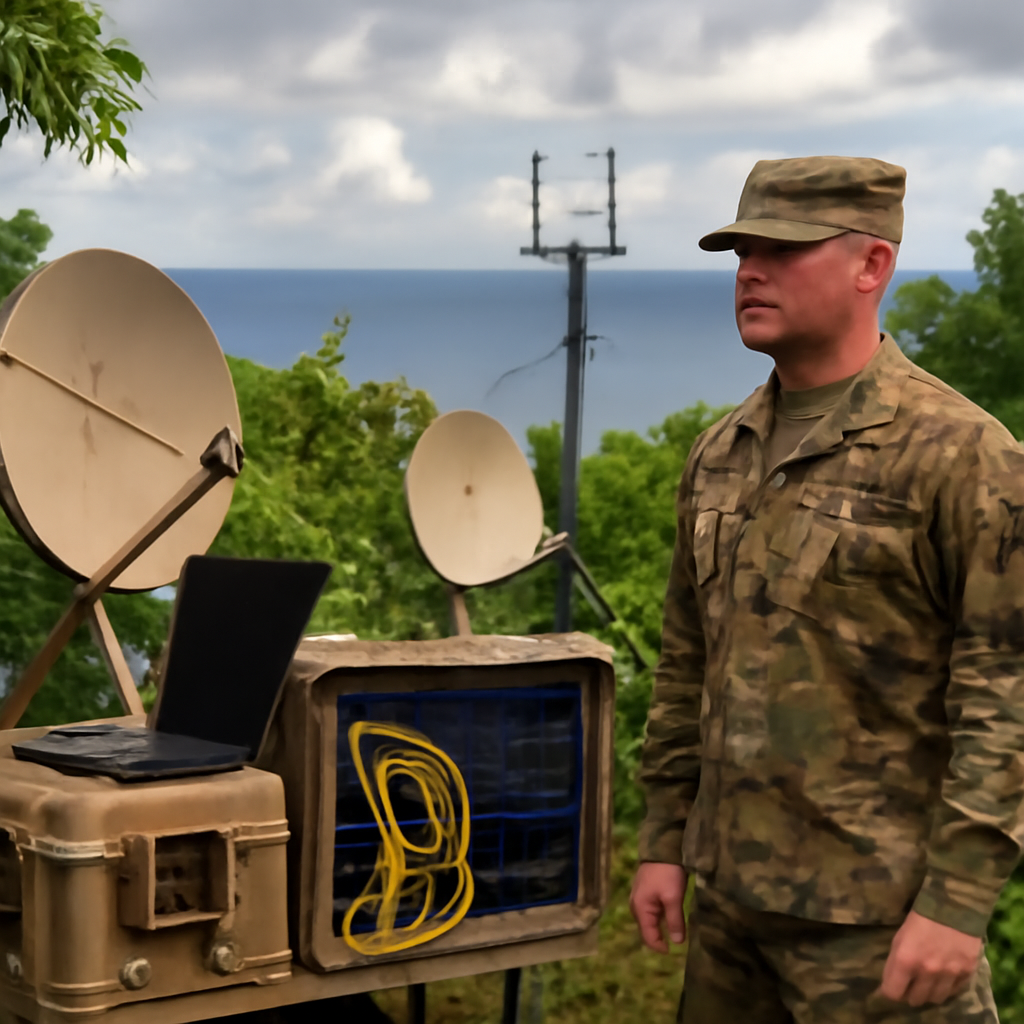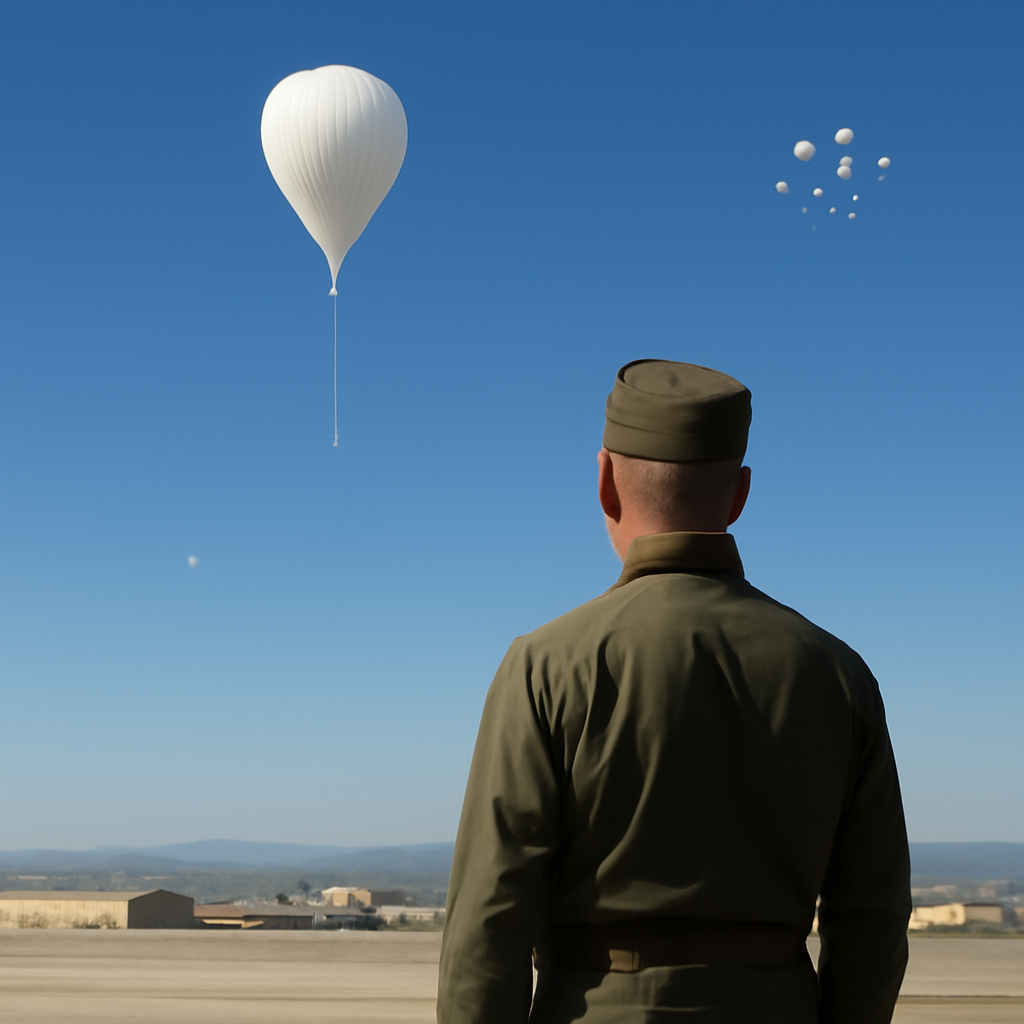
"We would like to proliferate the stratosphere with high‑altitude balloons, but I mean 200, 300 at a time," Brig. Gen. Steven Carpenter told TWZ at the Association of the U.S. Army conference in Washington, D.C.
Brig. Gen. Steven Carpenter's operational concept
Carpenter, commanding general of Multi‑Domain Command Europe, described a plan to send hundreds — and conceivably thousands — of high‑altitude balloons east in a future European conflict. He framed the balloons as multipurpose platforms: "not only as decoys, a lot of decoys, but also communications retrans[mission platforms], electronic sensing, as well as electronic attack, and then obviously air‑launched effects to be able to drop them down and use kinetic means as well." The operating band he cited is the stratosphere, roughly "above 60,000 feet up to 80,000 feet," which he said is difficult to target except with advanced systems.
Capabilities the Army intends to field
Modern high‑altitude balloons, Carpenter and the TWZ report note, can offer persistent presence measured in days, weeks or even months. Some systems can modulate altitude to hold station despite prevailing winds and provide broad fields of view for radars, cameras and other sensors. That persistence and altitude would allow the platforms to serve as reconnaissance nodes, communications relays and electronic‑warfare platforms while operating from outside immediate surface and airspace boundaries.

This site is the portfolio.
OSINTSights runs on Cloudflare Workers, D1, R2, and Vectorize, with an AI pipeline on Hetzner ARM. Nubivance designed, built, and operates it. We do the same for clients.
See what we buildAir‑launched effects (ALEs): strike, loitering munitions, and force multiplication
The Army plans to use balloons as launch platforms for what it calls air‑launched effects (ALEs). TWZ summarizes ALEs as a collective term for air‑launched drones configured for surveillance, electronic warfare, signal relay, decoys and loitering munitions capable of kinetic attack. Carpenter said the Army is examining "different technologies, different altitudes ... different ranges, different levels of yield or lethality," and that balloons could carry drones deep into enemy territory to be launched opportunistically. He outlined possible targets ranging from an adversary ballistic‑missile radar to a ballistic‑missile system itself, with the choice of drone type and launch proximity driven by target size and protection.
Logistics, recent operational experimentation, and surge requirements
Carpenter acknowledged that fielding balloons at scale depends on resources and pre‑positioning. "The Army will make decisions on which vendors they’re going to go with," he said, and emphasized that "the ability to field that at scale is just simply based on the resources provided." Asked how quickly the desired numbers could be in theater, he said that "if the United States or NATO and its allies were on a wartime footing, it would be extremely rapid," but that that would require moving systems "into theater before crisis turned to conflict" based on intelligence indicators and warnings.
The report also records recent experimentation and operational use. The Army had planned a demonstration of balloons in the Pacific but redirected assets to the Middle East; Andrew Evans, Director of Strategy and Transformation in the Office of the Deputy Chief of Staff of the Army (G‑2), told Breaking Defense that the Army "pivoted and supported operations in CENTCOM" and that "They were effective for the mission that they were assigned," though he did not disclose exact locations. TWZ also documents training and exercises: a sensor‑laden balloon lift off from Guam during an exercise in 2024, a June 24, 2026 special user demonstration at Orote Airfield as part of Valiant Shield 26, and deployments at Tehachapi Airfield on April 22, 2026.
What this means for NATO, the U.S. Army, and adversaries
- NATO and allied forces: Link 16 integration is central to the concept — Carpenter said many balloons would be equipped with Link 16 to transmit coalition situational‑awareness data and help sustain communications if satellite links are degraded.
- The U.S. Army and procurement: The service must surge procurement, choose vendors, and secure funding to field hundreds of platforms quickly; Carpenter tied rapid fielding to being on a wartime footing and to pre‑conflict positioning guided by intelligence.
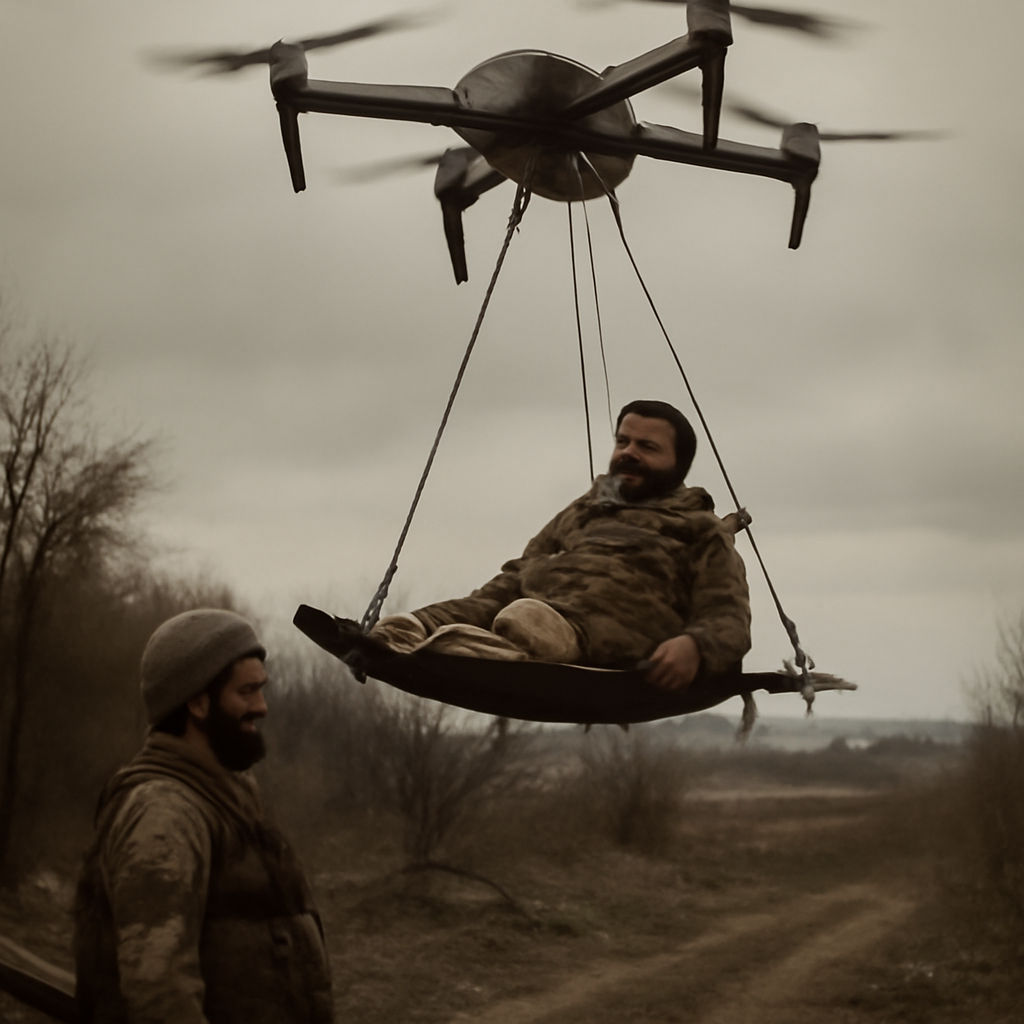
- Adversaries and regional actors: TWZ notes operational precedent elsewhere — Ukrainian forces have used balloons to launch kamikaze drones, Russians have used balloons as decoys, and China has showcased broader lighter‑than‑air capabilities, a topic that rose in visibility after a Chinese spy balloon passed over parts of the United States and Canada in 2023.
Conclusion
The Army is moving from concept to operationalization: balloons are now being tested as persistent sensors, communications relays, decoys and launch platforms for air‑launched effects, and commanders say the operating concept has been validated against modern adversary systems. But the plan hinges on buying and positioning large numbers of systems quickly and on the intelligence picture that signals when to surge them into theater. Carpenter’s plain formulation—proliferate the stratosphere with hundreds at a time—frames a concrete choice the service faces now: invest the resources and pre‑position assets, or accept that the capability will not be available when a crisis becomes conflict.