US Army Demonstrates Drone-Delivered Blood Resupply in a Pioneering Lithuanian Exercise
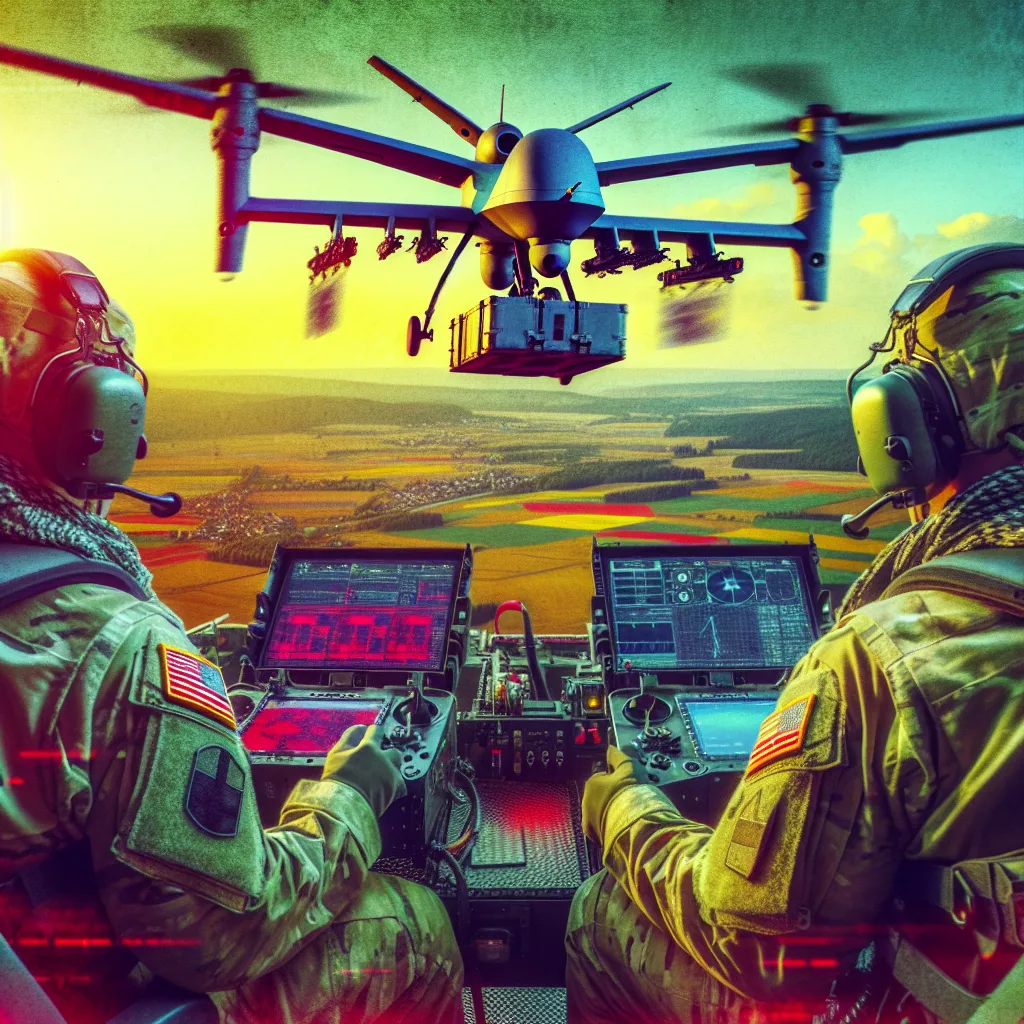
On May 15, during the Swift Response 2025 demonstration at Lithuania’s Pabrade Training Area, a U.S. Army drone executed a simulated blood drop—a striking demonstration of how technology is reshaping field medicine. The TRV-150, a drone specially adapted for rapid medical resupply, delivered Class VIII medical supplies, including simulated blood products, to a forward operating position, offering tangible proof of concept for a life-saving logistics capability in modern combat scenarios.
This exercise unfolded amid increasing demands for agile battlefield support, where the ability to quickly and reliably resupply life-saving materials can mark the difference between mission success and failure. Observers note that the test represents one of several collaborative efforts under the DEFENDER framework, aimed at bolstering the resilience and responsiveness of allied forces in Eastern Europe, a region that has witnessed escalating security tensions in recent years.
The significance of the demonstration reaches well beyond mere technological novelty. By leveraging drone technology, the U.S. Army is not only enhancing the speed of logistical support but also reducing the risks associated with manned resupply missions in potentially hostile environments. This capability is especially pertinent in scenarios where conventional resupply convoys might be exposed to enemy fire or ambushes, placing both personnel and critical supplies in jeopardy.
Historically, battlefield resupply has relied on ground convoys or helicopter drops, methods that invariably expose troops to collateral risks. However, emerging drone technology, exemplified by the TRV-150, promises to reduce these hazards by offering a fast, precise, and potentially autonomous method of delivering crucial medical supplies directly to the point of need. With conflicts in modern warfare characterized by unpredictable threats and rapid changes in the tactical situation, innovations like these are increasingly seen as vital in maintaining operational effectiveness and safeguarding lives.
According to statements released by the U.S. Army and detailed on Defence Blog, the simulation involved the drop of blood, a representative Class VIII medical asset, onto a designated target area. While actual blood was not used, the exercise replicated the conditions and challenges involved in such a resupply mission. The demonstration was monitored by a mix of military observers, allied officials, and technology specialists, all keen to assess its potential applications in real-world operations.
Beyond the immediate tactical applications, this trial signals broader strategic implications. As modern warfare increasingly integrates unmanned systems for both reconnaissance and logistics, the U.S. Army’s initiative underscores the continual evolution of military doctrine. The proactive exploration of drone-delivered medical support epitomizes the military’s commitment to adopting advanced technologies to improve battlefield survivability and mission efficiency.
Security analysts emphasize that such exercises are not isolated experiments but rather an integral component of an ongoing modernization process. Colonel Michael Donnelly, a retired Army officer and defense technology analyst, has noted in his public commentary that integrating unmanned aerial systems into the logistics chain “reduces the tactical footprint of manned resupply missions and paves the way for more agile responses in dynamic combat environments.” His analysis reflects the consensus among military strategists: rapid innovation in logistical support is essential in mitigating the inherent risks associated with supply lines in modern warfare.
Technological advancements in unmanned systems are simultaneously prompting a reevaluation of traditional battlefield strategies. This demonstration highlights the convergence of military necessity and technological progress, serving as a reminder that in a rapidly evolving security environment, adaptability is just as crucial as firepower. Furthermore, it brings to light the importance of international partnerships, particularly within frameworks like DEFENDER, which foster cooperative innovation among NATO allies and regional actors.
From a tactical perspective, the ability to resupply blood on the battlefield could revolutionize how medics and commanders plan for casualties in combat. By reducing the time required to deliver life-sustaining products to frontline positions, drone technology may diminish the window of vulnerability for wounded soldiers. The ramifications for battlefield medicine are significant. Medical experts argue that “every minute counts” when it comes to saving lives, and faster delivery systems could tip the balance in emergency scenarios—an assertion that is increasingly supported by empirical data from field exercises.
Looking ahead, further refinements of this technology are anticipated. Military research and development initiatives have been steadily increasing funding and support for autonomous systems that can perform critical logistical tasks under duress. Future iterations of the TRV-150 and similar platforms are expected to incorporate enhancements such as improved payload capacity, precision navigation, and autonomous target recognition, all designed to further mitigate risks and streamline resupply operations in both training and combat conditions.
As the U.S. Army continues to test and refine these technologies in joint exercises with allies, observers anticipate that drone-based resupply missions will become integral to future operational strategies. Defense experts warn that robust integration of unmanned systems could also influence how adversaries conduct surveillance and counter-resupply efforts, ultimately reshaping the contours of modern military engagements. International cooperation in these trials is critical, highlighting how technological progress is not confined by national borders but shared among like-minded allies preparing for a complex security landscape.
In summation, the May 15 demonstration in Lithuania emerges not only as a testament to innovation but also as an imperative strategic recalibration for modern military logistics. The successful execution of a drone-based blood resupply test encapsulates a broader narrative: that modern warfare increasingly demands solutions that blend technological ingenuity with battlefield pragmatism.
Ultimately, as technological, operational, and geopolitical dynamics continue to evolve, the question remains: how will the synthesis of unmanned systems and life-saving logistical support redefine the future of combat care? The answer, it seems, lies in a proactive embrace of innovation combined with enduring commitment to the human element at the heart of military operations.