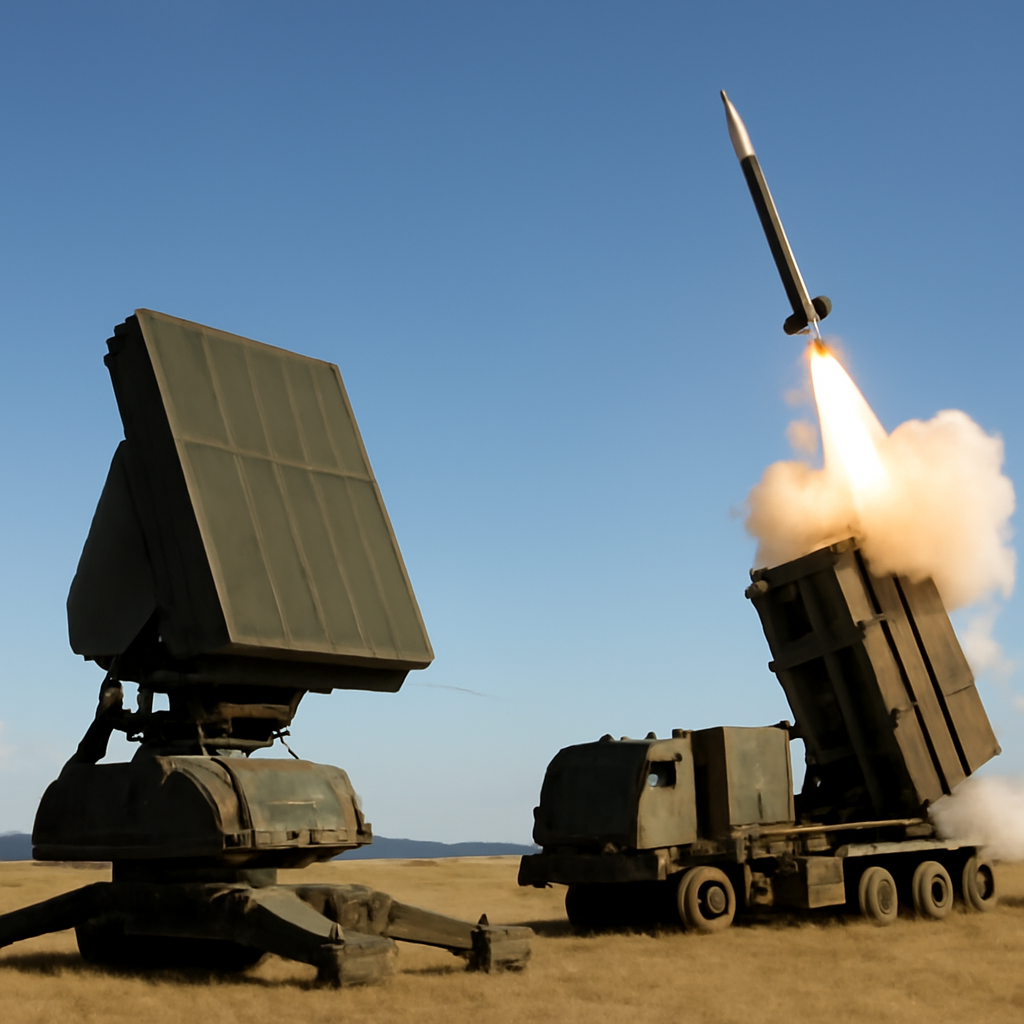
“For the last 14 months…has been in the largest air and missile defense fight in U.S. history,” Lt. Gen. John Rafferty told an audience in Huntsville, summing up a campaign that the Army says saw it down more than 1,400 Iranian missiles and drones.
Lt. Gen. John Rafferty’s tally: Army role and the 32nd AAMDC
Rafferty, commander of the U.S. Army Space and Missile Defense Command, Joint Functional Component Command for Integrated Missile Defense, and Joint Task Force‑Gold, said the 32nd Army Air and Missile Defense Command (AAMDC) “has been in the largest air and missile defense fight in U.S. history.” He reported that during the 12‑day war the Army “successfully engaged 125 ballistic missiles,” and that during Operation Epic Fury “over 1,200 ballistic, cruise and UAS threats have been neutralized.” The 32nd AAMDC, based at Fort Bliss, Texas, is responsible for all U.S. Army air and missile defense in the region.
Adm. Brad Cooper’s CENTCOM numbers and the broader theater tally
Those Army figures are part of a larger CENTCOM accounting. Adm. Brad Cooper testified that the region’s integrated Middle East Air Defense network “intercepted over 6,000 one‑way attack drones and more than 1,500 ballistic missiles aimed at U.S. forces, Israel, and our Arab partners.” Cooper did not break down national shares; Rafferty’s figures suggest the Army was responsible for roughly 16% of those interceptions. CENTCOM declined to provide numbers for Navy and Air Force intercepts when asked.

Audit-ready is a season. It shouldn't be.
Evidence in spreadsheets, controls drifting between audits, frameworks multiplying on flat headcount. Nubivance runs continuous compliance on Rapid7 Cyber GRC - SOC 2, HIPAA, ISO 27001, PCI, CMMC.
End the scrambleMagazine depth and CSIS inventory assessments
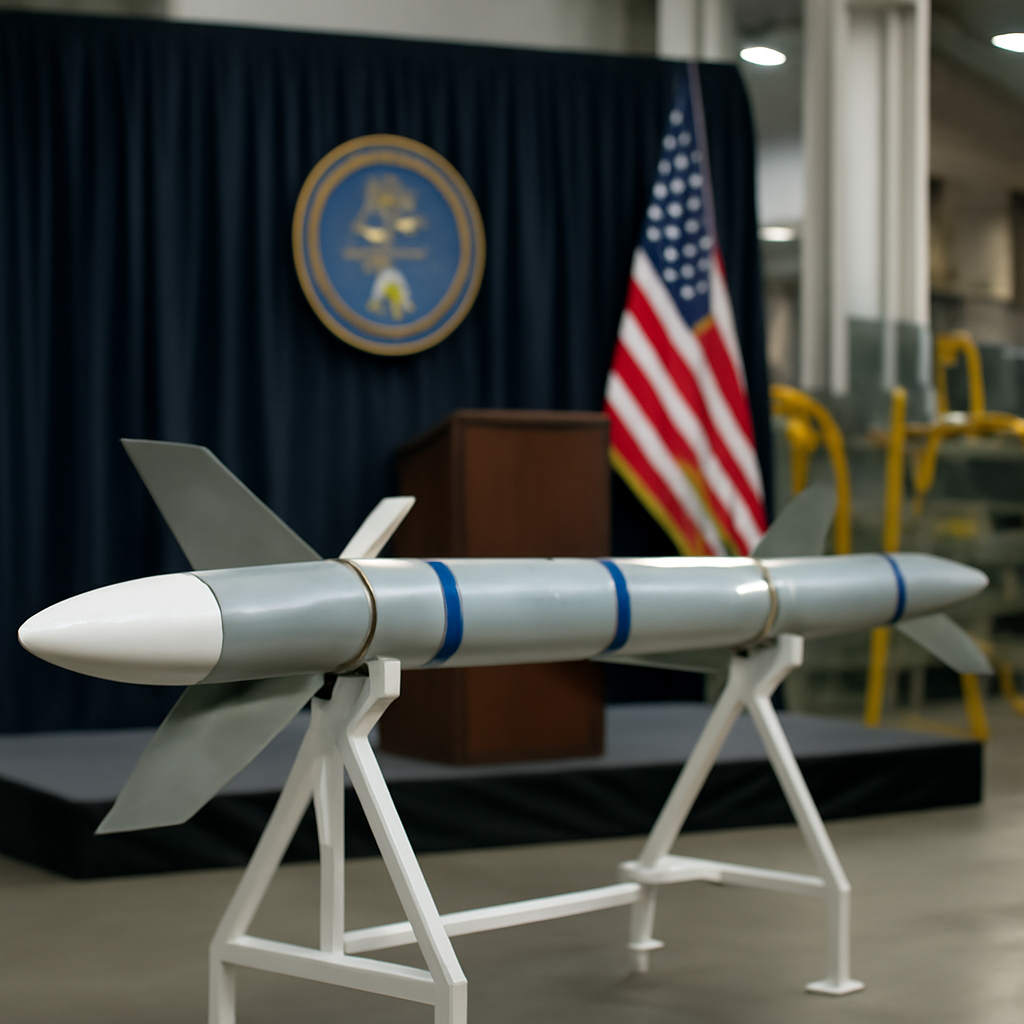
The intense pace of engagements has put clear pressure on interceptor inventories. The Center for Strategic and International Studies (CSIS) reported that the U.S. had about 2,300 Patriot interceptors before Epic Fury, 1,030 by the time a “shaky ceasefire went into effect on April 8,” and between 759 and 827 as of July 27. CSIS also reported 452 THAAD interceptors in inventory before Epic Fury, between 232 and 262 on the date of the ceasefire, and between 234 and 278 as of July 27. The account notes that partner nations (minus Israel, which uses its own systems) have had missile stocks backfilled by the U.S. because of the massive consumption of interceptors. Observers and officials have emphasized that it is common to use multiple interceptors against a single target to increase kill probability, so the number of targets does not equal the number of interceptors expended.
Rafferty on capabilities beyond interceptors and operational data sharing
Rafferty acknowledged magazine‑depth worries but emphasized a broader approach. “I cannot add anything to the emphasis on magazine depth… or for the need for cheaper and wide‑ranging mix of interceptors,” he said, adding that “interceptors alone won’t do it.” He urged a “comprehensive missile defeat strategy” that pairs interceptors with “non‑kinetic effects, both electronic warfare and directed energy,” and stressed better targeting C2 enabled by a data strategy that can move data “from TS [top secret], move it down to secret, and even down to CUI [controlled unclassified information]” to speed engagement decisions. Rafferty did not provide granularity on the number of interceptors used in specific engagements and did not address whether current stocks would be sufficient for a conflict with other peer adversaries.
What this means for the U.S. Army, partner nations, and policymakers
- U.S. Army air defenders: The 32nd AAMDC’s reported 125 ballistic missile engagements in the 12‑day war and more than 1,200 engagements in Epic Fury reflect sustained, high‑tempo operations that have strained inventories and driven innovation in tactics and sensor‑shooter integration.
- Partner nations and Israel: Israel continues to use its own systems, while other partners have relied on U.S. backfills; sustaining regional defenses will require replenishment or alternative, less costly defeat mechanisms to avoid a persistent reliance on expensive interceptors.
- Policymakers and procurement leaders: CSIS inventory figures and testimony that interceptors were fired “at an alarming rate” in some naval testimony point to an urgent need for a mix of more affordable interceptors, non‑kinetic options, and enterprise data flows to reduce per‑target cost and preserve magazine depth.
For now, the fighting has quieted: the source reports “no major attacks” between the U.S. and Iran in recent weeks and notes media reporting that the president has shifted to economic pressure against Iran. But the heavy consumption of THAAD and Patriot interceptors, the admitted reliance on a multi‑layered defense, and Rafferty’s call for integrated non‑kinetic and data‑driven approaches leave open a set of concrete questions: how quickly inventories can be rebuilt, how readily cheaper or non‑kinetic options can be fielded, and how Navy and Air Force interception tallies fit into the full picture. Those answers will determine whether the region’s air‑defense posture can be preserved without exhausting the very munitions it depends on.