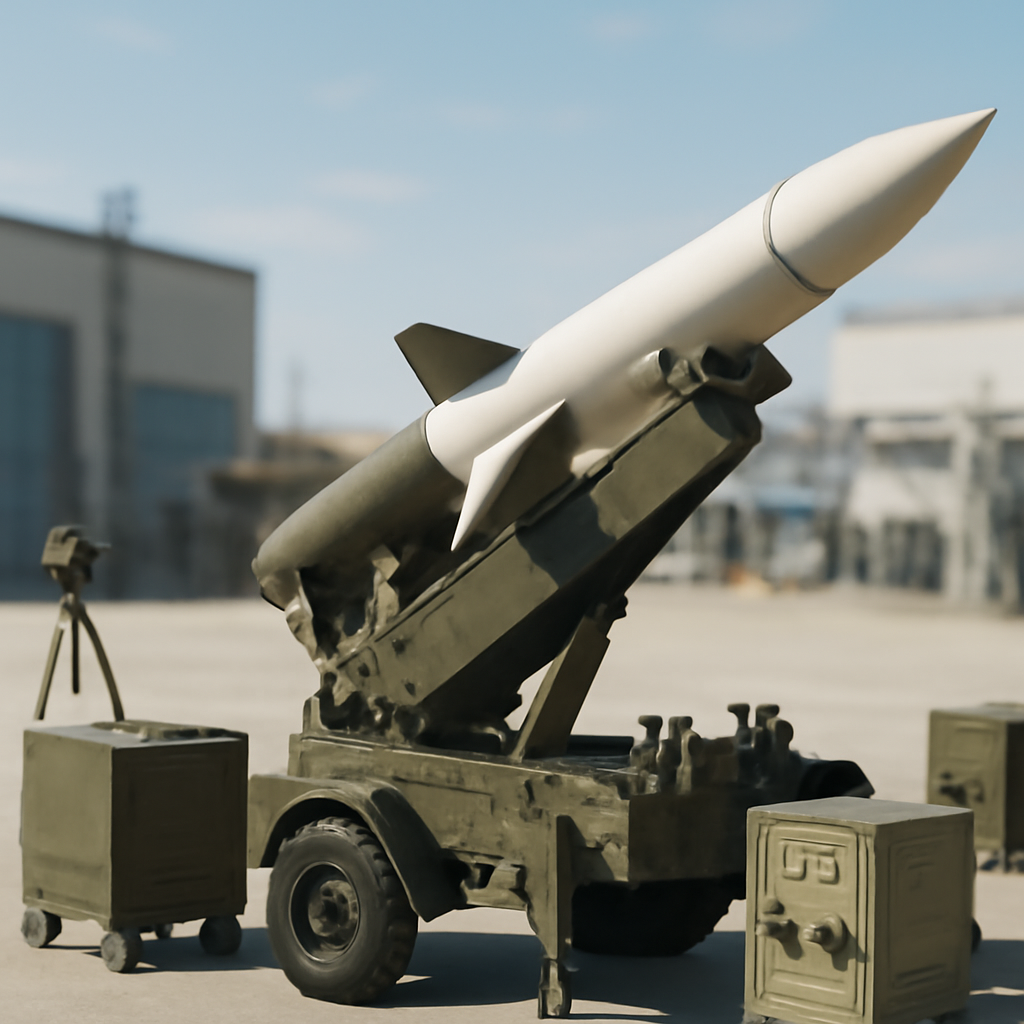
The Army is currently aiming to buy 11,000 Next‑Generation Short‑Range Interceptor (NGSRI) missiles and 2,200 new man‑portable launchers, with production planned to begin in Fiscal Year 2028.
The NGSRI Alternate Interceptor Demonstration and near‑term timeline
The service has issued a contracting notice for what it calls the NGSRI Alternate Interceptor Demonstration (AID). The notice says, “The Army is seeking to identify additional potential sources to fulfill the NGSRI requirements.” It adds that “the Army plans to conduct a demonstration in the Spring 2027 timeframe. A successful demonstration by an offeror may lead to an award for missile procurement.” The notice also referenced an industry day to be held at Redstone Arsenal the following month.
Who is already in the competition: Lockheed Martin and Raytheon
The Army has been funding work on two competing NGSRI designs from Lockheed Martin and Raytheon since 2023. Both companies have publicly announced successful milestone achievements at separate points this year. Lockheed Martin’s entrant is named QuadStar; the company has released imagery associated with QuadStar test activity. Raytheon, meanwhile, is the current prime contractor for the legacy Stinger missile.

Audit-ready is a season. It shouldn't be.
Evidence in spreadsheets, controls drifting between audits, frameworks multiplying on flat headcount. Nubivance runs continuous compliance on Rapid7 Cyber GRC - SOC 2, HIPAA, ISO 27001, PCI, CMMC.
End the scrambleBackwards compatibility: Sgt. Stout, MADIS, and existing launchers
The contracting notice stresses that “The NGSRI missile is backwards compatible with the legacy Stinger missile platforms such as SGT STOUT and Marine Corps Marine Air Defense Integrated System (MADIS).” Sgt. Stout is an Army Stryker‑based air defense vehicle whose turret can be fitted with up to two four‑round Stinger launchers, or swapped for launchers carrying pairings of millimeter‑wave radar‑guided AGM‑114L Hellfire missiles. The turret also mounts a 30mm XM914 automatic cannon capable of firing proximity‑fuzed airburst rounds and a 7.62x51mm M240B machine gun.
The Marine Corps’ MADIS currently consists of two Joint Light Tactical Vehicles in different configurations: one armed with Stinger missiles plus an XM914 cannon and M240 on a single remote weapon station; the other with the same remote station but without Stingers, and fitted with electronic warfare, electronic support measures, and sensors. The Army has also pursued new individual Control Launch Assemblies (CLA) for Stinger that could be used with future NGSRI missiles; Lockheed Martin has publicly shown a new CLA design as part of QuadStar.
The threat NGSRI is designed to counter: Group 2 and Group 3 UAS
The NGSRI program was “initiated to meet the Department of the Army requirement for Maneuver Short Range Air Defense (M‑SHORAD) surface to air missile systems to replace the legacy FIM‑92 Stinger man‑portable air defense system,” the notice explains. The missile is described as “a high performance, soldier portable, fire and forget, surface to air missile system capable of defeating rotary wing, fixed wing, and Group 2/3 Unmanned Aircraft System threats.”
The notice defines Group 2 UAS as systems with gross weights between 21 and 55 pounds, operational ceilings to 3,500 feet, and top speeds up to 250 knots. Group 3 covers uncrewed aerial systems weighing 55 to 1,320 pounds, ceilings between 3,500 and 18,000 feet, and top speeds between 100 and 250 knots. The Iranian‑designed Shahed‑136 is cited in the material as a high‑profile example of a Group 3 kamikaze drone; the report also notes a global surge in kamikaze development in Group 2 and that both categories include surveillance and reconnaissance designs. The piece adds that the Stinger itself has received upgrades in recent years to improve effectiveness against drones.
What this means for the Army, Lockheed Martin and Raytheon, and foreign purchasers
- The Army: The service seeks additional suppliers to “avoid vendor lock” and to ensure competition and production scale. With plans to begin production in Fiscal Year 2028, the Army faces a compressed decision window: a spring 2027 demonstration could directly influence which designs move to procurement.
- Lockheed Martin and Raytheon: Both firms remain in active development and may still receive production orders even if the AID brings new entrants into contention; the notice makes clear that a new demonstration “would also not preclude the service from ultimately ordering NGSRIs from either Lockheed Martin or Raytheon.”
- Foreign armed forces and global purchasers: Because NGSRI is being designed for backward compatibility with existing Stinger launchers, any adopted design could attract interest abroad. The article ties renewed global demand for MANPADS to the ongoing war in Ukraine and other conflicts, and suggests that demand has risen particularly due to growing drone threats.
Officials have also emphasized a broader procurement shift: the U.S. military is prioritizing diversified supplier bases and greater government control of intellectual property for munitions, and since “President Trump’s second term began last year” there has been more explicit focus on bringing in smaller and non‑traditional firms to reduce reliance on traditional primes.
Next concrete milestones to watch in the record are the Army’s Redstone industry day, the Spring 2027 demonstration window, and the service’s decision before production begins in Fiscal Year 2028 — a timetable the contracting notice links directly to possible procurement awards.
https://www.twz.com/land/army-widens-stinger-surface-to-air-missile-replacement-search