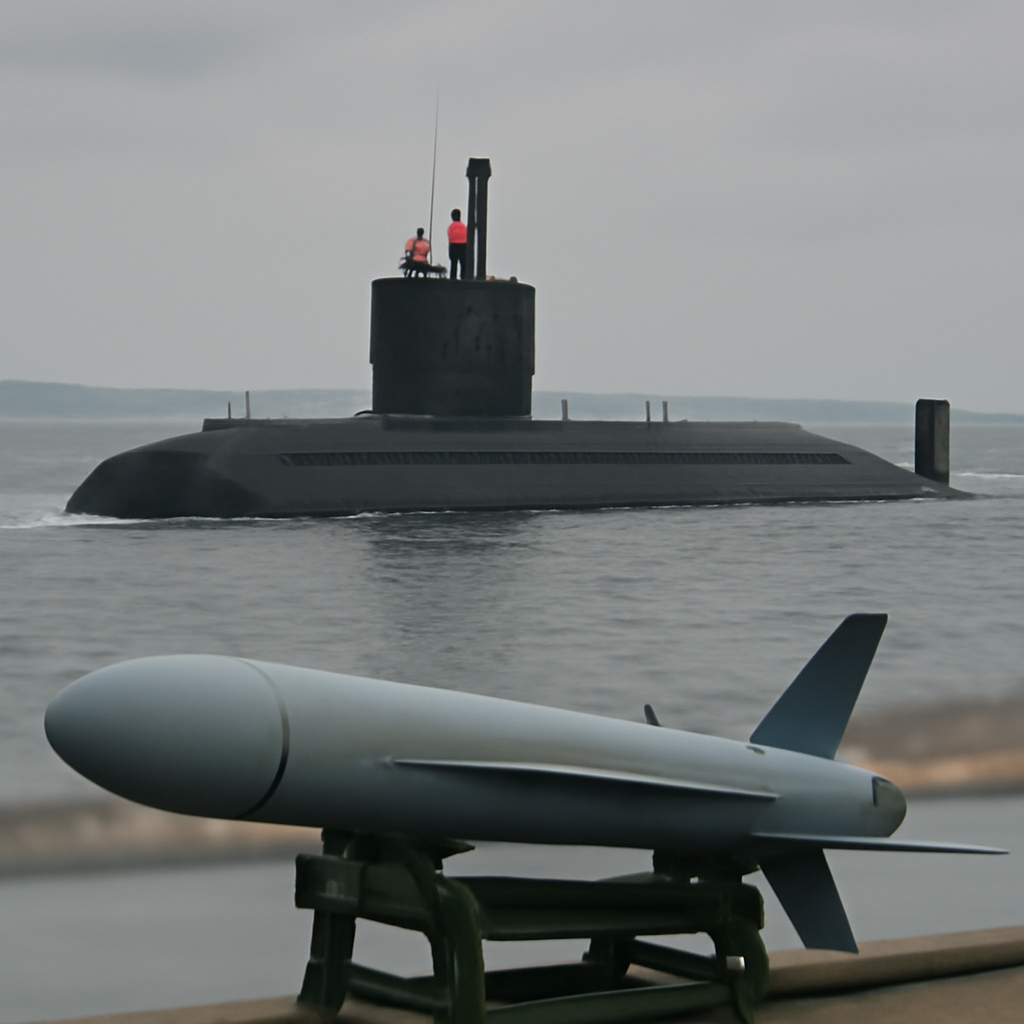
"IonStrike is important because it does not require Soldiers to learn a new kill chain," said Maj. Cody Davis, the 52nd ADA BDE’s operations officer.
Project Bullfrog tests observed by USAREUR‑AF and LANDCOM
On 21 May 2026 the U.S. Army’s 52nd Air Defense Artillery Brigade (52nd ADA BDE) disclosed that it was testing DZYNE Technologies’ IonStrike interceptor in Europe under the banner “Project Bullfrog.” Senior leaders from U.S. Army Europe and Africa (USAREUR‑AF) and NATO Allied Land Command (LANDCOM) observed the exercises at an undisclosed location. Soldiers from the brigade provided hands‑on feedback on operational employment, integration requirements, and the defence of fixed and semi‑fixed sites against one‑way attack drones throughout spring demonstration events.
IonStrike: a radar‑agnostic, low‑cost kinetic interceptor
DZYNE positions IonStrike as a radar‑agnostic, low‑cost kinetic interceptor intended to provide a mid‑range intercept capability against one‑way attack drones and other small unmanned aerial systems (UAS). The system cues on existing radar feeds and connects to the Forward Area Air Defense (FAAD) System and the Integrated Battle Command System Maneuver (IBCS‑M), enabling operators to detect, track, classify, and engage targets through familiar command‑and‑control architectures.
The interceptor is launched from a multi‑interceptor pallet: a four‑cell launcher is currently fielded and a 12‑interceptor configuration is under development to increase magazine depth against larger raid profiles. Unlike traditional fire‑and‑forget interceptors, IonStrike is designed to be re‑taskable in flight and to include abort capabilities that give operators greater flexibility after launch.
The vendor frames the product around a cost‑exchange argument that the Army has made explicit in recent conflicts — "intercepting a $10,000 drone with a $500,000 missile is a trade that no military can sustain at scale" — and presents IonStrike as a lower‑cost kinetic option within the wider air defence architecture.

This site is the portfolio.
OSINTSights runs on Cloudflare Workers, D1, R2, and Vectorize, with an AI pipeline on Hetzner ARM. Nubivance designed, built, and operates it. We do the same for clients.
See what we buildFocus on the Eastern Flank Deterrence Initiative (EFDI)
The tests were aimed specifically at the Eastern Flank Deterrence Initiative (EFDI), described in the exercise materials as a warfighting concept that uses unmanned and minimally manned systems supported by an integrated mission command network that uses live data to accelerate decision‑making. EFDI is intended to offset forward posture challenges — including the reduced U.S. troop presence following the recent withdrawal of 5,000 soldiers from Germany — and to counter adversary advantages in mass and momentum.
Market context: JIATF‑401 and Perennial Autonomy’s contract
IonStrike is entering an increasingly crowded counter‑UAS interceptor market. The Pentagon’s Joint Interagency Task Force 401 (JIATF‑401) awarded Perennial Autonomy a $500 million contract on 19 May 2026 for a separate family of AI‑enabled drone interceptors — Merops, Bumblebee, and Hornet — already deployed with U.S. Central Command. On the same day JIATF‑401 expanded its drone defence marketplace to Australia, Poland, and South Korea, broadening allied access to U.S.‑made counter‑drone technologies. The Army’s field tests therefore sit alongside larger, allied procurement and deployment efforts for competing systems.
What this means for the 52nd ADA BDE, LANDCOM, and DZYNE Technologies
- 52nd ADA BDE and soldiers: evaluators will prioritise whether IonStrike can function as a repeatable and sustainable combat layer in operational environments, with attention to reload procedures, launcher configuration, and the reliability of abort and re‑tasking functions, Maj. Benjamin Bowman, the brigade’s forward operations officer, said.
- USAREUR‑AF and LANDCOM planners: the systems will be judged on integration with existing FAAD and IBCS‑M architectures, and on whether the interceptor can provide an affordable layered option to offset decreased forward troop presence and deter massed one‑way drone raids.
- DZYNE Technologies: the company must demonstrate magazine depth and in‑flight re‑tasking at scale — including the planned 12‑interceptor pallet — while competing with larger contracts and allies’ procurement paths led by JIATF‑401.
A follow‑on operational assessment is planned for summer 2026. That assessment will evaluate command‑and‑control integration, radar cueing performance, launcher configuration, reload procedures, lethality against representative one‑way attack drones, and the reliability of the system’s abort and re‑tasking functions — the specific performance areas cited by brigade leadership. The tests so far show a deliberate effort to plug a mid‑range, lower‑cost kinetic slot into NATO’s layered air defence construct; the operational assessment will determine whether IonStrike can sustain that role under realistic load and integration pressures.