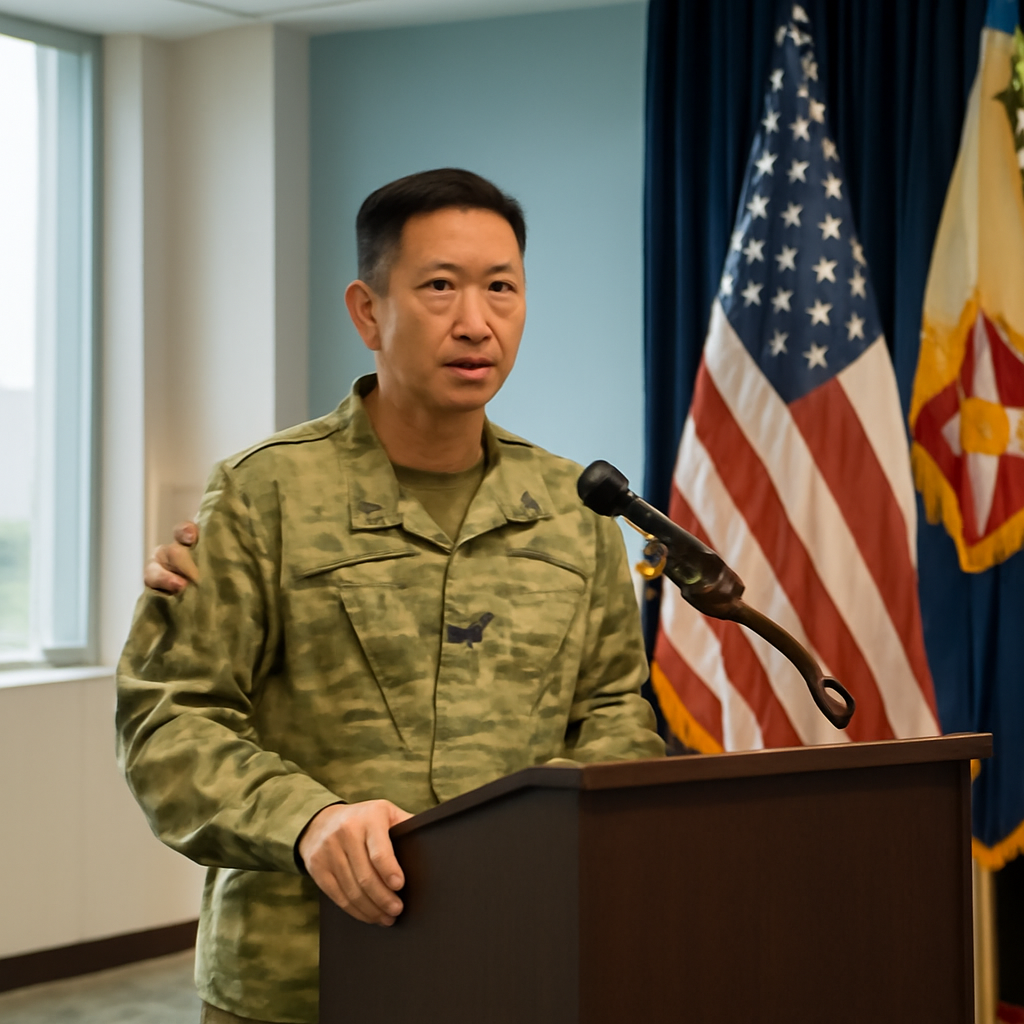
"Over the next couple of years, we’re looking forward to building our staff, building our capacity to be prepared for whatever comes our way," Col. Dennis Han said, announcing the activation of the 45th Sustainment Brigade.
Reestablishing the 45th Sustainment Brigade
The Army has reactivated the 45th Sustainment Brigade on Okinawa, replacing the island-based 10th Support Group. The service described the move as a transition from a support group to a brigade-level headquarters intended to "better command and control sustainment capabilities in the region," a change explained by Col. Dennis Han, who leads the reestablished unit.
The activation signals an organizational shift in how the Army intends to manage logistics and sustainment across a larger area of operations. According to Han, the reestablishment will involve building the brigade’s staff and expanding its capacity over the next couple of years.
Closure of the 10th Support Group and what changes on Okinawa
The 10th Support Group, which the Army said was focused on providing logistics support within Japan, was shuttered as part of the reorganization. The switch to the 45th Sustainment Brigade broadens the unit’s mission from a Japan-only logistics role to one that covers the broader Pacific theater.
The Army also signaled modest, tangible changes to force presence at Torii Station on Okinawa’s west coast: Col. Han said the transition will mean a "small growth" in the number of soldiers stationed there, but explicitly noted there will be no additional infrastructure at the base.

Audit-ready is a season. It shouldn't be.
Evidence in spreadsheets, controls drifting between audits, frameworks multiplying on flat headcount. Nubivance runs continuous compliance on Rapid7 Cyber GRC - SOC 2, HIPAA, ISO 27001, PCI, CMMC.
End the scrambleWhy a brigade-level headquarters matters for sustainment
Leaders framed the reactivation as a way to provide a theater-scale sustainment architecture. Col. Han presented the brigade headquarters as better suited to command and control responsibilities across the Pacific, implying a need for higher-echelon coordination to support operations spanning a vast geographic area.
Maj. Gen. James Dooghan, commander of U.S. Army Japan, framed the ceremony announcing the change as "more than casing one set of colors and uncasing another." He called it "about continuity and transformation, ensuring our Army is positioned to sustain the force wherever and whenever it is needed," linking the unit-level move to wider operational requirements.
Broader sustainment posture and regional messaging
The shift aligns with recurring emphasis on sustainment's role in the joint force. At AUSA’s Land Forces Pacific conference in May, U.S. Indo-Pacific Command leader Adm. Samuel Paparo remarked that the Army "delivers foundational sustainment capabilities to the entire joint force," and added that he was "fervent in my belief that nobody knows or senses or feels viscerally the scale of sustainment than our nation’s Army." Those remarks, cited in the announcement, situate the 45th’s activation within an ongoing conversation about logistics readiness across the region.
Taken together, the statements from Army leaders and the quoted admiral underline a deliberate intent to scale sustainment structures beyond single-country support toward a theater-wide posture.
How U.S. Army Japan, Torii Station, and U.S. Indo-Pacific Command are positioned
- U.S. Army Japan: Through Maj. Gen. James Dooghan’s remarks, the command presented the reactivation as part of continuity and transformation—an organizational step to ensure sustainment capability is aligned with theater needs.
- Torii Station: The base will host a slightly larger soldier presence as the brigade builds out its staff, but officials said no new infrastructure construction at the station will accompany the move.
- U.S. Indo-Pacific Command: Adm. Samuel Paparo’s prior public comments about the Army’s centrality to joint sustainment were invoked in the announcement, linking the brigade’s broader Pacific mission to regional command priorities.
The reactivation of the 45th Sustainment Brigade replaces a Japan-focused support group with a headquarters designed to operate at a wider geographic scale. Leaders promise modest growth in personnel on Okinawa and a multi-year effort to build staff and capability, while stressing that the change is part of a larger effort to ensure sustainment capacity across the Pacific. The next tangible measures will be the staff additions and how the brigade organizes command-and-control functions to serve a theater-sized mission.