Charge into the Future: U.S. Army Trains on Next-Generation Tactical Trucks
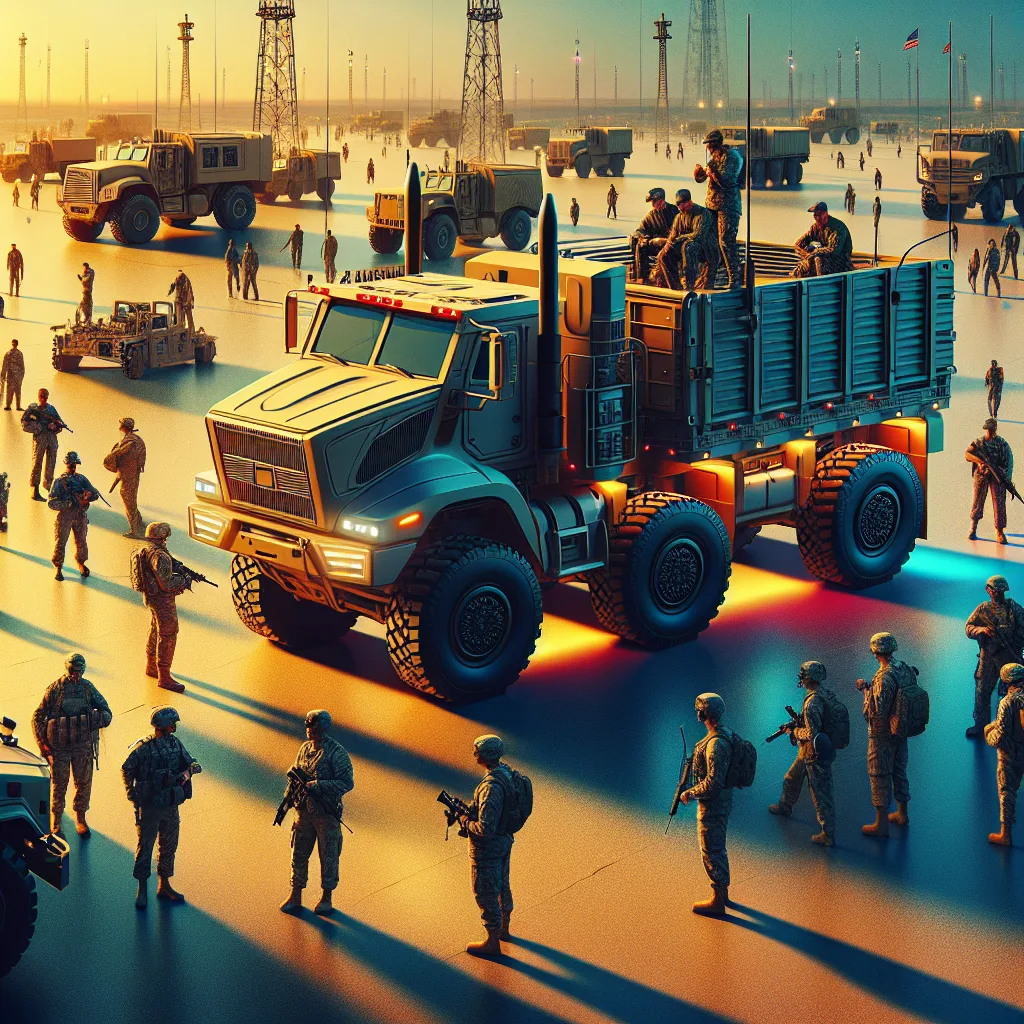
The U.S. Army is stepping boldly into tomorrow by launching formal operator training for its latest medium tactical truck fleet. On May 20, the Army Transportation School received its first two variants of the new Family of Medium Tactical Vehicles A2 (FMTV A2) – the M1083A2 Cargo MTV and the M1078A2 Light MTV – signaling a significant milestone in military logistics modernization.
In a scene set against a backdrop of ever-evolving battlefield demands, the introduction of these new tactical trucks is no small matter. Military analysts note that the modernization of Army logistics is as crucial as the advancements in weaponry. As the Defense Blog reported, this transition is not simply an upgrade in hardware but represents a paradigm shift in the operational capabilities of Army logistics. The arrival of the FMTV A2 variants marks the beginning of a rigorous training program aimed at preparing operators for the complexities of modern integrated battlefield support.
Historically, the Family of Medium Tactical Vehicles have been at the backbone of the Army’s efforts to ensure rapid, reliable, and robust transport in varied operational theaters. For over three decades, legacy FMTV models have transported everything from supplies and personnel to heavier equipment across both training grounds and combat zones. Transitioning to the A2 series is more than just a change in numbers – it is an embrace of improved safety features, advanced communications, and enhanced mobility built on decades of field experience.
At the core of this transformation lies the U.S. Army Transportation School, responsible for imparting critical skills to those at the helm of the nation’s logistical network. The formal training underway now is both a reflection of current operational needs and a strategic investment in the future. The upgraded trucks offer advanced design elements, from reinforced chassis and improved engine performance to modernized driver interfaces that promise to reduce fatigue and improve situational awareness. These improvements are destined to enhance life-cycle management for the vehicles and streamline logistical operations in remote and challenging environments.
Beyond the technical specifications, the modernization of the tactical fleet carries broader implications for the Army’s mission readiness. In an era where rapid deployment and agility are key, the new FMTV A2 vehicles have been engineered to operate in a wide spectrum of operational conditions. This flexibility supports not only traditional military missions but also humanitarian and disaster-relief operations, where mobility and reliability are paramount.
Recognizing the impact of such modernization on overall mission capability, military strategists often point to the importance of logistics in warfare. As noted by retired General Mark A. Milley in past interviews, “The ability to move and sustain forces rapidly is a keystone of operational success.” While General Milley’s remarks specifically referenced broader logistics, his insights underscore the rationale behind investments in upgraded systems like the FMTV A2.
For defenders and policymakers alike, the introduction of these next-generation trucks is more than a tactical upgrade—it is a signal that the Army is positioning itself for the unpredictability of future conflicts. A renovated fleet, supported by comprehensive training initiatives, is expected to address challenges ranging from cyber threats to supply chain disruptions. While official statements from the Army Transportation School emphasize technical improvements and streamlined training protocols, the broader strategic context reveals a deliberate and measured effort to retain logistical superiority over potential adversaries.
Observers within the defense community point out that the Army’s investment in the FMTV A2 series aligns with a broader trend of military modernization. For instance, experts at the Defense Advanced Research Projects Agency (DARPA) and entities within the U.S. Department of Defense have consistently highlighted the need for robust, multi-domain operational capabilities. Though the trucks themselves are not fighting vehicles, their role in guaranteeing that combat units are well-supplied, mobile, and ready at a moment’s notice is critical to overall military effectiveness.
Looking ahead, the training rollout represents just the beginning of a longer process. Subsequent phases of implementation are anticipated to include further technical refinements, expanded training modules at additional Army installations, and field evaluations under operational conditions. The Army Transportation School will likely continue to serve as a proving ground where real world challenges drive iterative improvements and adaptations within the logistical framework.
As the military community watches this evolution with measured optimism, several factors remain under scrutiny:
- Operational Efficiency: How swiftly and effectively the new systems integrate with existing logistical networks will play a crucial role in determining the overall success of the initiative.
- Technological Adaptation: The incorporation of modern driver-assist systems and enhanced communication technologies will test the adaptability of both hardware and personnel in a dynamic operational environment.
- Budgetary Implications: Allocating resources for such modernization always comes with oversight challenges. The balance between fiscal responsibility and technological necessity remains under close review by Congressional defense committees.
- International Competitiveness: In a global arena marked by rapid military innovation, ensuring that the U.S. Army remains at the cutting edge of logistical capabilities is a key component of national and allied security strategies.
These factors, among others, will help define the trajectory of the Army’s modernization program. By systematically addressing challenges—both known and emerging—the Army is demonstrating a commitment to ensuring that its operational infrastructure remains agile and resilient.
Ultimately, the formal operator training at the U.S. Army Transportation School is a microcosm of a larger strategic recalibration. As the Army prepares to field its next-generation medium tactical trucks, the initiative offers both a snapshot of current logistical modernization efforts and a blueprint for how the military will approach future challenges.
In the final analysis, the successful implementation and integration of the FMTV A2 series into the Army’s transportation arsenal will have far-reaching implications. It speaks to the evolution of military strategy where the efficiency of movement, speed of deployment, and technological innovation coalesce to support a modern, flexible response on the battlefield. As the wheels of change turn, the question remains: will this new fleet set the stage for an era of enhanced operational readiness in an increasingly complex global security environment?