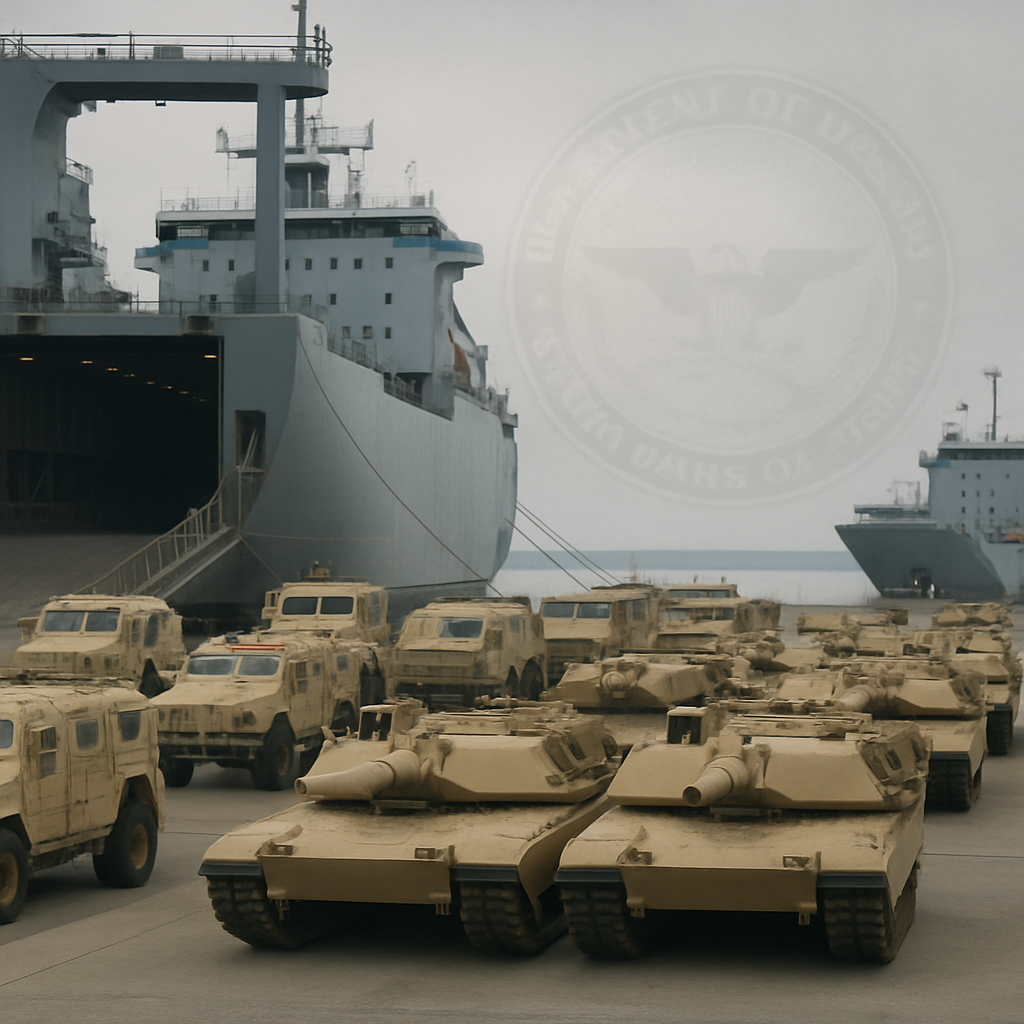
"The Secretary of State has determined and provided detailed justification that an emergency exists that requires the immediate sale to [the recipient] of the above defense articles and defense services is in the national security interests of the United States, thereby waiving the Congressional review requirements." That language appears in each of the Defense Security Cooperation Agency (DSCA) congressional notifications announced late Friday.
Details of the $8.6 billion in notifications
The Trump administration approved a package of congressional notifications totaling about $8.6 billion for four Middle East partners: Qatar, Kuwait, Israel and the United Arab Emirates. The announcements, issued in the form of DSCA congressional notifications, are not final; the notices themselves acknowledge that quantities and dollar totals often shift during negotiations.
The individual announcements as issued are:
- Qatar: $4.01 billion to replenish Patriot air-and-missile-defense systems, including 200 Phased Array Tracking Radars and Patriot Advanced Capability-3 (PAC-3) Missile Segment Enhancement missiles and PAC-2 rounds.
- Kuwait: $2.5 billion for an Integrated Battle Command System (IBCS) developed by Northrop Grumman, which could include six dismounted IBCS engagement operations centers and two hosted centers.
- Israel: $992.4 million to buy 1,000 Advanced Precision Kill Weapon Systems (APKWS), described as a precision-guided interceptor usable against drones, small aircraft, and cruise missiles.
- Qatar (second notice): $992.4 million for 10,000 APKWS rounds.
- UAE: $147.6 million for 1,500 APKWS guidance sections and other equipment.
The DSCA 'emergency' waiver language and State Department response
Each notification contains an identical determination that an "emergency exists" and that the immediate sales are in U.S. national security interests, language the notices say allows the Secretary of State to waive the usual congressional review requirements. The State Department did not respond to questions about why it issued the emergency notices, according to the DSCA announcements and reporting.
The DSCA-format announcements make clear they are notifications to Congress rather than completed contracts, and the notices themselves warn that negotiated quantities and final dollar amounts frequently change as deals proceed.

This site is the portfolio.
OSINTSights runs on Cloudflare Workers, D1, R2, and Vectorize, with an AI pipeline on Hetzner ARM. Nubivance designed, built, and operates it. We do the same for clients.
See what we buildWhat this means for Israel, Qatar, Kuwait and the UAE
For the four named recipients, the notifications signal large near-term purchases of U.S. missile-defense and precision-guided munitions-related equipment. Israel was notified for 1,000 APKWS at $992.4 million; Qatar received two separate notifications, one for Patriot system replenishment at $4.01 billion and one for 10,000 APKWS rounds at $992.4 million; Kuwait was authorized to pursue a $2.5 billion IBCS buy developed by Northrop Grumman; and the UAE received notification for 1,500 APKWS guidance sections and other equipment at $147.6 million.
Each notification frames the sale as advancing U.S. foreign policy and national security objectives by improving the security of what the State Department called "a major non-NATO ally that has been an important force for political stability and economic progress in the Middle East."
What this means for US lawmakers and US weapon stockpiles
The notices were released 60 days after the U.S. and Israel launched attacks on Iran, a timing the DSCA announcements note. The reporting also says U.S. lawmakers are closely following declines in U.S. weapon stockpiles and the cost of ongoing operations. By invoking an "emergency" waiver of congressional review, the administration bypassed the standard multi-week congressional review process that would normally accompany large foreign military sales notifications.
Because the announcements are notifications rather than finalized sales, Congress still retains oversight mechanisms tied to final contracting and delivery, but the rapid-notice route avoids the formal pause provided by a full congressional review period laid out in the DSCA notification process.
What this means for Northrop Grumman and defense suppliers
The Kuwait notice explicitly names the Integrated Battle Command System as developed by Northrop Grumman and describes possible scope — six dismounted engagement operations centers and two hosted centers — that could represent a sizeable systems-integration and sustainment effort. The multiple APKWS notifications for Israel, Qatar and the UAE point to continued demand for guidance sections and rounds tied to the APKWS family of weapons, which the DSCA notices describe as applicable against drones, small aircraft and cruise missiles.
Because the notices are described as replenishments or system purchases, suppliers indicated by the DSCA notices would expect follow-on contracting and negotiation where quantities and dollar amounts can change before final award.
Friday's notifications leave a clear, immediate record: the administration used emergency-waiver language in DSCA congressional notifications to accelerate approvals for more than $8.6 billion in potential sales to four Middle East partners, while the State Department declined to explain publicly why it treated these notifications as emergencies. Lawmakers, suppliers and recipient nations will now move into the negotiation and oversight phases that the DSCA format contemplates, even as questions about stockpile levels and the costs of ongoing operations remain in play.



