"This proposed sale will support the foreign policy and national security objectives of the United States by improving the security of a major non‑NATO ally that is a force for political stability and economic progress in the Gulf region," the State Department wrote.
What the State Department approved
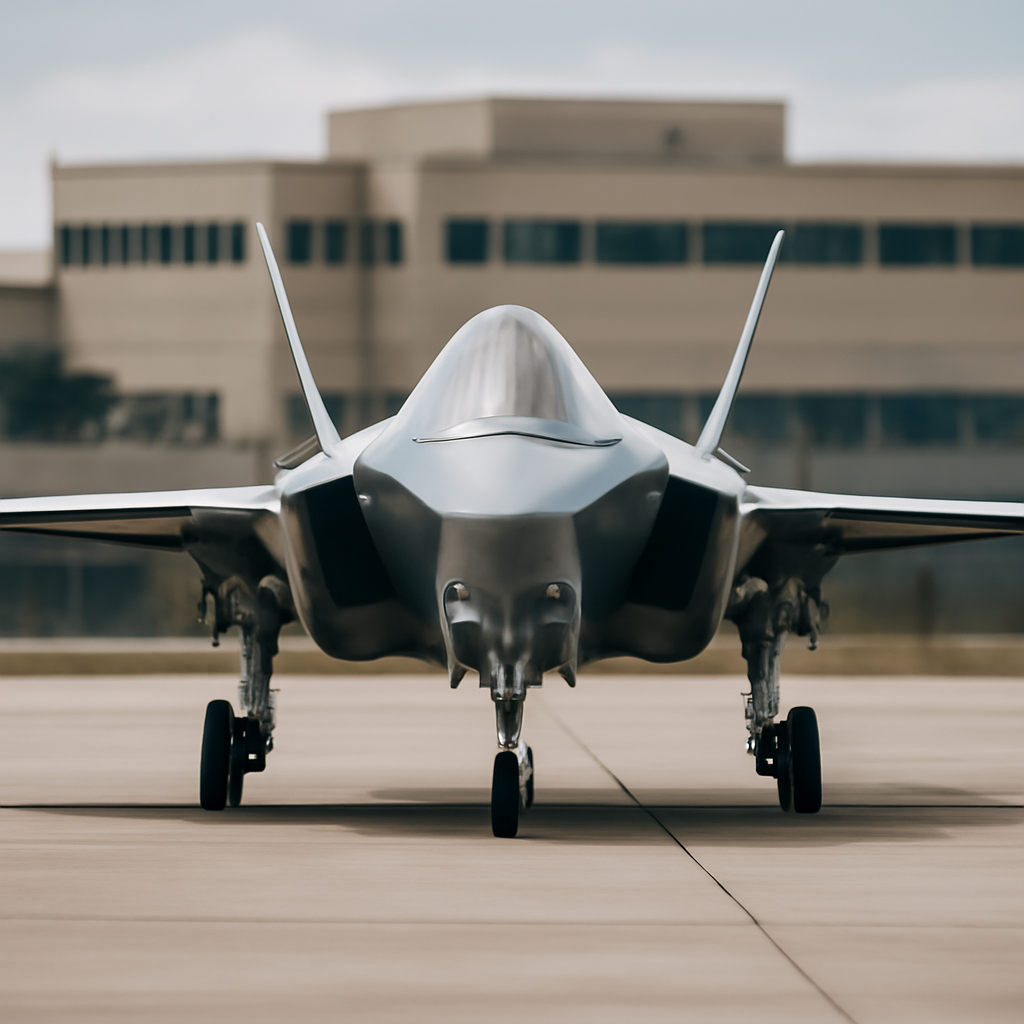
The U.S. State Department approved the possible sale of 48 F‑35 Lightning II Joint Strike Fighters to the Kingdom of Saudi Arabia, a package with an estimated total cost of $24.3 billion. The jets would be conventional takeoff and landing variants. Saudi Arabia has also requested 49 Pratt & Whitney F135‑PW‑100 engines, along with support and other related items, according to the announcement.
How the department framed the security impact
In its written rationale, the State Department said the sale would improve Saudi Arabia’s "capability to deter current and future threats by strengthening its homeland defense, and improving interoperability with U.S. forces, and other regional and NATO forces." The department added the proposed sale would "augment Saudi Arabia’s operational aircraft and enhance its air‑to‑air, and air‑to‑ground self‑defense capability," and asserted that "The Kingdom of Saudi Arabia will have no difficulty absorbing this equipment and services into its armed forces."

This site is the portfolio.
OSINTSights runs on Cloudflare Workers, D1, R2, and Vectorize, with an AI pipeline on Hetzner ARM. Nubivance designed, built, and operates it. We do the same for clients.
See what we buildA marked policy shift and recent U.S. discussions
The decision was described in the announcement as a major policy shift: Washington had previously been unwilling to export the advanced stealth fighters to Arab states. The White House said that in November "President Trump approved a major defense sale package, including future F‑35 deliveries, which strengthens the U.S. defense industrial base and ensures Saudi Arabia continues to buy American." The source also notes that a Saudi F‑35 deal was discussed under the Biden administration as part of broader diplomacy centered on normalizing relations between Saudi Arabia and Israel.
Regional context and Israeli concerns
The proposed sale was announced while the Kingdom is engaged in a fierce fight against the Houthi rebels of Yemen, the announcement noted. The sale has drawn concern from Israel, which feared that providing Saudi Arabia with advanced fighters could "tip the balance of power in the region." The State Department response quoted in the announcement said the proposed sale "will not alter the military balance in the region." The report also reiterates that the United States has a requirement to maintain Israel’s qualitative military edge, which it described as prioritizing Israel for advanced U.S. weapons ahead of Arab states. (The source additionally includes a picture caption referencing Israeli Air Force F‑35i fighters.)
How Saudi Arabia, Israel, and the U.S. defense industrial base are affected
- Saudi Arabia: The State Department said the sale would strengthen the Kingdom’s homeland defense, improve interoperability with U.S. and allied forces, and augment its operational aircraft inventory; the Kingdom also formally requested engines, support, and other items to accompany the jets.
- Israel: Israeli officials have expressed concern that advanced F‑35 deliveries to Saudi Arabia could shift regional military balances; the State Department publicly stated the sale "will not alter the military balance in the region" and emphasized the U.S. requirement to preserve Israel’s qualitative military edge.
- U.S. defense industrial base: The White House framed earlier approvals as measures that "strengthen the U.S. defense industrial base" and help ensure continued Saudi purchases of American defense equipment.
This development represents a formal U.S. authorization to pursue a sizeable F‑35 sale to Saudi Arabia at a moment when the Kingdom is engaged in active regional conflict and when U.S. policy toward advanced exports to Arab states has shifted. The State Department’s public justification centers on deterrence, interoperability, and preserving regional military balances, while the White House frames the move in industrial and diplomatic terms. The sale is described as a possible transaction and, per the original report, remains a developing story.
Original reporting: https://www.twz.com/air/f-35-sale-to-saudi-arabia-approved-by-state-department