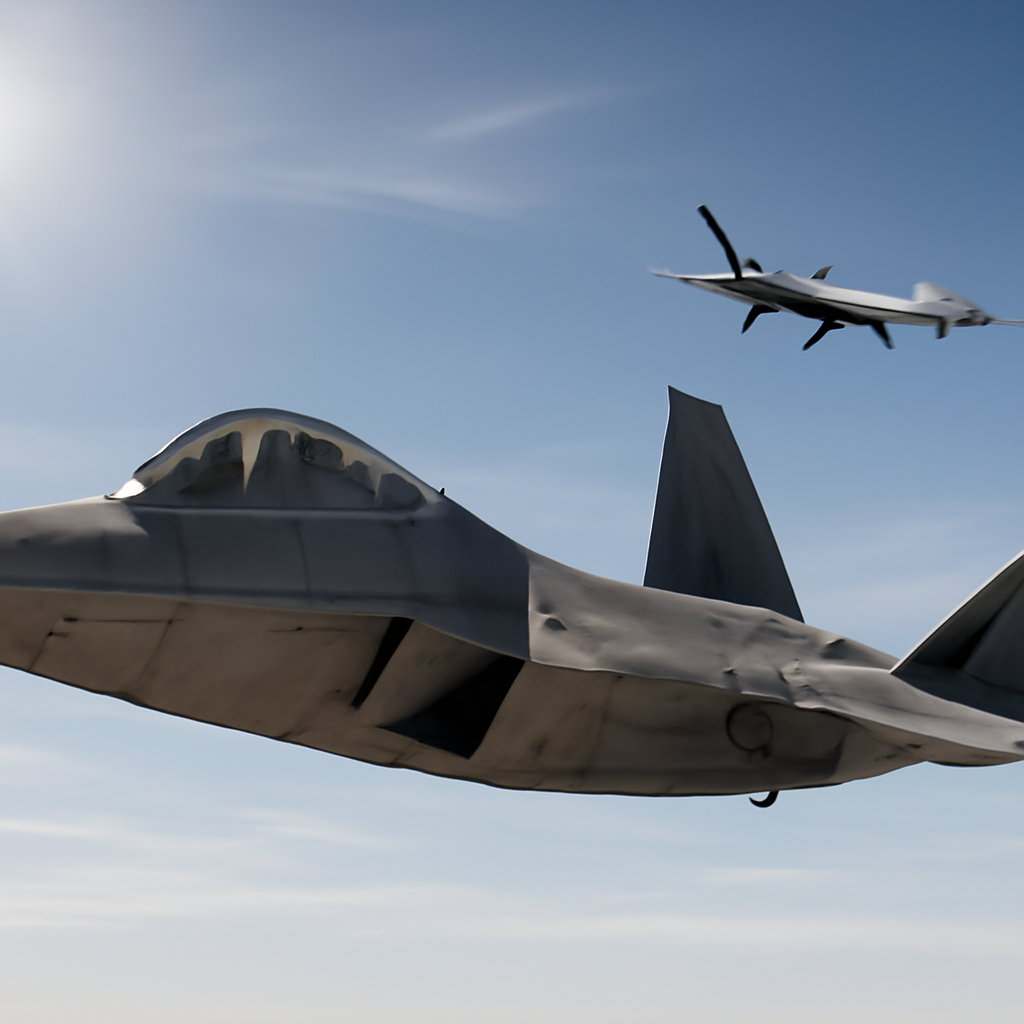
"Iran launched over 500 ballistic missiles and 2,000 drones by Day 4 of the war," according to Pentagon and CENTCOM reporting — a scale of retaliation that reshaped the campaign within days.
Operation Epic Fury and initial US-Israeli strikes
On 28 February 2026 the United States and Israel opened a coordinated air campaign — codenamed Operation Epic Fury (US) and Operation Roaring Lion (Israel) — that struck military installations, nuclear enrichment sites, and key officials. The strikes in the opening hours included the assassination of Supreme Leader Ali Khamenei. CSIS counted roughly 900 strikes in the first 12 hours, more than 3,000 targets by Day 10, and a sustained tempo of 300–500 targets per day thereafter. The first 100 hours cost $3.7 billion, and the two-month campaign cost approximately $25 billion.
The campaign disabled or destroyed about 120 air-defence systems and damaged 29 ballistic missile launch sites and four manufacturing facilities. The three main enrichment sites — Natanz, Fordow, and Isfahan — sustained what the Chairman of the Joint Chiefs of Staff described as "extremely severe damage." Still, a classified assessment found the nuclear strikes set Iran’s programme back by less than six months, and roughly 50% of Iran’s missile launchers remained intact in April 2026.
Operation True Promise IV: the missile-and-drone pivot
Iran’s response, Operation True Promise IV, massively expanded the war’s footprint. By Day 4 Tehran had launched the figures cited above, and the ISW/AEI Critical Threats Project recorded 95 Iranian strike waves by 4 April 2026. Within 48 hours strikes hit seven countries: Bahrain, Jordan, Kuwait, Qatar, Saudi Arabia, the UAE, and Iraq. Targets included the Fifth Fleet Headquarters in Bahrain, Ali Al Salem and Camp Buehring in Kuwait, Al Udeid in Qatar, Al Dhafra in the UAE, and Ain al-Asad in Iraq (the latter producing at least 64 concussive injuries among US service members).
The campaign destroyed an AN/TPY-2 THAAD radar at Muwaffaq Salti Air Base in Jordan — one of only nine such radars globally and valued at $300 million — which the Al Jazeera Centre for Studies described as "blinding US eyes in the Middle East." After an initial peak, CENTCOM Commander Admiral Brad Cooper reported ballistic missile launch rates fell roughly 90% and drone launches about 83% by approximately 3 March. Iran then stabilised on a sustainable drone-attrition model, with reported daily strike rates of 190–392 drones and an Iranian claim of a tenfold increase in drone production capacity.

This site is the portfolio.
OSINTSights runs on Cloudflare Workers, D1, R2, and Vectorize, with an AI pipeline on Hetzner ARM. Nubivance designed, built, and operates it. We do the same for clients.
See what we buildUnderground missile cities and the limits of bunker-busters
CNN documented approximately 30 underground missile bases in the Zagros and Alborz ranges — facilities built 400–1,500 feet into granite with interconnected tunnels, automated rail, blast-resistant doors and multiple exits. Even heavy bunker-busters could not reach their depths: the GBU-57 Massive Ordnance Penetrator failed to neutralise the complex. US strikes hit about 77% of visible tunnel entrances, yet US intelligence later admitted damage had been overestimated by at least 50% as Iranian engineers used pre-positioned excavation equipment to restore operations within hours.
The Times of Israel reported US assessments that Iran could recover underground launchers and fire thousands of missiles. The Soufan Centre concluded that the remaining capabilities position Tehran to fight a war of attrition — a judgment reinforced by a Soufan and other think-tank consensus that underground facilities were the single most significant factor shaping the war’s strategic outcome.
Interceptor depletion and China’s rare-earth controls
The campaign exposed a stark cost asymmetry. In the first four days US Patriot batteries fired 943 interceptors; GCC states expended roughly 86% of their pre-war Patriot-family inventories in five weeks. THAAD batteries fired roughly 198 interceptors in the first 16 days — about 40% of the US global inventory of 534 rounds. Analysts emphasised a production gap: a Shahed-136 drone costs $20,000–$50,000 to produce, while a PAC-3 MSE interceptor costs $3.7–4 million — roughly a 114-to-1 cost ratio in Iran’s favour. Analysts estimated three to five years would be required to rebuild interceptor stockpiles.
Compounding munitions shortages, China’s Ministry of Commerce Announcement No. 61 (effective 1 December 2025) imposed strict export controls on seven heavy rare earths and China controls about 90% of global refining capacity. The war burned through rare-earth-dependent weapons — over 850 Tomahawks were fired, roughly 80% of JASSM-ER inventories expended, and Patriot and THAAD stores heavily drawn down. A 1 January 2027 US federal mandate banning Chinese‑sourced rare‑earth magnets in military platforms adds a looming supply-chain deadline at a moment when domestic mine‑to‑magnet capacity is not operational.
What this means for policymakers, Gulf militaries, and energy markets
- Policymakers and defence planners: face a combined problem of depleted interceptors and constrained rare-earth supply chains that may take years to fix, complicating rearmament timelines and Pacific deterrence plans (CSIS’s “Last Rounds?” framing).
- Gulf militaries and US forward bases: must reckon with hub‑and‑spoke vulnerabilities exposed by strikes on 16 US sites across the region, damage estimates of $2.3–2.8 billion in equipment and over $5 billion in infrastructure repairs, and the loss of specialized radars such as AN/TPY‑2.
- Energy markets and national budgets: the Strait of Hormuz closure removed 6.7 million bpd by 10 March and exceeded 10 million bpd by 12 March; the IEA called it the largest oil supply disruption in history, with global GDP loss estimates from $590 billion to $3.5 trillion and acute fiscal pain for oil exporters such as Iraq (losing roughly $3 billion per day in export revenue).
Two months of high-intensity strikes produced severe tactical effects yet failed to collapse Iran’s retaliatory architecture. Iran retained up to 70% of its pre-war ballistic missiles, underground production and storage survived largely intact, and post‑ceasefire analysis warned of rapid reconstitution and a heightened political case for weaponisation after Khamenei’s death. Against that set of facts — interceptor depletion, rare‑earth dependence, underground resiliency, and sustained drone manufacturing — the strategic balance at ceasefire left Tehran with substantial capacity to reconstitute and the United States with a long, costly rebuild ahead.