The two air wars: destruction above, disruption below
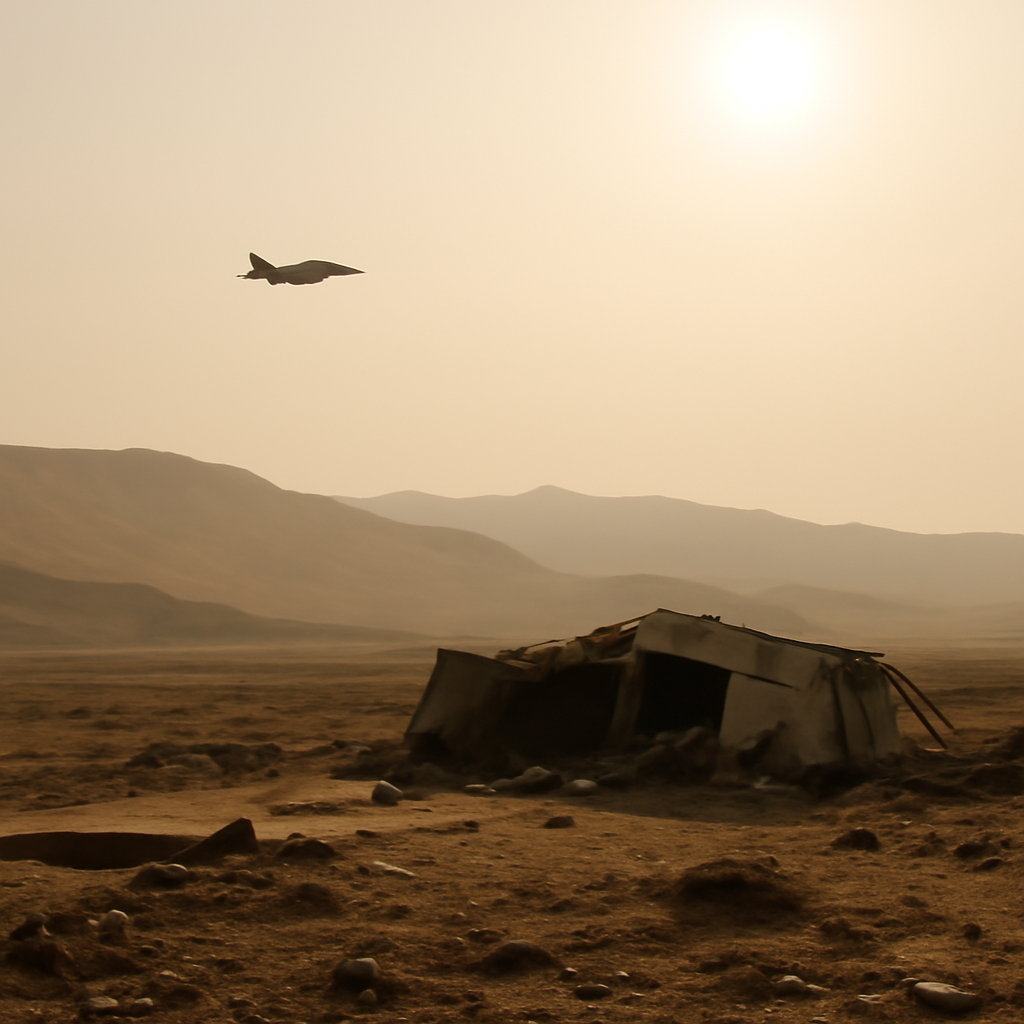
Over four months since the United States launched attacks on Iran — including six weeks of what the authors call the most intensive air campaign since the Iraq invasion’s "shock and awe" — American and Israeli forces secured high-altitude dominance. Above 20,000 feet, the campaign achieved air superiority over large swaths of southern and western Iran, degraded Iranian air defenses, sank much of Iran’s traditional navy, and damaged elements of its missile and drone capabilities. By those metrics — desired mean points of impact and systems destroyed — the authors write, the US won the air war of destruction.
But Iran shifted the fight downward into the low-altitude air littoral where persistence, mass, and tempo mattered more than stealth and precision. The result, according to Maximilian K. Bremer and Kelly A. Grieco, was that the war that actually decided outcomes was the one of disruption — one that made the Strait of Hormuz too costly and dangerous for routine transit.
Shahed drones and a deliberate asymmetric strategy
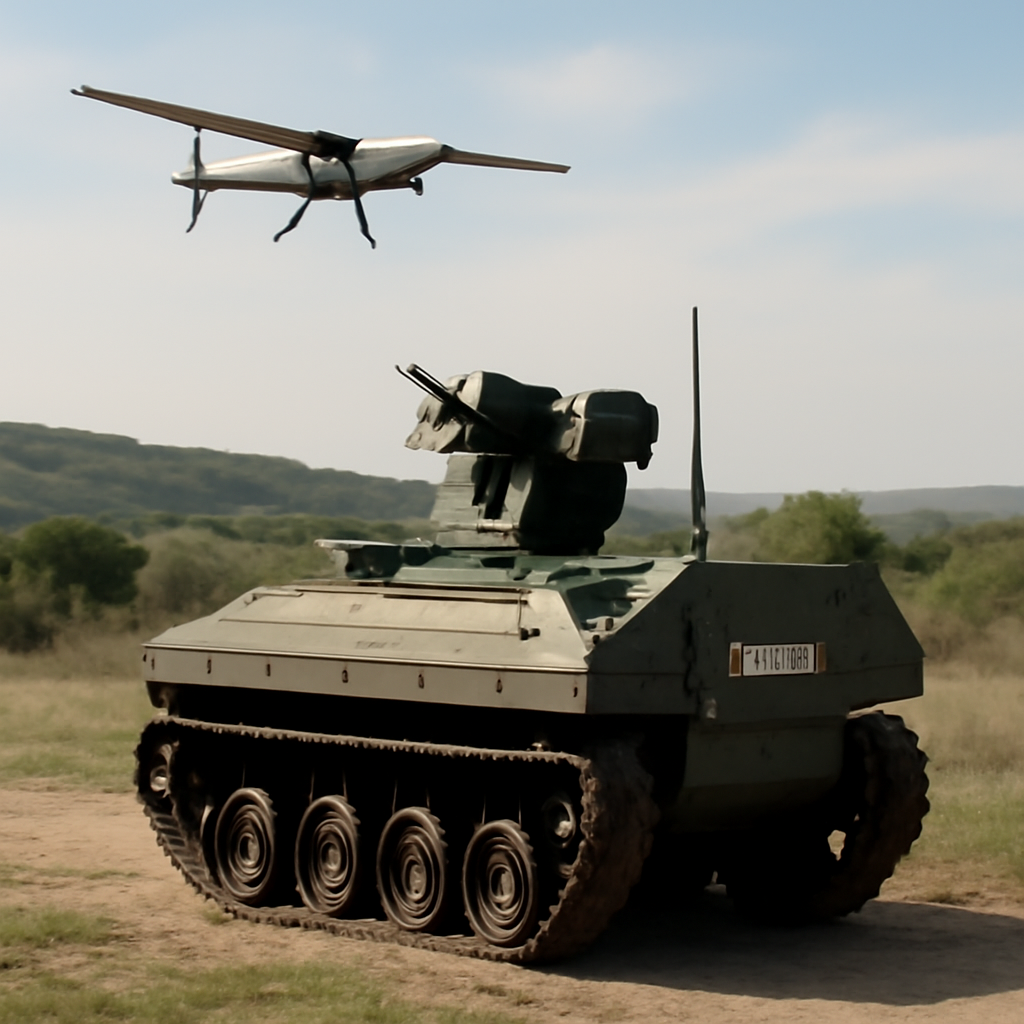
Iran’s primary disruptive weapon was the Shahed drone. By American standards, Bremer and Grieco note, the Shahed is slow, low-flying, easy to shoot down and costs "tens of thousands of dollars." Yet these inexpensive systems destroyed more expensive radar and command-and-control facilities, disrupted oil production, and struck ports and airfields across the region.
The authors emphasize that Iran did not stumble into this approach; it tested and refined it through Houthi attacks in the Red Sea and militia operations in Iraq. Iran also "watched $20,000 drones prove their value when it supplied them to Russia." The learning curve left Tehran ready to leverage cheap, expendable systems for disproportionate effect.

Audit-ready is a season. It shouldn't be.
Evidence in spreadsheets, controls drifting between audits, frameworks multiplying on flat headcount. Nubivance runs continuous compliance on Rapid7 Cyber GRC - SOC 2, HIPAA, ISO 27001, PCI, CMMC.
End the scrambleThe Strait of Hormuz: a local tactic with global reach
Central to Iran’s disruption was the Strait of Hormuz — a 21-mile chokepoint the US could not guarantee remained open. A drone launched from the Iranian coast could reach an oil tanker in minutes; keeping shipping lanes open, the authors argue, requires persistent, close-in coverage and forces positioned near enough to detect and respond before a threat arrives. The US posture in this campaign did not provide that.
As the threat mounted, war-risk insurance for transits "effectively collapsed," leaving hundreds of ships stranded in the Gulf. That economic and logistical pressure became a time-horizon contest: intelligence assessments cited in the piece concluded Iran could endure a naval blockade for at least 90 to 120 days, if not longer, while American consumers, European and Asian governments, and regional Gulf states faced mounting costs and questions about endurance.
Force posture, command shifts, and operational distance
The threat environment shifted US force posture. Where in 2003 US aircraft were forward deployed across Kuwait, Qatar, UAE, Bahrain and Saudi Arabia, Bremer and Grieco report the recent campaign pushed carriers, stealth fighters, and tankers back to Israel, Jordan, and the Arabian Sea and shifted command of operations away from the Combined Air Operations Center at Al Udeid. From those distances the US could still strike targets across Iran — but it could not police the strait or provide the persistent, close-in coverage the littoral fight demanded.
Procurement gaps, LUCAS, and the scale problem
The authors say decades of procurement choices optimized for long-range precision — the war of destruction — left a gap in US capabilities for a close-in, attritional fight. What they identify as missing are aircraft that loiter long at relatively low altitudes with large magazines, mobile air defenses, and mass-produced interceptors cheap enough to field at scale.
They point to LUCAS — described in the article as a copy of Iran’s Shahed design — as "pointing in the right direction," but note a $30 million contract producing hundreds of drones still leaves the US outmatched against adversaries producing "tens of thousands." Fixing that, the authors argue, will require procurement choices the Pentagon has resisted: long on‑station drones, platforms with deep magazines, mobile defenses, and mass-produced countermeasures.
What this means for the Pentagon, policymakers, and insurers
- The Pentagon: Must reassess planning scenarios to treat the war of disruption as a primary contingency rather than an afterthought to high-altitude campaigns, and prioritize platforms and munitions optimized for persistence and mass at low altitude.
- Policymakers: Face a political calculus in which chronic inconvenience and economic pain — exemplified by prolonged closure of the Strait of Hormuz — can force concessions even when an adversary has absorbed battlefield destruction.
- Insurers and global shippers: Will remain acutely sensitive to littoral threats; the collapse of war-risk insurance and hundreds of stranded ships in the Gulf in this campaign underline how localized asymmetric attacks can cascade into global economic effects.
Bremer and Grieco close on a stark measure: the framework agreement now being negotiated is, in their view, the real metric of which air war mattered. More bombing, as President Trump has threatened, "misses the point" — the campaign failed not from insufficient intensity but from prioritizing the air war that did not decide the outcome. The question the United States now faces, the authors leave us with, is whether planning and procurement will change to meet a threat that wins by making victory feel not worth the cost.
https://breakingdefense.com/2026/07/iran-was-the-most-successful-failure-in-us-airpower-history/