The engine replacement is expected to cost $15 billion and reach initial operational capability in 2033, after the first contract was awarded in 2021.
FY27 analysis of alternatives: a formal look at the B-52’s future
The US Air Force has opened a formal study in the FY27 budget cycle “to look at future B-52 requirements and costs and/or a new heavy bomber aircraft configuration and costs.” That analysis of alternatives will set the parameters for whether the service continues investing in upgraded B-52s or pursues a new heavy bomber design. The question follows a major midlife renovation program already underway on the B-52 fleet.
The B-52J renovation: scale, costs, and operational roles
The ongoing modernization will produce 76 B-52Js and centers on a sweeping engine replacement estimated at $15 billion, with initial operational capability slated for 2033. Those upgraded aircraft will continue to carry nuclear-armed cruise missiles — the Raytheon AGM-181 — as part of the US nuclear deterrent triad, and will remain the Air Force’s only carrier for the Lockheed Martin AGM-183, which the service plans to restart with an anti-ship seeker. The B-52 also figures as a planned launch platform for hypersonic weapons.

This site is the portfolio.
OSINTSights runs on Cloudflare Workers, D1, R2, and Vectorize, with an AI pipeline on Hetzner ARM. Nubivance designed, built, and operates it. We do the same for clients.
See what we buildHypersonic demand, capacity limits, and alternate concepts
Interest in hypersonics across the Defense Department — reflected in programs pursued by the Air Force, Navy and Army — is driving demand for heavy, long-range standoff launch platforms. The article notes the smaller RTX and Northrop Grumman Hypersonic Attack Cruise Missile (HACM) being developed for the USAF and Australia, and the Pentagon’s hope that new market entrants will produce more — and cheaper — hypersonic weapons. That growing inventory, however, collides with capacity constraints: the B-52 fleet, “dual-hatted for the nuclear deterrence mission,” is at a capacity limit, which prompted the Defense Innovation Unit’s 2020 request for information for a high-capacity bomber with four B-2-type rotary launchers. Competing operational philosophies are also in play: advocates for a larger B-21 fleet — retired USAF colonel Mark Gunzinger has proposed a 225-aircraft force bought at 20 per year — argue that stealthy penetrators can be cheaper than large numbers of stand-off missiles on “arsenal” platforms when target sets and campaign lengths grow.
Supercruise, Ben Rich’s SR-71 thought experiment, and weapon efficiency
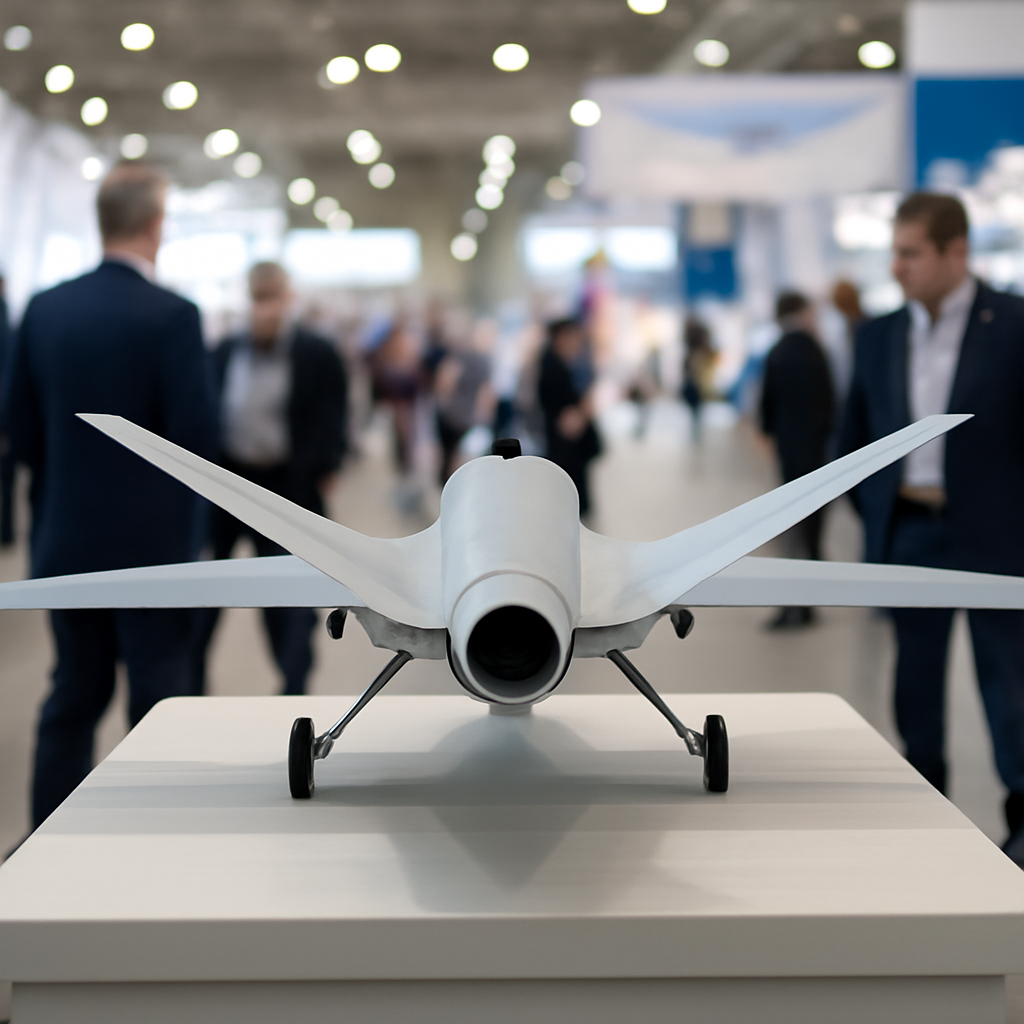
The article re-examines the largely dormant supercruise bomber concept embodied by the XB-70 Valkyrie and the SR-71 family. A supersonic bomber that cruises at Mach 2.4 — roughly three times a B-52’s cruise speed — would materially change stand-off dynamics. Ben Rich’s 1976 paper is cited: a notional SR-71 strike launch of an AGM-69 SRAM at high speed and altitude would travel more than 500 nautical miles (930 km), about five times the SRAM’s range when released from a B-1 at Mach 1.6. Ramjet and dual-mode ramjet weapons also benefit: they require a booster to reach a ramjet’s efficient operating speed (around Mach 2.5), a threshold a supersonic carrier could provide and thereby eliminate the booster. The arithmetic in the piece is stark: if a supersonic bomber’s weapons can be two-thirds the size of a subsonic launch equivalent, an F-15EX-like 6-tonne weapon load could match 9 tonnes subsonically; with more than twice the sortie generation, that 6 tonnes becomes equivalent to roughly 20 tonnes delivered subsonically — in the range of B-52 or B-2 payloads.
Technical feasibility: engines, signatures, and survivability
The author argues supercruise is technically practicable. High-pressure cores used in commercial jet engines already sustain tens of thousands of hours at high temperatures and could be paired with tailored low-pressure sections for sustained supersonic operation; at least one of the three major engine prime contractors has carried out studies in this area. Survivability arguments are challenged as well: the long-standing notion — attributed to Robert McNamara in the piece — that faster aircraft are necessarily easy prey for larger defensive missiles is questioned. Intercepting a target at Mach 2.4 and 70,000 feet (21,000 metres) poses kinetic and energy challenges. The article points to historical Soviet measures — the S-200 system’s seven-tonne interceptor and its liquid-fuel core — and Ben Rich’s assessment that such interceptors could only “guarantee a kill” under constrained conditions. Complementary measures such as front-aspect radar-cross-section reduction and electromagnetic warfare (decoys, Cross-Eye, and high-power microwave) are presented as force-multipliers for a large, power-rich platform that does not require extreme low-observable manufacturing.
What this means for the US Air Force, hypersonic developers, and B-21 advocates
- The US Air Force: faces a scheduling and risk trade-off between continuing deep upgrades to a 1950s-era structural design and accelerating a new heavy-bomber acquisition. The FY27 analysis will drive whether planners double down on the B-52J path or seek a fresh airframe sooner.
- Hypersonic developers (Raytheon, RTX, Northrop Grumman): will watch launcher capacity and platform mix closely — a shift to higher-speed carriers could change missile sizing (smaller, booster-less ramjet weapons) and demand more weapons optimized for supersonic release profiles.
- B-21 advocates and acquisition reformers (Mark Gunzinger, Mitchell Institute): have concrete leverage in the debate, given proposals for a 225-aircraft B-21 force and the argument that stealthy penetrators may be more cost-effective than high-volume arsenal aircraft for sustained campaigns.
The FY27 analysis of alternatives will be the formal hinge point. The author’s contention is clear: a supercruising heavy bomber is technically credible and could alter the calculus on weapon size, sortie rates and survivability — and that possibility should factor into the Air Force’s decisions well before the refurbished B-52Js begin arriving in service.