What if an airborne electronic warfare pod could change its behavior in mid-flight the moment a new threat appears? The idea — that rapid, remote reprogramming of jamming systems in response to real-time intelligence could be "hugely valuable" — is the central point raised in a recent report on testing of the Angry Kitten pod on an HC-130J platform.
What the testing focuses on
The War Zone reported that current testing of the Angry Kitten jamming pod on an HC-130J is concentrating on the pod's ability to receive threat updates via satellite. The report emphasized the operational ambition: being able to reprogram the pods remotely in response to a changing threat environment. As The War Zone put it, "Being able to rapidly reprogram Angry Kitten pods remotely based on the real-time threat environment would be hugely valuable."
Why receiving updates via satellite matters
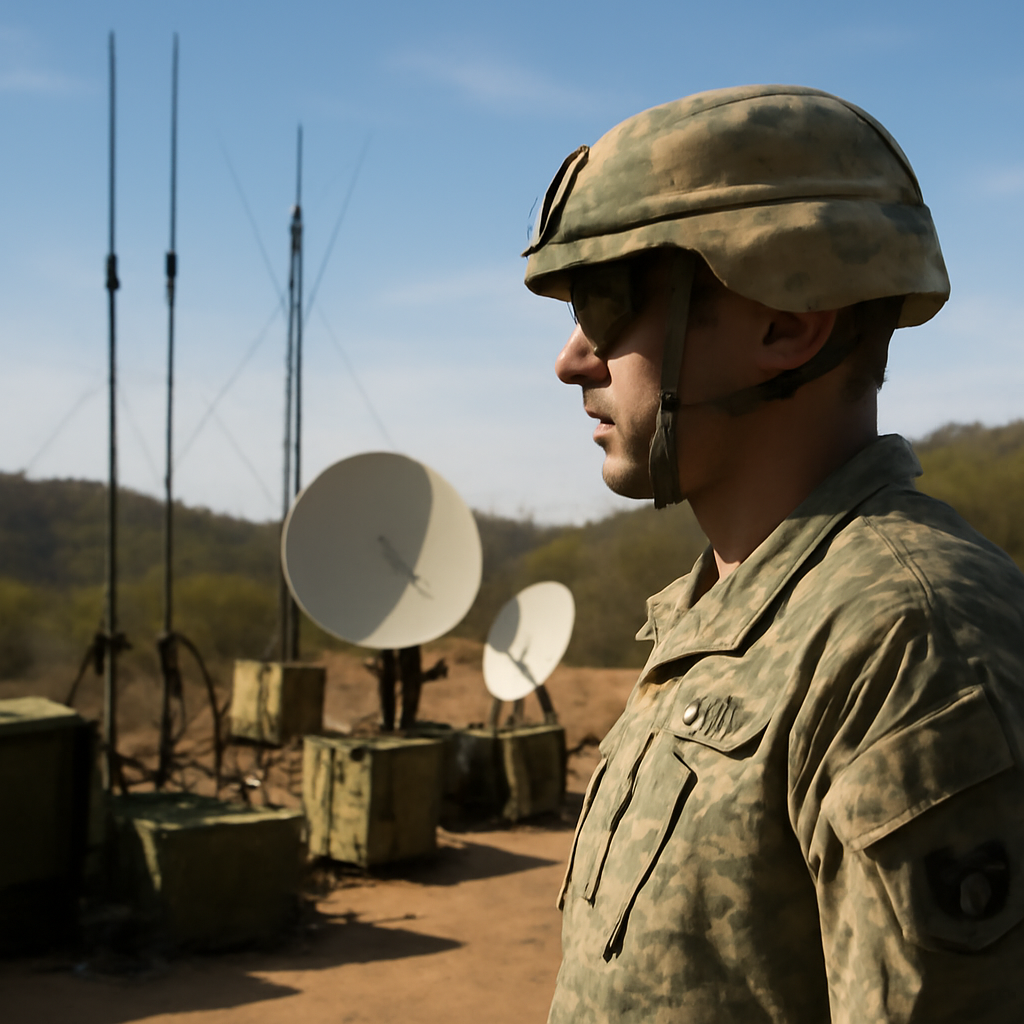
Satellite-delivered updates are the mechanism highlighted in the report as the path to faster, more flexible reprogramming. The ability to transmit new threat information to an airborne jamming pod while it is deployed suggests a shift from pre-mission configuration toward in-mission adaptability. That shift is the explicit focus of the testing described in the article.

This site is the portfolio.
OSINTSights runs on Cloudflare Workers, D1, R2, and Vectorize, with an AI pipeline on Hetzner ARM. Nubivance designed, built, and operates it. We do the same for clients.
See what we buildImplications for users and decision makers
- For operators, the capability described implies a potential reduction in the lag between threat discovery and countermeasure deployment — a directly stated goal of the testing.
- For planners and policymakers, the ability to alter jamming parameters in real time via satellite updates raises questions about command-and-control processes, verification of updates, and the rules that govern when and how reprogramming occurs. The War Zone's reporting frames the remote reprogramming capability as a significant operational advantage.
- For adversaries, the described emphasis on rapid reprogramming via satellite changes the contest from one of fixed counters to one of continuous adaptation — a dynamic explicitly implied by the report's focus on real-time threat responsiveness.
Technical and operational trade-offs to watch
The War Zone story centers on a single, clear objective: enabling Angry Kitten pods on an HC-130J to receive satellite-delivered threat updates and be reprogrammed remotely. That objective carries implicit trade-offs between flexibility and the demands of ensuring secure, reliable communications and safe change control. The article frames remote reprogramming as "hugely valuable," underscoring the perceived payoff should those trade-offs be successfully managed.
As the testing continues, the practical questions will be whether the satellite update mechanism can be made robust under operational conditions, how rapidly reprogramming can be performed without degrading mission safety, and how decision authorities and technical safeguards will be aligned to permit such changes in flight — issues the report raises by focusing squarely on the satellite-update capability.
Will the ability to push a new software definition or signature to a pod in mid-flight tilt the advantage toward defenders who can adapt quickly — or will the complexities of secure, dependable reprogramming limit the capability's practical reach? The War Zone's reporting on Angry Kitten testing on the HC-130J makes clear that the pursuit of real-time responsiveness via satellite updates is underway, and that stakeholders will be watching closely to see whether the "hugely valuable" promise can be realized.