“For decades, American air and space power has often operated from a position of sanctuary. Those days are over,” Gen. Kenneth S. Wilsbach said Monday, framing a decisive shift in how the Air Force intends to protect its bases and personnel from missiles and drones.
Gen. Kenneth S. Wilsbach: point defense as a core function
In a keynote at the Air & Space Forces Air, Space and Cyber Symposium, Gen. Wilsbach argued the Air Force can no longer treat point defense as a “side hustle.” He tied recent operational lessons directly to the change in emphasis: widespread damage to U.S. bases during the war with Iran, including a July strike on Muwaffaq Salti Air Base in Jordan that a video shows was struck by several Iranian medium- to intermediate-range ballistic missiles, killing at least two and injuring several American servicemembers. Wilsbach used Israel’s layered defenses as an example of how robust protection can let air forces continue generating power despite incoming attacks, and said the Air Force must develop similar defensive depth for its own forward and domestic installations.
Point defense weapon system, anti-aircraft gun RFI, and directed energy
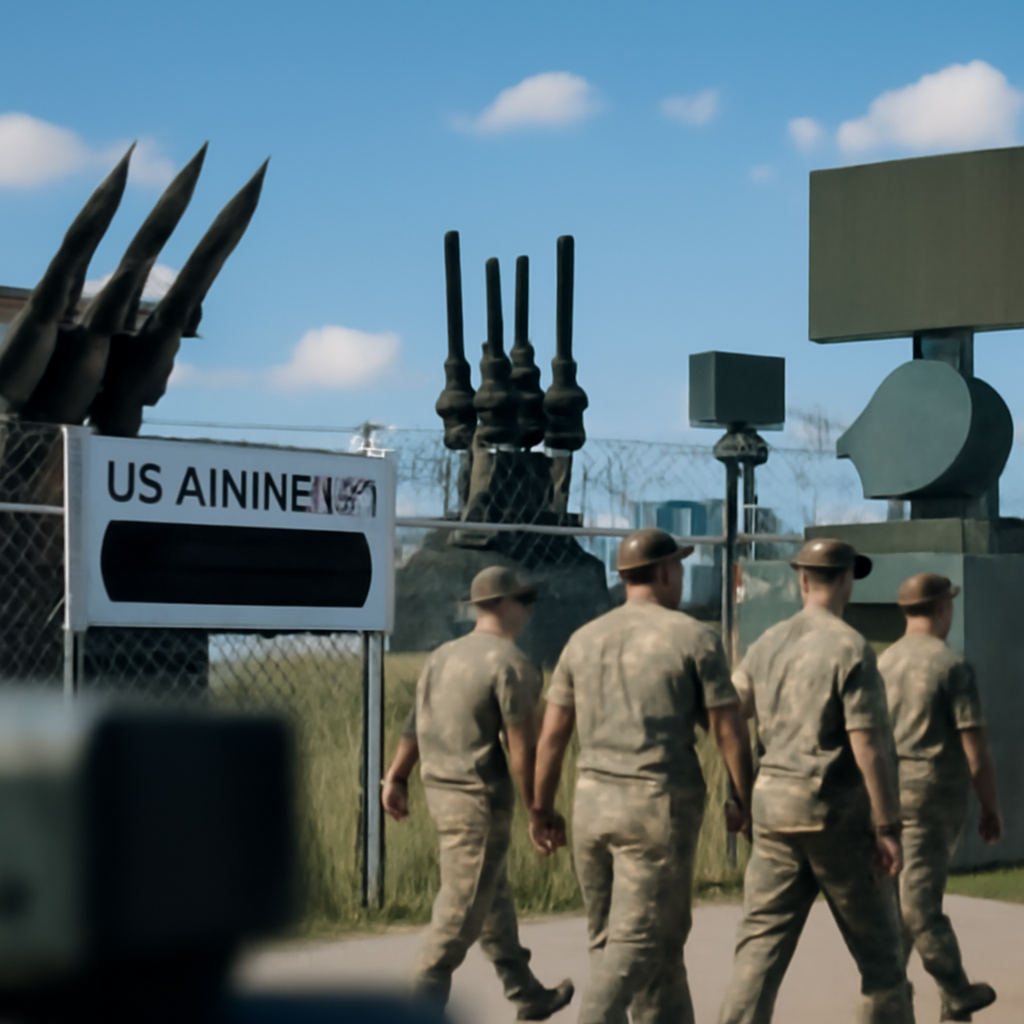
Wilsbach announced plans to “establish the point defense weapon system, bringing together kinetic and non-kinetic capabilities to secure our air bases,” but offered no technical specifics at the symposium. TWZ previously reported the Air Force has posted a Request for Information (RFI) seeking an anti-aircraft gun system intended to help defend air bases worldwide from drones and cruise missiles. That gun concept is described as part of a larger Air Force push into ground-based air defenses (GBADs), a role traditionally filled by the Army through systems such as Patriot and the Humvee-based Avenger, with THAAD and short-range systems like Centurion C-RAM and Coyote cited as complementary capabilities. The Air Force also signaled interest in directed-energy weapons such as lasers for force protection, noting lower cost-per-shot but acknowledging those systems remain works in progress.

The cyber insurance questionnaire just landed. Now what?
SOC 2, HIPAA, insurance renewals - someone has to own security strategy. Nubivance provides fractional CISO leadership without the full-time salary.
Get a security leadNew career field of point defense airmen
Recognizing that new hardware requires trained operators, Wilsbach said the service has “established a new career field of point defense airmen” that will be operational in two years. He stressed the inseparability of protecting the force and generating combat power: “We need our airmen trained, equipped, and ready to fight from the opening moments of a conflict.” When pressed about scope, Wilsbach suggested the goal is long-term placement of point defenders “at every base” but said the near-term plan is to stand up the career field, deploy it to the “critical bases that need protecting most,” and expand from there.
Acquisition changes and a possible base defense Portfolio Acquisition Executive
Air Force Secretary Troy Meink raised procurement process changes as a companion effort, telling symposium attendees the service is considering a new base defense Portfolio Acquisition Executive (PAE). The memo cited at the session notes PAEs were created earlier in the year as part of an acquisition overhaul ordered by Defense Secretary Pete Hegseth, intended to organize leadership around capability portfolios rather than discrete programs. Meink acknowledged cost and overhead challenges to creating a new PAE but said the idea remains a path the Air Force is “on” to better ensure airmen “have the kit they need to do the job.”
What this means for the Air Force, the Army, and U.S. bases
- The Air Force: will build new doctrine, a point-defense career field (operational in two years), and pursue both kinetic and non-kinetic systems — including an anti-aircraft gun RFI and directed-energy options — while de-emphasizing widespread investment in above-ground hardened shelters.
- The Army: retains primary responsibility for many GBAD roles today (Patriot, Avenger, THAAD), but the article notes TWZ has repeatedly highlighted strains on existing Patriot battalions and a longer-standing shortfall in SHORADS, meaning Army and Air Force roles will need clearer division and coordination.
- U.S. bases at home and overseas: will see prioritized protection at “critical” sites first; domestic concerns were highlighted by drone incursions such as those at Langley Air Force Base in December 2023 and later events at Barksdale and other locations. The Air Force calls this a global problem that includes the continental United States as well as forward locations.
Wilsbach’s remarks, Meink’s procurement signal, and TWZ’s reporting on an anti-aircraft gun RFI sketch a service trying to close a gap exposed by recent conflicts and domestic incursions. The near-term markers to watch inside the Air Force are concrete descriptions of the point defense weapon system, the first assignments of the new point-defense career field, and any formal decision to stand up a base defense PAE — each a tangible next step that will determine whether the service’s stated intent becomes operational capability.