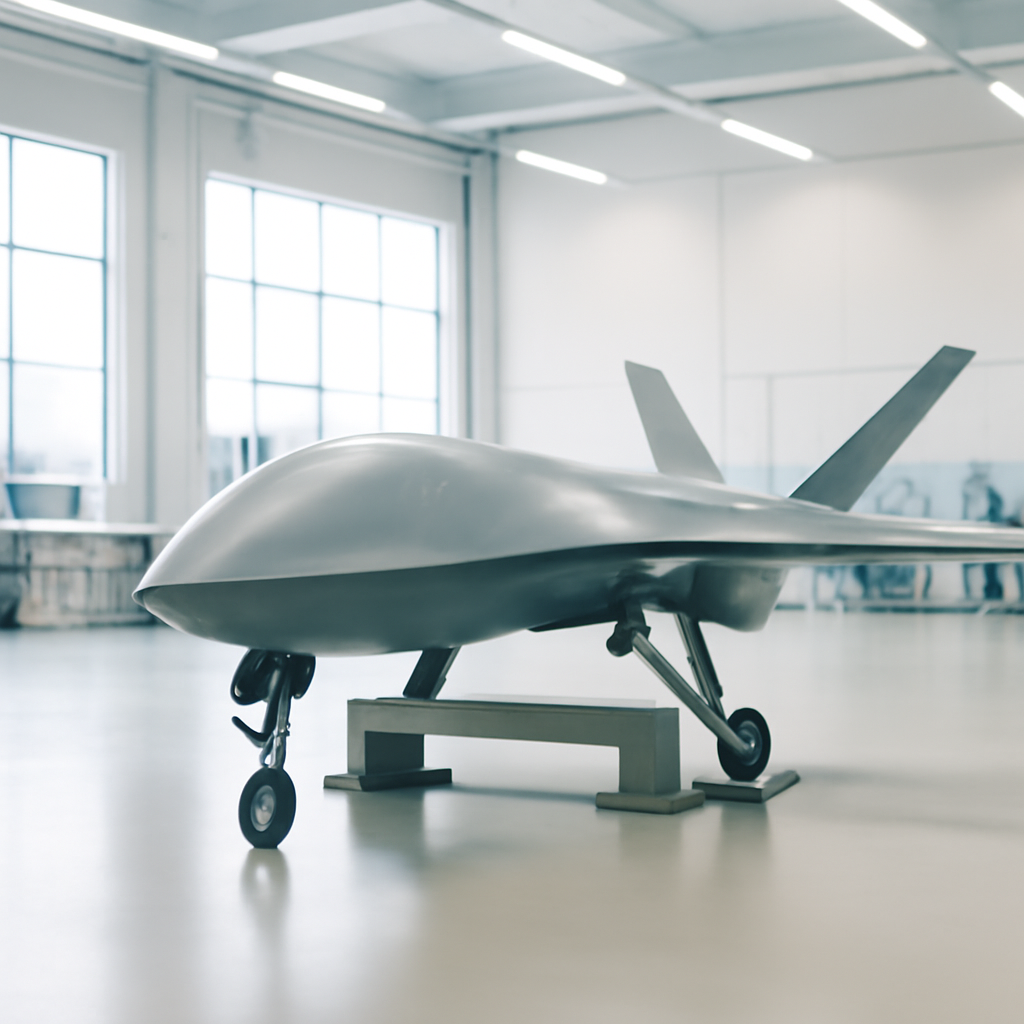
“We’ve never been a company that rested on its laurels,” said GA-ASI President David Alexander.
David Alexander frames a push to modernize large UAS
Alexander laid out a clear line of reasoning: recent combat losses demonstrate the need to evolve — not abandon — large Uncrewed Aircraft Systems (UAS). He told reporters that “we’ve also seen Pentagon leaders call it the ‘MVP’ of the campaign,” and argued that persistent, long-endurance platforms remain decisive because they deliver surveillance and precision strike at scale while keeping U.S. aircrews out of harm’s way. He warned that small systems — “quadcopters, gliders, and short-range rockets” — “can’t change physics,” and that long-range, high-payload missions demand “large, hefty airframes with significant wingspan, fuel capacity, and payload volume.”
MQ-9B SkyGuardian and SeaGuardian upgrades for contested operations
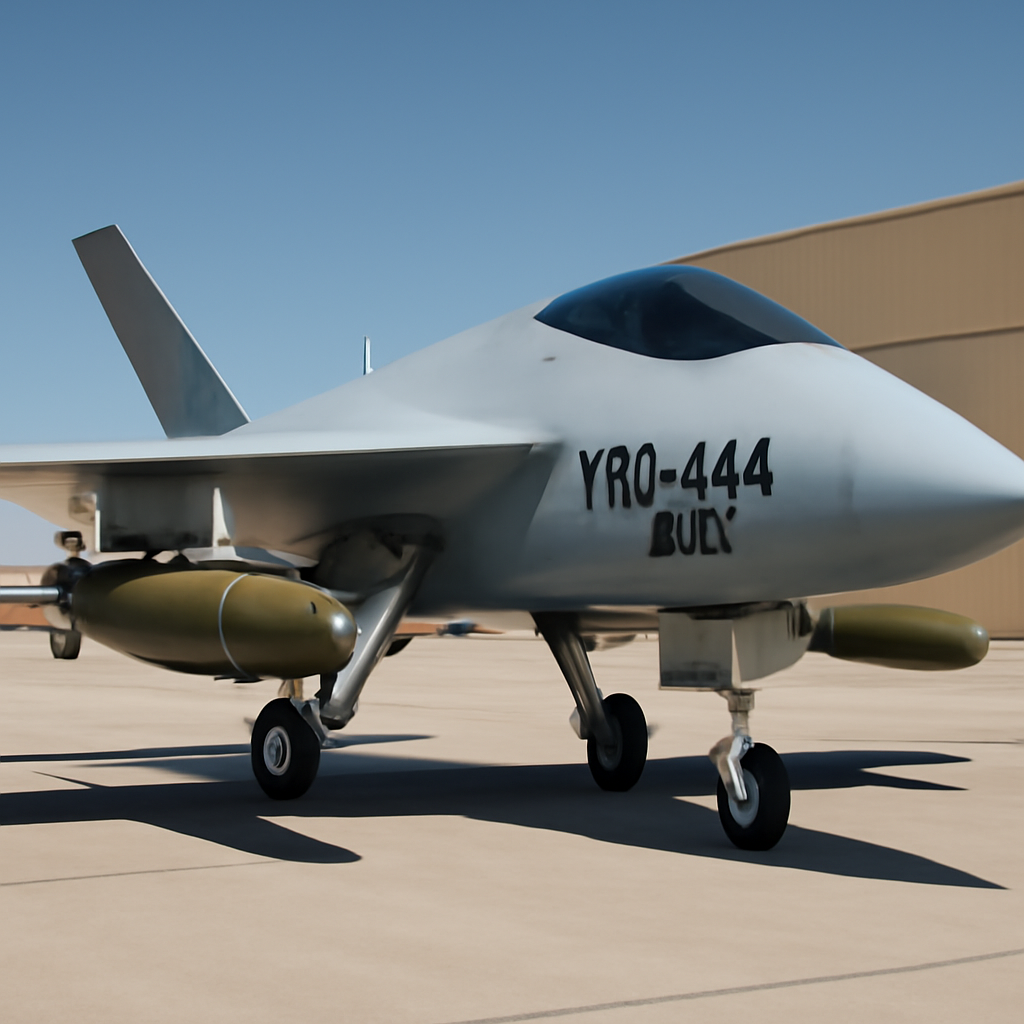
The MQ-9B SkyGuardian and SeaGuardian remain GA-ASI’s flagship multi-mission ISR platforms but have been upgraded specifically for long-range contested work. New pylons with 30‑inch lug spacing accommodate larger standoff weapons, including the Long Range Anti-Ship Missile and the Joint Strike Missile, converting the MQ-9B into a long-range strike and maritime interdiction asset. Communications resilience is improved via integration with proliferated low Earth orbit (pLEO) constellations, which GA-ASI says provide low-latency, high-bandwidth, jam-resistant links; combined with “DoD‑standard cybersecurity,” the company claims MQ-9B can sustain secure command-and-control and sensor links “from pole to pole” under electronic attack. The company positions the upgraded MQ-9B as a standoff sensor-shooter that “slots into a resilient, distributed kill chain” for Air Force and joint planners.

This site is the portfolio.
OSINTSights runs on Cloudflare Workers, D1, R2, and Vectorize, with an AI pipeline on Hetzner ARM. Nubivance designed, built, and operates it. We do the same for clients.
See what we buildMojave STOL: expeditionary takeoff and austere launch recovery
Mojave STOL is positioned to provide uncrewed combat airpower from sites that lack fixed runways. GA-ASI designed the aircraft for short takeoff and landing from “open fields, dry riverbeds, even the decks of amphibious assault ships,” enabling dispersed operations where traditional airfields are vulnerable. Mojave STOL carries integrated radar, electro-optical/infrared, and signals intelligence payloads, and the company emphasizes a human-portable, laptop-based ground control approach to deliver persistent ISR and precision targeting for dispersed forces operating from improvised launch and recovery sites.
Gambit family and the FQ-42A Collaborative Combat Aircraft
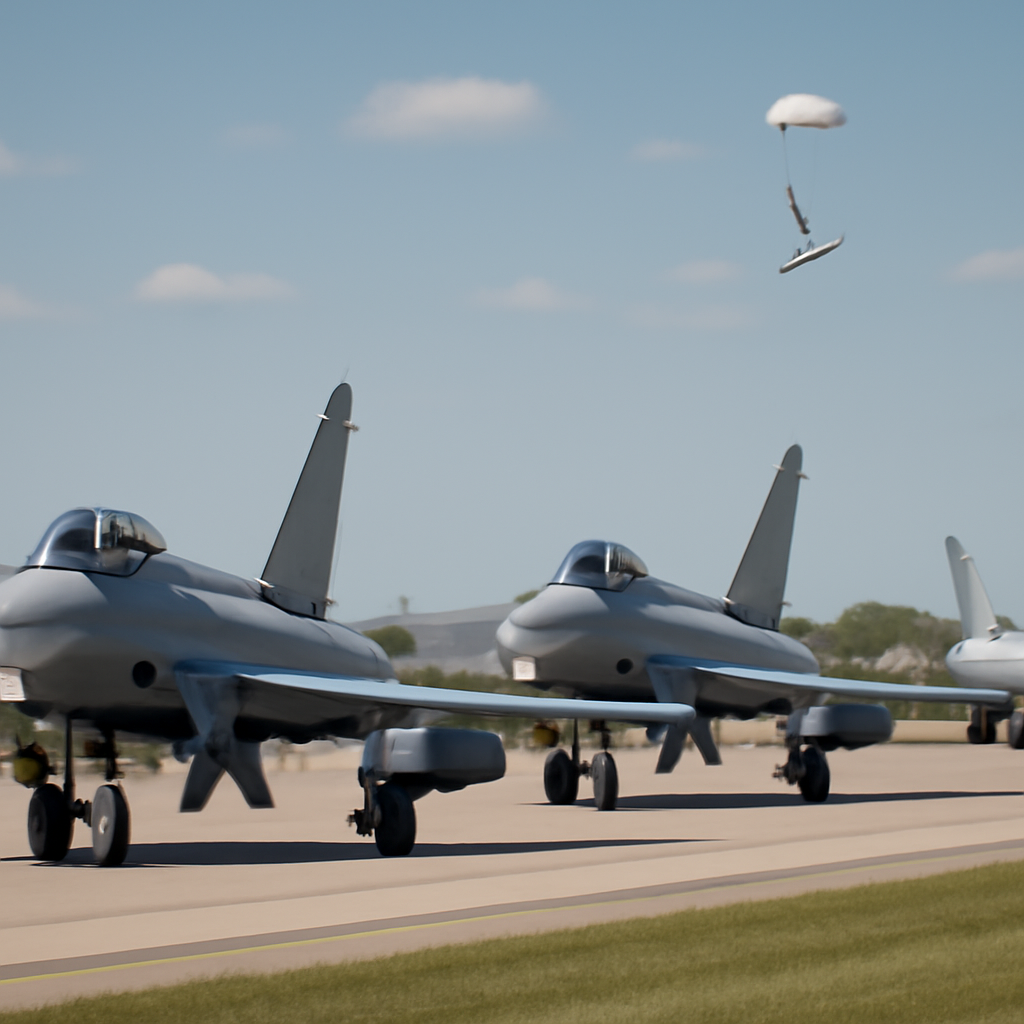
The Gambit Series is a family of autonomous jets that share a common core — roughly 70 percent of key components — a design choice GA-ASI says will lower cost and simplify production, logistics, and sustainment. The FQ-42A, a Gambit variant, was recently selected by the U.S. Air Force for its Collaborative Combat Aircraft (CCA) program and is described as that service’s first uncrewed fighter. GA-ASI describes six missionized Gambit variants: long-endurance ISR in contested airspace; air-to-air combat and escort; adversary training; stealth reconnaissance; carrier-based operations; and penetrating air‑to‑ground missions including suppression of enemy air defenses. All Gambit aircraft are designed for human-machine teaming with advanced fighters and other UAS to extend sensors, add weapons capacity, and impose dilemmas on adversary defenses.
Wildfire Massed Modular Aircraft: theater-range and attritable production
Wildfire is framed as a theater-range, high-production UAS built to deliver “affordable combat mass.” GA-ASI states Wildfire can carry two Long Range Anti-Ship Missiles or four Joint Strike Missiles and boasts a ferry range that exceeds 8,000 nautical miles, enabling deep operations in contested battlespace. The design emphasizes modularity — open interfaces and hard points for rapid payload swaps — and rapid production, leveraging “more than 5 million square feet of GA-ASI manufacturing capacity.” GA-ASI presents Wildfire, together with Gambit, as a means of producing “attritable mass”: capable systems that can be fielded in numbers and replaced without the strategic cost associated with manned losses.
What this means for the U.S. Air Force, expeditionary forces, and procurement/sustainment
- U.S. Air Force: The FQ-42A’s selection for the CCA program places an uncrewed fighter within Air Force planning and signals an emphasis on human-machine teaming, escort and penetration roles for uncrewed jets.
- Expeditionary forces and naval amphibious operations: Mojave STOL’s ability to operate from austere sites and amphibious assault ship decks is aimed at distributing combat airpower beyond fixed runways, giving dispersed commanders persistent ISR and strike options.
- Procurement and sustainment planners: The Gambit family’s 70 percent commonality and Wildfire’s mandate for rapid, high-volume production using “more than 5 million square feet” of capacity are sold as measures to reduce per-platform cost and absorb attrition through scale.
GA-ASI’s presentation is unapologetically forward-leaning: the company cites “nearly 10 million flight hours” and says it has the people, infrastructure and capacity “in place, today, to do it at scale.” Whether that combination of upgraded legacy platforms, new collaborative fighters, and attritable mass will perform against the evolving threats Alexander names — including “the threats we’re seeing in Ukraine and Iran” — is the calculus GA-ASI asks defense planners to accept as they modernize. “GA-ASI is ready to answer the call,” Alexander said.
Source: A new era of uncrewed airpower: GA-ASI’s lineup for high-tech warfare — Breaking Defense