“In this case, after contract award, the Air Force will receive less capability while paying more for the program,” the Government Accountability Office concluded about the B-52 Radar Modernization Program.
Two contracts totaling $766 million: RTX/Raytheon and Boeing
The Department of Defense announced two awards that together are worth $766 million to advance the B-52 Radar Modernization Program (RMP). One is an indefinite delivery/indefinite quantity contract with a ceiling of $603 million issued to RTX’s subsidiary Raytheon for production and sustainment of new radars. The second award is a contract with a maximum value of nearly $163 million to Boeing for bomb rack modernization kits that the DoD said will support the RMP. Both RTX and Boeing referred requests for comment to the Air Force.
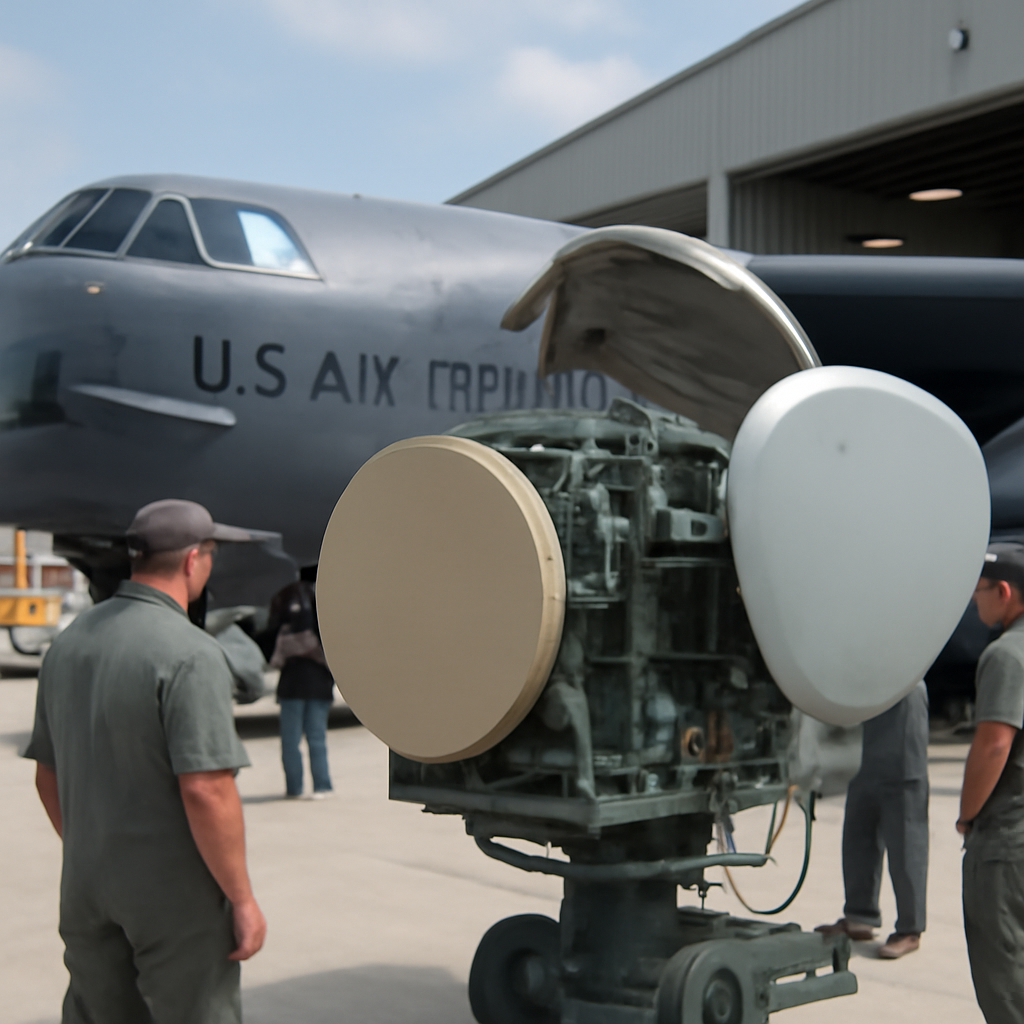
The hardware change: AN/APQ-188 replacing AN/APQ-166
Raytheon will supply the AN/APQ-188 radar to replace the B-52’s older AN/APQ-166 sensor. The radar overhaul is one of 13 separate upgrade efforts intended to keep the Eisenhower-era bomber flying through the middle of the century. Those combined modernization efforts are collectively expected to total about $21 billion.

This site is the portfolio.
OSINTSights runs on Cloudflare Workers, D1, R2, and Vectorize, with an AI pipeline on Hetzner ARM. Nubivance designed, built, and operates it. We do the same for clients.
See what we buildCost growth, schedule slips, and program adjustments
The RMP’s budget has increased roughly 30 percent to over $2.9 billion, a rise that previously triggered a Nunn-McCurdy breach. The Air Force now anticipates RMP will be operational in the third quarter of fiscal 2030 — about three-and-a-half years later than originally expected. To accelerate fielding, the Air Force has removed unspecified performance requirements while also implementing some cost control measures, a combination the GAO noted results in reduced capability even as program costs have increased. The GAO also reported that the Air Force planned to buy radars directly from RTX to help smooth depot work.
Flight-test loss and its program impact
The RMP suffered a tragic setback in June when one of two flight test aircraft crashed shortly after takeoff from Edwards Air Force Base in California, killing all eight crew on board. Results from the mishap investigation have not yet been released. A second aircraft is expected to be modified this year to support flight testing for the radar upgrade. Col. Spencer Turner, the B-52 system program manager, told reporters on July 27 that officials are prioritizing the mishap investigation and will “look at our schedule and adjust as necessary,” leaving open how the crash will affect the overall timeline.
What this means for the Air Force, RTX/Raytheon, and Boeing
- The Air Force: will proceed with procurement steps that include direct buys from RTX for depot smoothing, has made tradeoffs by removing unspecified performance requirements to speed delivery, and is prioritizing the mishap investigation before committing to schedule changes.
- RTX/Raytheon: will carry primary responsibility for production and sustainment of the new AN/APQ-188 radar under a $603 million IDIQ ceiling, and stands to be the direct supplier the Air Force referenced for depot work.
- Boeing: as the B-52 prime contractor, will supply bomb rack modernization kits under a contract worth nearly $163 million and remains the lead on broader B-52 modernization efforts that have experienced cost and schedule growth.
The RMP sits at the intersection of technical risk, budget pressure and operational urgency: a more capable sensor is being pursued even as costs climb and a flight-test fatality forces a reassessment of timelines. The program’s next definable milestones are the mishap investigation results and the modification and testing of the second flight-test aircraft — outcomes the Air Force itself has identified as central before committing to any revised schedule.
https://breakingdefense.com/2026/08/air-force-awards-766-million-for-b-52-radar-modernization/