The SPAC merger: Bleichroeder Acquisition Corp., $2.3 billion valuation
Ursa Major announced a plan to go public next year in a transaction that values the Colorado-based defense startup at $2.3 billion. The deal is structured as a merger with Bleichroeder Acquisition Corp., a special purpose acquisition company backed by Inflection Point Asset Management. The companies said the transaction is expected to close in the first quarter of 2027.
Company focus: hypersonics and solid rocket motors
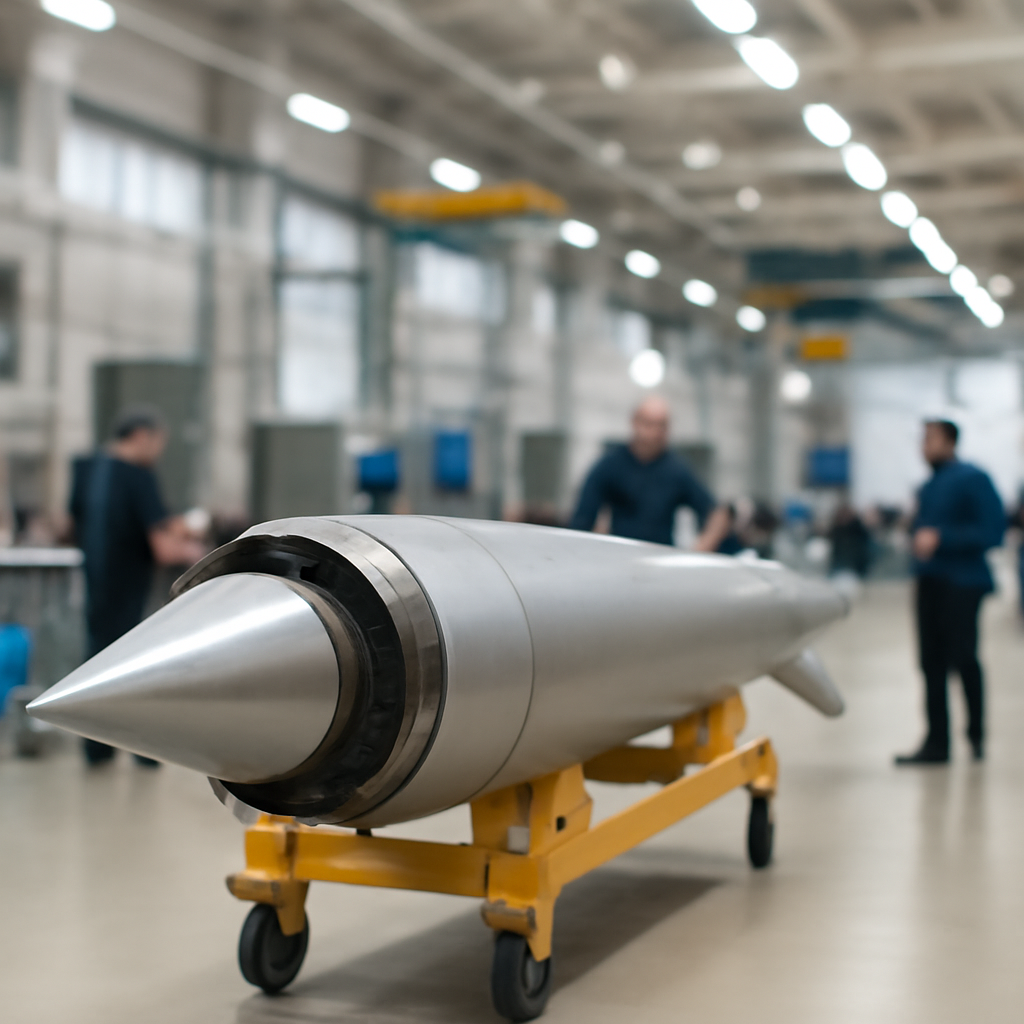
Founded in 2015, Ursa Major bills itself as a developer of propulsion systems, with particular attention to hypersonic systems and solid rocket motors. The firm says it has invested across propulsion, manufacturing, testing, qualification and flight — the areas CEO Chris Spagnoletti highlighted in explaining why a public listing would support a step toward production capacity for its customers.

Audit-ready is a season. It shouldn't be.
Evidence in spreadsheets, controls drifting between audits, frameworks multiplying on flat headcount. Nubivance runs continuous compliance on Rapid7 Cyber GRC - SOC 2, HIPAA, ISO 27001, PCI, CMMC.
End the scrambleCapital, staffing and government investment
Ursa Major has raised more than $380 million in private capital since its founding, and the company also reports investment from the Defense Department to support development of solid rocket motors, space systems and hypersonics. The company currently employs more than 360 people across six facilities, according to the news release announcing the deal.
Recent program funding and flight activity: Navy award and AFRL engine flight
In the weeks before the SPAC announcement, Ursa Major reported two program-level developments. Last month the company received a $10 million award from the US Navy to advance its MK 104 solid rocket motor through critical design review and static fire. Separately, Ursa Major said it conducted the first flight of its Draper liquid rocket engine this year as part of the Air Force Research Laboratory’s Affordable Rapid Missile Demonstrator effort.
HAVOC hypersonic system and per-unit cost claim
In February, Ursa Major unveiled a hypersonic missile system it calls HAVOC. The company told Breaking Defense at the time that HAVOC is intended to be mostly manufactured in-house and could be built for around $3 million per unit, a figure CEO Spagnoletti provided during that briefing.
What this means for the US Navy, the Air Force Research Laboratory, and the Defense Department
- US Navy: The $10 million award to advance the MK 104 through critical design review and static fire gives the Navy a concrete near-term activity tied to Ursa Major’s solid rocket motor work; Navy program managers will have the MK 104’s design and test milestones to track.
- Air Force Research Laboratory (AFRL): AFRL’s Affordable Rapid Missile Demonstrator is the program context for Ursa Major’s first flight of the Draper liquid rocket engine, an explicit sign the laboratory has placed at least experimental flight activity with the company’s propulsion hardware.
- Defense Department: The Pentagon’s prior investment in Ursa Major’s technology development — across solid rocket motors, space systems and hypersonics — aligns with the company’s statement that a public offering will support scaling production capacity for customers that include defense entities.
Ursa Major’s leadership frames the transaction as a bridge from years of engineering, testing and private financing to a new phase focused on production capacity and public transparency. The near-term corporate timeline is clear: a merger with Bleichroeder Acquisition Corp. backed by Inflection Point Asset Management and an expected close in the first quarter of 2027. What remains to be seen in the factual record provided is whether the public listing and the company’s asserted production plans will accelerate deliveries for the MK 104, support broader HAVOC manufacture at the cited unit cost, or change the pace of future DoD programs tied to Ursa Major’s propulsion work.