"Ukraine is not ‘dragging’ anyone into the war or ‘transferring’ the war anywhere," Ukrainian Foreign Minister Andrii Sybiha wrote on his Telegram channel, pushing back against claims that Kyiv is expanding the battlefield.
NATO assessment of Russian naval movements
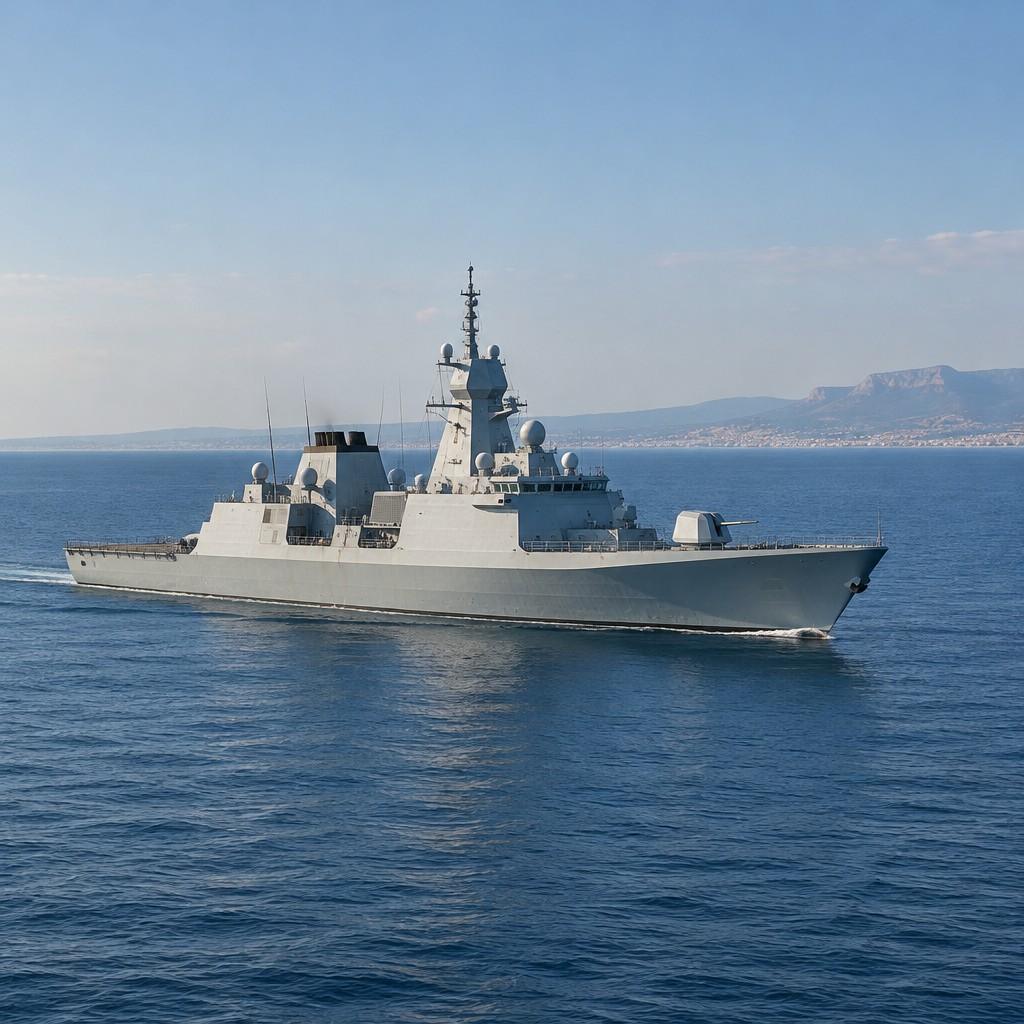
A NATO official told Breaking Defense the alliance is “not expecting a surge or redeployment of further Russian assets in the Mediterranean” after a Ukrainian unmanned-vessel strike near Libya. The official, who spoke on condition of anonymity, said that the Russian surface fleet is “having serious war-generation issues,” and that the alliance routinely evaluates its force posture and readiness in the Mediterranean.
The same NATO source provided force-ratio figures: on any given day the average “ratio of NATO deployed assets to those of Russia is 3:1,” and in the Mediterranean the imbalance is even larger, with allied deployed assets outnumbering Russia’s by roughly 5–6 to 1. Still, the official said NATO’s primary concern is not an immediate Russian naval buildup but the potential for the conflict to spill into other areas and to threaten commercial shipping, noting that Russia has already targeted “innocent merchant shipping” in the Black Sea.
Ukrainian strike and the SBU account
The Security Service of Ukraine (SBU) said Kyiv used unmanned vessels to strike two Russian ships near the Libyan port of Benghazi, sinking a warship and damaging a cargo vessel. According to the SBU, seven naval drones were “delivered to a designated location and launched into the water from a ‘mothership’ near the target.” The agency did not identify the vessel or specify where the drones were launched, leaving open questions about whether the operation originated from Libyan territory.
The Associated Press reported that Libyan officials briefed on the attack said the Russian corvette was struck at the Benghazi Naval Base and that at least four drones were intercepted while two hit the vessel. Those Libyan officials also told the AP earlier this year that Ukrainian forces — mostly drone specialists — had operated from facilities in western Libya, identifying Misrata’s air base as a main site along with facilities in Tripoli and Zawiya.

Audit-ready is a season. It shouldn't be.
Evidence in spreadsheets, controls drifting between audits, frameworks multiplying on flat headcount. Nubivance runs continuous compliance on Rapid7 Cyber GRC - SOC 2, HIPAA, ISO 27001, PCI, CMMC.
End the scrambleLibya’s divided authorities and regional risks
Deep political divisions in Libya frame the immediate regional risk. The western part of the country is controlled by the UN-recognized Government of National Unity (GNU), formed in 2021 and led by Prime Minister Abdul Hamid Dbeibeh. Eastern Libya is controlled by rival authorities aligned with military commander Khalifa Haftar and the Libyan National Army (LNA), and eastern authorities have allowed Russian naval vessels to use the port of Tobruk as a resupply and refueling hub.
Arturo Varvelli, head of the Rome office and senior policy fellow at the European Council on Foreign Relations, told Breaking Defense that the United Nations’ mission called for an independent investigation and warned against “the risk of dragging Libya into foreign conflicts.” Varvelli said the strike could have “serious ripple effects for the region” and possibly draw the war closer to NATO’s southern flank — a particular strategic danger given Libya’s proximity to Italy. He judged a direct kinetic response against western Libya unlikely in the short term and saw an asymmetric response as more probable.
How NATO, Italy, and Misrata’s foreign forces are affected
- NATO: The alliance will continue to evaluate force posture and readiness in the Mediterranean, watching for spillover that could threaten commercial shipping and the alliance’s southern flank, even as it judges a large Russian naval redeployment unlikely.
- Italy: Rome maintains a military presence in western Libya through the Bilateral Mission of Assistance and Support in Libya (MIASIT), active since 2018. Officials and analysts cited in the reporting warned that any retaliatory move involving Misrata could risk striking Italian personnel present in the area.
- Misrata’s foreign forces (Turkey, Italy, US AFRICOM, British intelligence center): Varvelli and other analysts flagged the presence of Turkish and Italian forces, US Africa Command elements, and a British intelligence center at Misrata’s Air Force Academy as a complicating factor — an attack on the facility would risk hitting foreign personnel and could raise the political and military costs of a direct response in western Libya.
Signals from Moscow, Kyiv and Libyan authorities
Russia’s ambassador to Libya, Aydar Aganin, was quoted by Russian state media RT as saying the attack “will not go unanswered,” a warning that Varvelli cited in assessing Moscow’s options. Varvelli and others stressed the likelihood that any Russian or allied response would be asymmetric rather than a direct kinetic strike on western Libya, given the high costs for both sides.
On the Libyan side, the GNU’s Ministry of Foreign Affairs and International Cooperation stated that Libya’s territory “would not be used as a staging ground for attacks,” and described the Benghazi strike as highlighting “the danger of hosting foreign forces that operate outside the authority of the state.” Kyiv’s leadership, for its part, has publicly rejected the notion that Ukraine intends to extend the conflict beyond its borders.
The story leaves concrete operational questions unresolved in the near term: whether the drones were launched from Libyan territory, how Moscow will translate the ambassador’s warning into policy, and whether an independent investigation called for by the UN mission will establish new facts on the ground. For now, NATO’s public posture is to guard against spillover while judging a major Russian naval redeployment in the Mediterranean unlikely.