Ukrainian Drone Swarm Cripples Russian Strategic Bomber Bases in a Bold Tactical Shift
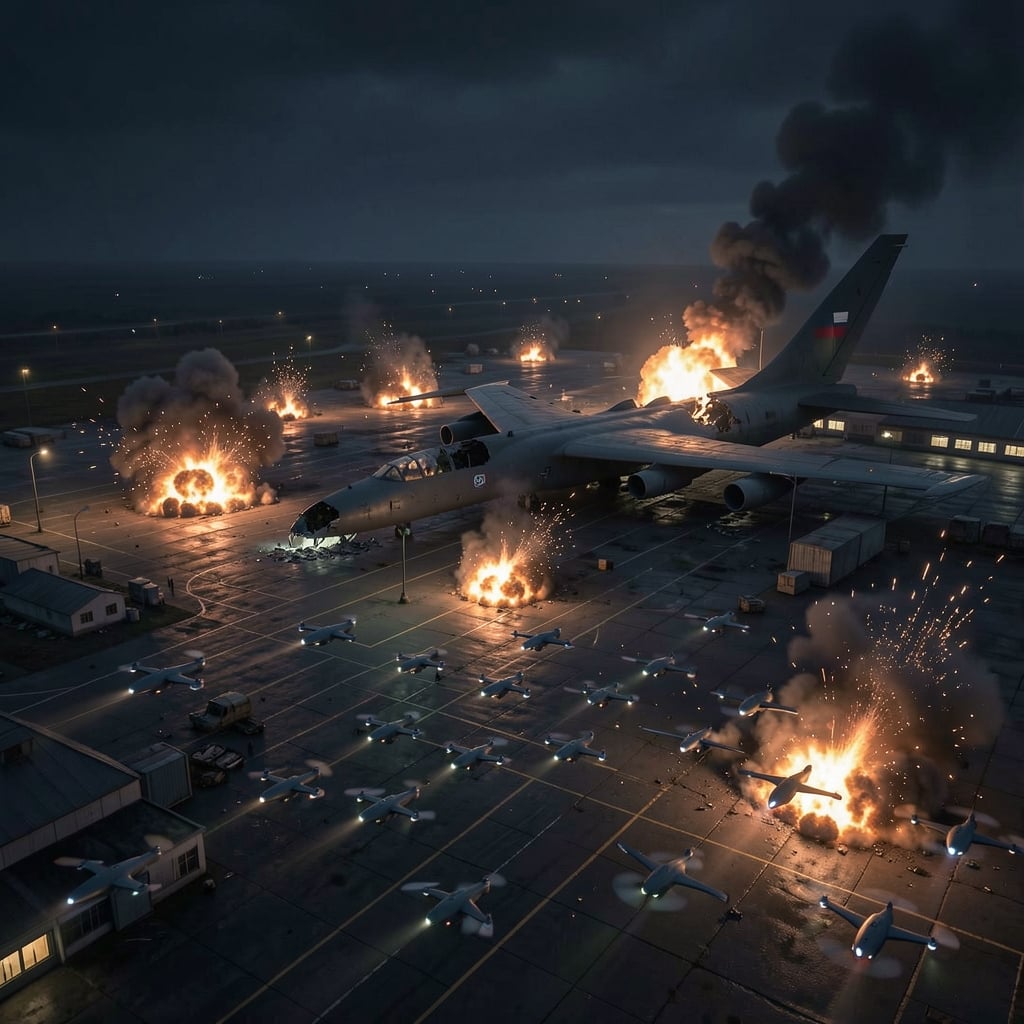
On June 1, Ukrainian forces executed what is being called their largest drone operation to date—a coordinated FPV (first-person view) drone swarm attack that struck deep into Russian territory. The targets were two key airbases, Olenya and Belaya, known to house strategic bombers capable of launching long-range missions. Ukrainian defense officials confirmed the operation, marking it as a significant step in the evolving nature of modern warfare in the region.
The attack is not merely a demonstration of Ukraine’s growing technical prowess but also an illustration of evolving military doctrines. Over recent years, drone technology has rapidly transitioned from reconnaissance to offensive systems. Ukrainian engineers and tactical experts have refined FPV drone techniques—essentially operating drones manually as they navigate complex flight paths—to enable swarming tactics that overwhelm traditional air defenses. This method, which relies on a large number of inexpensive, agile drones, has come to symbolize asymmetric warfare where unconventional strategies challenge entrenched military might.
Historically, the Russian bomber bases at Olenya and Belaya have been a cornerstone of long-range striking power. Russian military doctrine has long prioritized strategic bombers as a deterrence against adversarial incursions or retaliatory strikes. The airbases are integral not only for power projection but also for maintaining the credibility of Russia’s nuclear and conventional long-range capabilities. By targeting these sites, Ukraine aims to erode the operational confidence behind these assets, signaling that no part of the adversary’s military infrastructure is immune from modern drone warfare.
The broader implications of the assault are multifaceted. On one hand, it has reportedly disrupted the deployment of bombers that have been used in prior long-range operations against Ukrainian cities. On the other, it foreshadows a shift toward decentralized, technology-driven methods of conflict engagement. Analysts have noted that this precise use of drone swarms challenges traditional military anticipations—if a relatively low-cost, agile, and remotely piloted system can deliver such a crippling blow, then future engagements may increasingly rely on decentralized technological solutions. Organizations such as the International Institute for Strategic Studies have observed similar trends in conflicts where conventional advantages are offset by nimble, technology-driven tactics.
Key operational details emerging from Ukrainian sources include:
- Strategic Intent: The operation was designed to neutralize assets that fuel long-range aggression, potentially forcing a tactical recalibration on the Russian side.
- Technological Innovation: The effective use of FPV drone swarms underscores Ukraine’s accelerating adoption and adaptation of unmanned systems, a trend that is reshaping modern military confrontations.
- Operational Impact: By directly targeting bomber bases, the attack has not only physical ramifications—damaged infrastructure and disrupted operations—but also strategic ones, potentially altering the balance of power in the theater.
In the immediate aftermath, the Russian response has been measured, with state-run media offering minimal comment and military spokespeople reiterating longstanding deterrence claims. While no high-level official statements have emerged, military analysts from the RAND Corporation and other reputable sources suggest that this operation could mark a turning point. The evolution of drone swarming tactics may well be the precursor to more such operations, forcing policymakers and strategists to rethink the future dynamics of warfare, especially in hybrid and asymmetric combats.
Looking ahead, international observers and military experts alike are watching closely to see whether this daring maneuver will spur a broader adoption of drone-based tactics in contested zones globally. The innovation displayed in this operation raises questions about the future of airbase security and the evolving role of unmanned systems in deterrence strategies. It also emphasizes a recurring theme in modern conflicts: the pace of technological innovation often outstrips traditional military doctrines, leaving adversaries scrambling to adapt in real time.
In a broader sense, this recent attack encapsulates the relentless march of modern warfare into digital and technological domains—where manned aircraft, fortified bases, and longstanding military hierarchies can no longer assume invulnerability. As the conflict continues to evolve, one is left to ponder: In a world where rapid innovation often defines the tempo of battle, can traditional notions of power and deterrence truly endure?