"It disrupted every attempted breakthrough and prevented enemy infiltration," a 3rd Army Corps spokesperson said of a single remote-controlled vehicle that held a contested junction for 45 days.
How a Droid TW 12.7 held a key intersection for 45 days
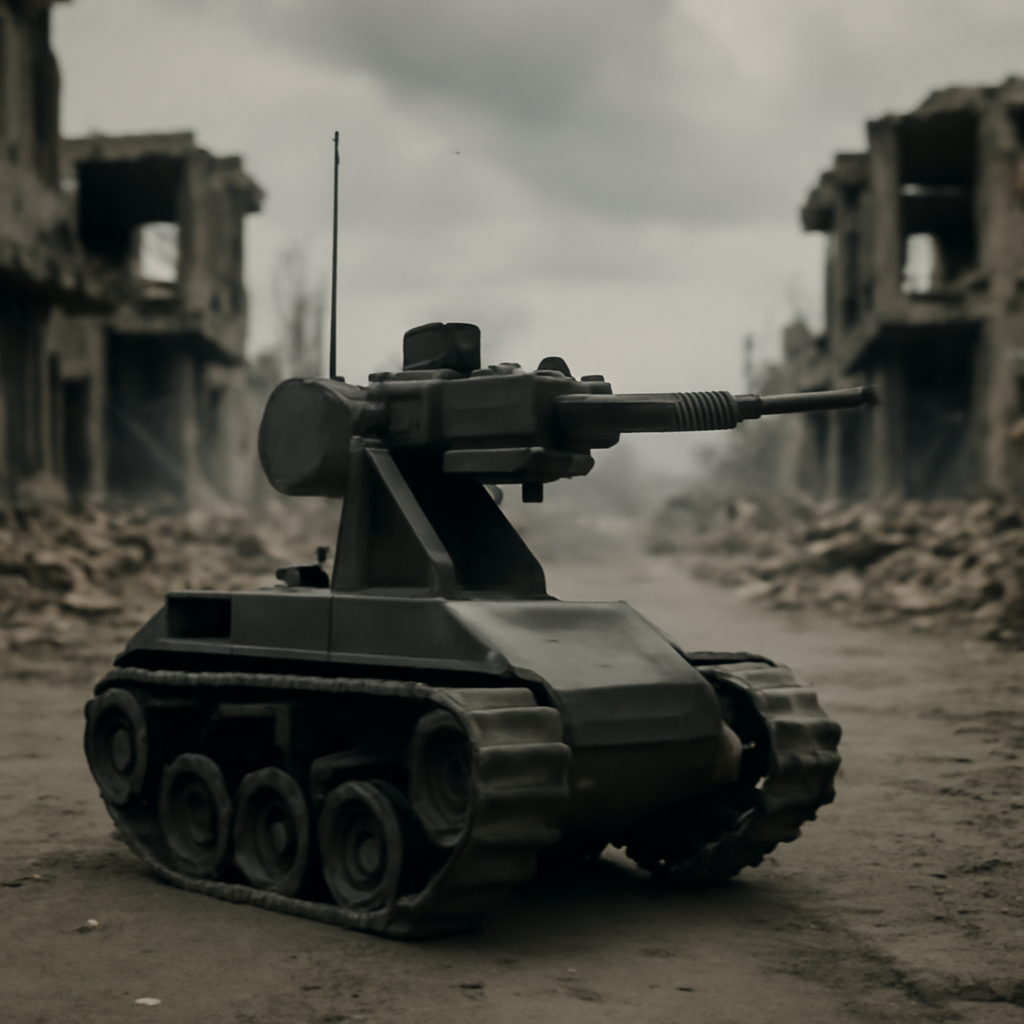
Last summer a single Droid TW 12.7 — a Ukrainian remote-controlled ground combat vehicle armed with a machine gun — defended what a 3rd Army Corps spokesperson described as a "key intersection under constant adversary attack" for 45 days. The operator was positioned roughly 10 kilometers away. According to the spokesperson, the robot and remote crew "disrupted every attempted breakthrough and prevented enemy infiltration," and the unit reported no loss of Ukrainian life in that period. The operation was called "Ukraine’s first fully robotic defensive operation of a position," and, the reporting notes, "It likely won’t be the last."
How air and ground systems worked together in the operation
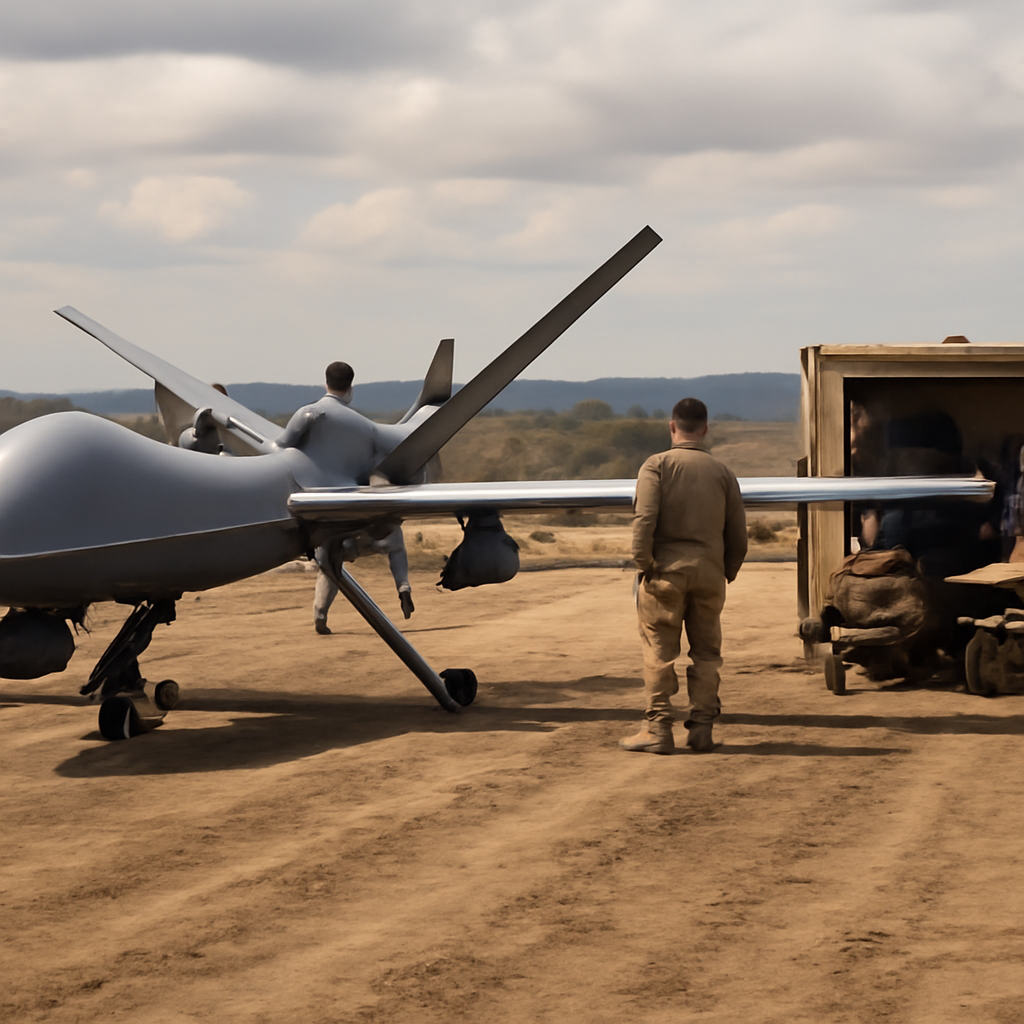
Ukrainian forces combined the ground robot with unmanned aerial systems: "Drones in the air provided continuous surveillance," officials said, detecting enemy movement and transmitting information in real time. When a threat was confirmed, the operator received a signal and engaged the target with the Droid’s machine gun. That pairing—persistent aerial sensing feeding a remote weapon—formed the immediate sensor-to-shooter loop that sustained the 45-day defense.

Audit-ready is a season. It shouldn't be.
Evidence in spreadsheets, controls drifting between audits, frameworks multiplying on flat headcount. Nubivance runs continuous compliance on Rapid7 Cyber GRC - SOC 2, HIPAA, ISO 27001, PCI, CMMC.
End the scrambleUGVs already doing logistics and combat-adjacent jobs
Defense analyst Olena Kryzhanivska reports that Ukrainian ground robots now perform 80 percent of logistics tasks on the front lines, a portfolio that ranges "from carrying explosives into enemy positions to evacuating the wounded." The Ukrainian Ministry of Defense hopes to bring that share up to 100 percent. Kryzhanivska also noted a market and operational profile: unmanned ground vehicles can cost between $10,000 to $30,000, and there is "an expectation that we might see the first encounter between Ukrainian ground drones and Russian ground drones."
Technical constraints: batteries, ammunition, and the need for specialized training
Ukrainian officials highlighted practical barriers to scaling robotic frontline operations. "Battery charge is a major factor. There is never enough of it," one official said, adding that the main solutions under consideration are installing higher-capacity batteries or equipping each platform with two to four batteries. The same shortfall applies to ammunition: "There is never enough." Another constraint is human capital. An official warned that "planning and executing an operation with an [unmanned ground vehicle or UGV] is significantly more difficult than, for example, operating a UAV," because of a higher number of obstacles and the need for deeper knowledge of terrain and navigation. The official cautioned that it is a misconception "to think that any UAV pilot can simply sit down and successfully carry out an operation with a UGV."
Human control and limits on lethal autonomy
Ukraine has deliberately limited the decision authority of lethal robots where civilians remain present. Olena Kryzhanivska said that giving ground robots autonomous ability "to make decisions, to engage, to strike and kill, that would be a very dangerous development, and Ukrainians are against that." Officials stressed that "Everything that happens in war must be controlled and coordinated by a soldier. The missions performed by our systems carry a high level of responsibility." In short, current practice keeps humans in the loop for lethal engagements even as unmanned systems perform lengthy, hazardous tasks.
Predictive intelligence and JEPA: American research that could change operations
Beyond present capabilities, the concept of "predictive intelligence" could let ground drones make more anticipatory decisions within a network of sensors and intelligence nodes— for example, predicting where or how enemy forces might move so platforms can be positioned in advance. Lt. Col. Eric Sturzinger, who leads research and engagements at the Army’s Artificial Intelligence Integration Center, is exploring the Tactical Joint Embedding Predictive Architecture, or JEPA, as a framework to enable drones to predict how adversaries might plan an attack and potentially make ground robot operations more effective.
What this means for the Ukrainian Ministry of Defense, the Army AI Integration Center, and vehicle makers
- Ukrainian Ministry of Defense: The ministry is already pushing to expand UGV logistics to 100 percent of such tasks, reflecting an intent to move more functions from human to robotic platforms where feasible.
- Army’s Artificial Intelligence Integration Center: Lt. Col. Eric Sturzinger’s JEPA work points to an interest in shifting from reactive remote control toward predictive, networked autonomy that could change how ground robots are employed.
- Vehicle manufacturers and program planners: With platform prices reported at $10,000–$30,000, producers face demand for solutions that balance endurance (battery capacity and multiple battery packs), payload (ammunition or mission equipment), and user interfaces that reduce the specialized training burden.
The Droid TW 12.7’s 45-day defense provides a compact case study in both promise and limits: unmanned platforms can sustain high-risk positions and save lives, but batteries, ammo, operator training, and a clear policy line on lethal autonomy constrain how quickly they can replace human soldiers. The next phase—integrating predictive architectures like JEPA and solving endurance and training bottlenecks—will determine whether that 45-day precedent becomes routine or remains an exceptional improvised success.