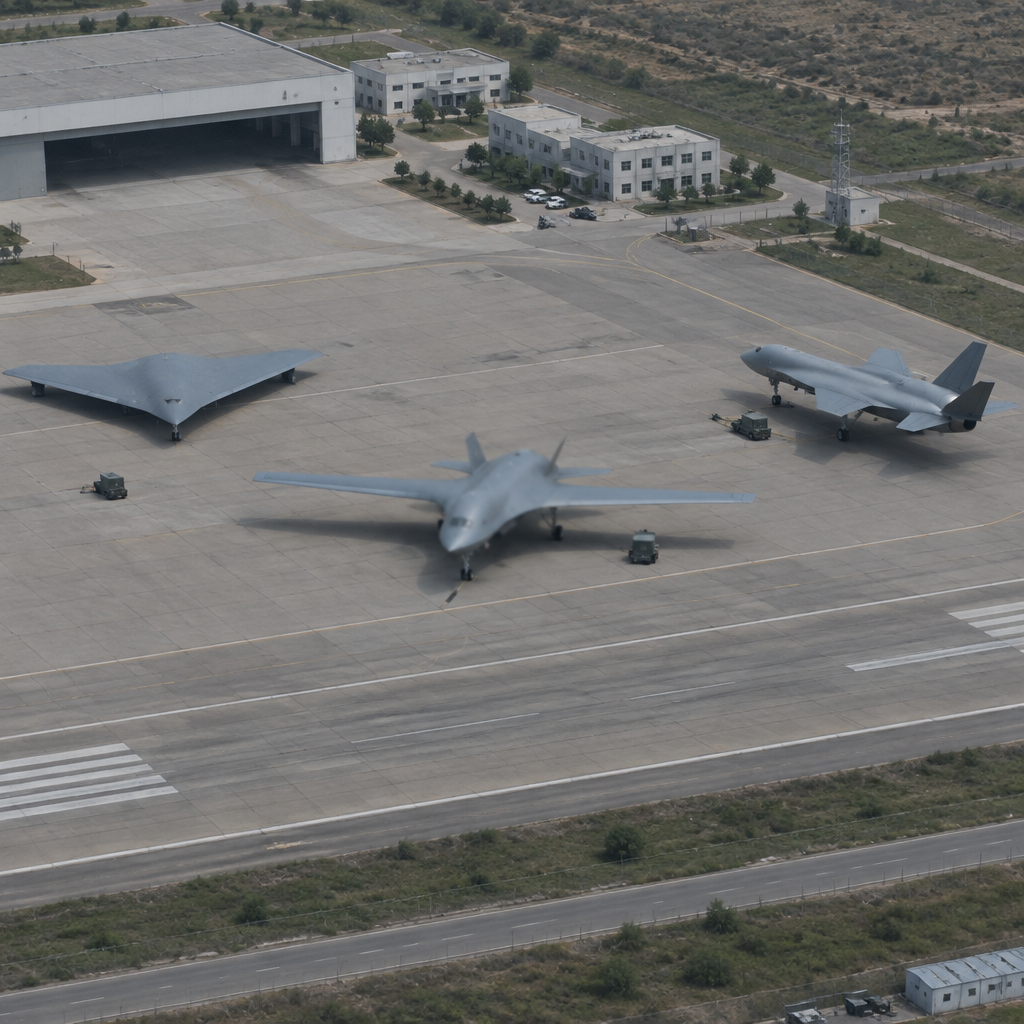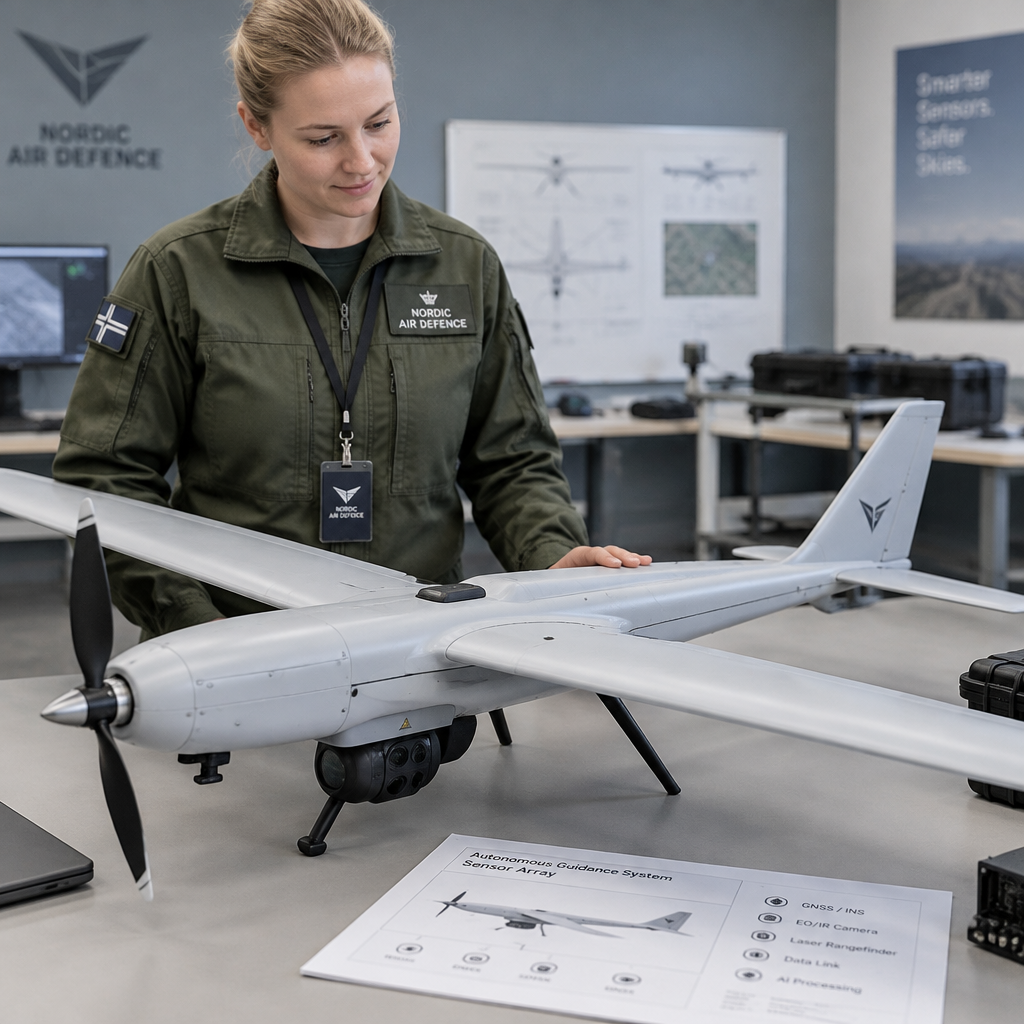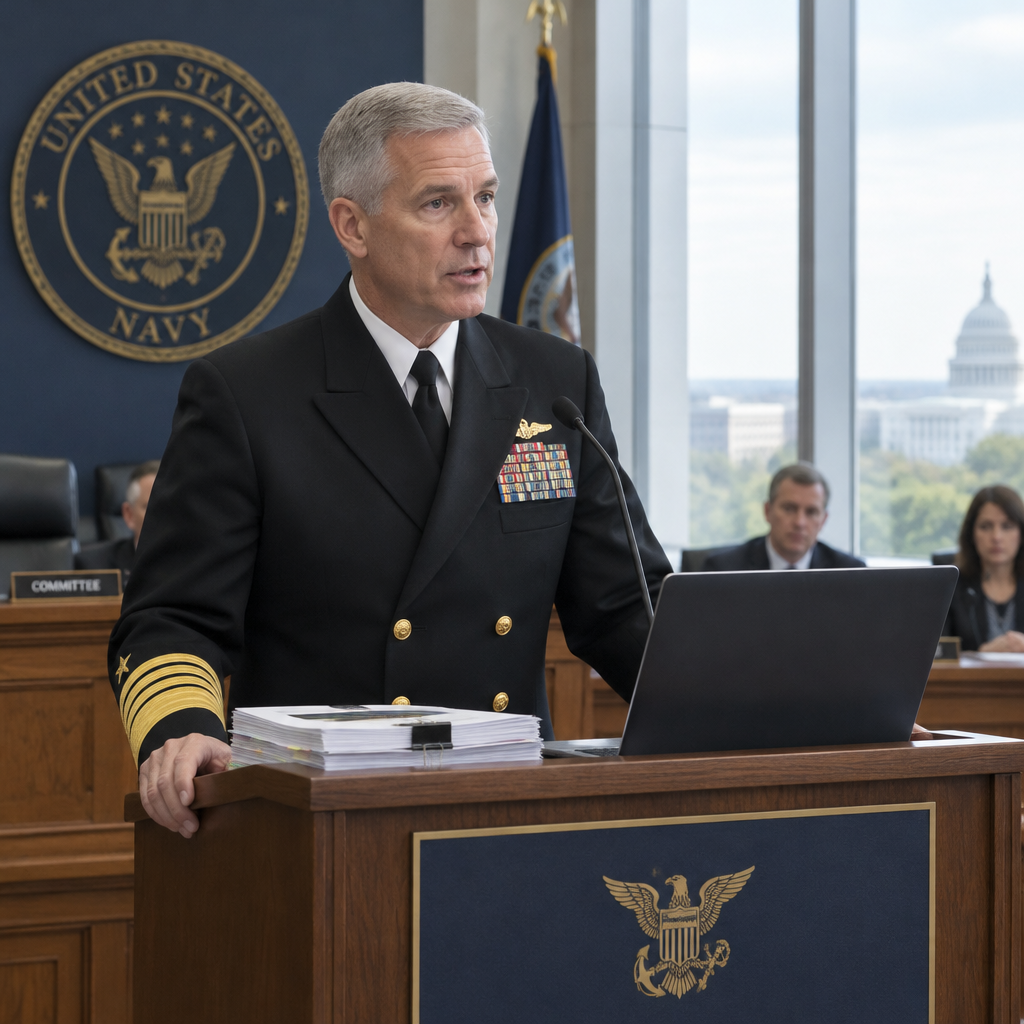
"CCA aircraft are an element of the future air fleet, the future combat capability of our aircraft carriers," William Toti told the Senate Armed Services Committee. The senior official currently performing the duties of the Under Secretary of the Navy used that line to frame a simple operational choice: the Navy does not have to wait for its next-generation F/A-XX fighter to begin integrating Collaborative Combat Aircraft (CCA) drones into carrier air wings.
William Toti on CCAs, F-35C, and F/A-XX
At a Senate Armed Services Committee hearing where senators are considering his nomination to formally become the Under Secretary of the Navy, Toti said the Navy can pair CCAs with existing platforms, specifically the F-35C Joint Strike Fighter. Asked by Senator Ted Budd whether CCA integration needs to wait for F/A-XX, Toti replied, "No, Senator, I think that they’re independent. I think we could probably start integrating systems before F/A-XX delivers." He added that "F/A-XX is a critical capability" that will be built into carrier air wings eventually, but that CCAs "will certainly be probably built into it from [the] ground up" while also being usable with the F-35.
Navy hires and the control-architecture work
In September 2025 the Navy contracted Anduril, Boeing, General Atomics, and Northrop Grumman to develop conceptual designs for carrier-based CCAs. Lockheed Martin has been working separately on the underlying control architectures that would let crewed aircraft direct unmanned systems. Toti noted a formal agreement across the Navy, Air Force, and Marine Corps to use the same or compatible control architectures so crewed platforms can direct each other's drones in joint operations.

The cyber insurance questionnaire just landed. Now what?
SOC 2, HIPAA, insurance renewals - someone has to own security strategy. Nubivance provides fractional CISO leadership without the full-time salary.
Get a security leadExisting drones and testing: MQ-25, X-47B, and Shield AI’s X-BAT
The Navy's first fixed-wing carrier-based drone planned for operational fielding is the MQ-25 Stingray, an uncrewed aerial refueling platform. The service previously flight-tested two X-47B UCAV demonstrators under the UCLASS program in the mid-2010s, including carrier operations and aerial refueling demonstrations, before shifting course to pursue the MQ-25. Separately, the Navy is investing in Shield AI’s X-BAT stealth, jet-powered drone through the Runway Independent Maritime Expeditionary Strike (RIMES) program; that effort is distinct from the CCA work and is intended to field a larger, more capable system with tail‑sitting vertical takeoff and landing.
Timeline, F/A-XX award, and industrial-base constraints
Toti said CCAs could begin arriving on carriers before the F/A-XX, which the service hopes to see flying for carrier decks in the early 2030s. Boeing won the F/A-XX competition in September (beating Northrop Grumman), and the company is also the prime contractor for the Air Force’s F-47 sixth-generation fighter. The source notes Boeing has been expanding production facilities while also struggling with delays and cost overruns on several programs, including the F-15EX Eagle II, T-7A Red Hawk, and KC-46 tanker. Acting Secretary of the Navy Hung Cao said at his confirmation hearing that "we literally just awarded the contract a little over a month ago" on F/A-XX, and that the Navy is doing "preliminary decisions" to assess costs for low-rate initial production to accelerate the program. The article also reports continuing concerns about available industrial base capacity that could affect program schedules.
What this means for the Navy, defense contractors, and Congress
- Navy operational leaders and air wing commanders: Expect a phased path to adding CCAs—initially pairing drones with existing F-35Cs and legacy platforms while F/A-XX is developed, and retaining interoperability through shared control architectures across services.
- Defense contractors (Anduril, Boeing, General Atomics, Northrop Grumman, Lockheed Martin, Shield AI): They face competing technical tracks—conceptual CCA designs, control-architecture work, and separate projects like RIMES/X-BAT—while program timing may be affected by industrial-capacity limits and recent performance issues cited for some Boeing programs.
- Congress and program managers: Having previously intervened to keep F/A-XX moving, congressional oversight will likely stay active as the Navy balances near-term CCA integration with longer-term F/A-XX development and procurement risks.
Toti’s testimony makes one point explicit: the Navy aims to field new unmanned capabilities as force multipliers for carrier air wings now rather than waiting for a next-generation manned fighter. The record in the hearing and recent contracts shows the service pursuing multiple parallel paths—concept studies for CCAs, control-architecture work to enable cross-service drone control, and separate investments in larger unmanned systems under RIMES—while watching industrial capacity and program schedules closely.