Around 94 percent of 16–17-year-olds in the UK have a form of photo ID, and roughly 150,000 do not — a gap that sits at the centre of a contentious plan to stop under‑16s using social media.
Ofcom’s shortlist: four “highly effective” age checks for under‑16s
Ofcom has narrowed seven originally proposed methods to four that it calls highly effective age assurance (HEAA) for the proposed under‑16 social media ban. The four methods are: photo‑ID matching — checking identity documents and comparing the document photo to a live image; banking checks — using identity information processed by banks (Ofcom estimates about 90 percent of 16–17‑year‑olds have a bank account); digital ID services — third‑party services that analyse a person’s photo once and allow reuse across services; and facial age estimation — automated analysis of facial features, which Ofcom says has a margin of error of a few years and should not be used alone.
Checks reserved for 18+ and why they differ
Ofcom kept three other methods as suitable only for proving adulthood (18+): credit‑card checks (on the basis that only adults can hold credit cards), mobile network checks (MNOs require proof of adulthood to remove content blocks), and email checks — using an email address to make educated guesses about age from the services it is registered with. Ofcom told publishers that while all seven methods were capable of verifying whether a subject was 18, there are fewer viable options for determining whether a person is 16.

Audit-ready is a season. It shouldn't be.
Evidence in spreadsheets, controls drifting between audits, frameworks multiplying on flat headcount. Nubivance runs continuous compliance on Rapid7 Cyber GRC - SOC 2, HIPAA, ISO 27001, PCI, CMMC.
End the scramblePractical gaps and the access problem
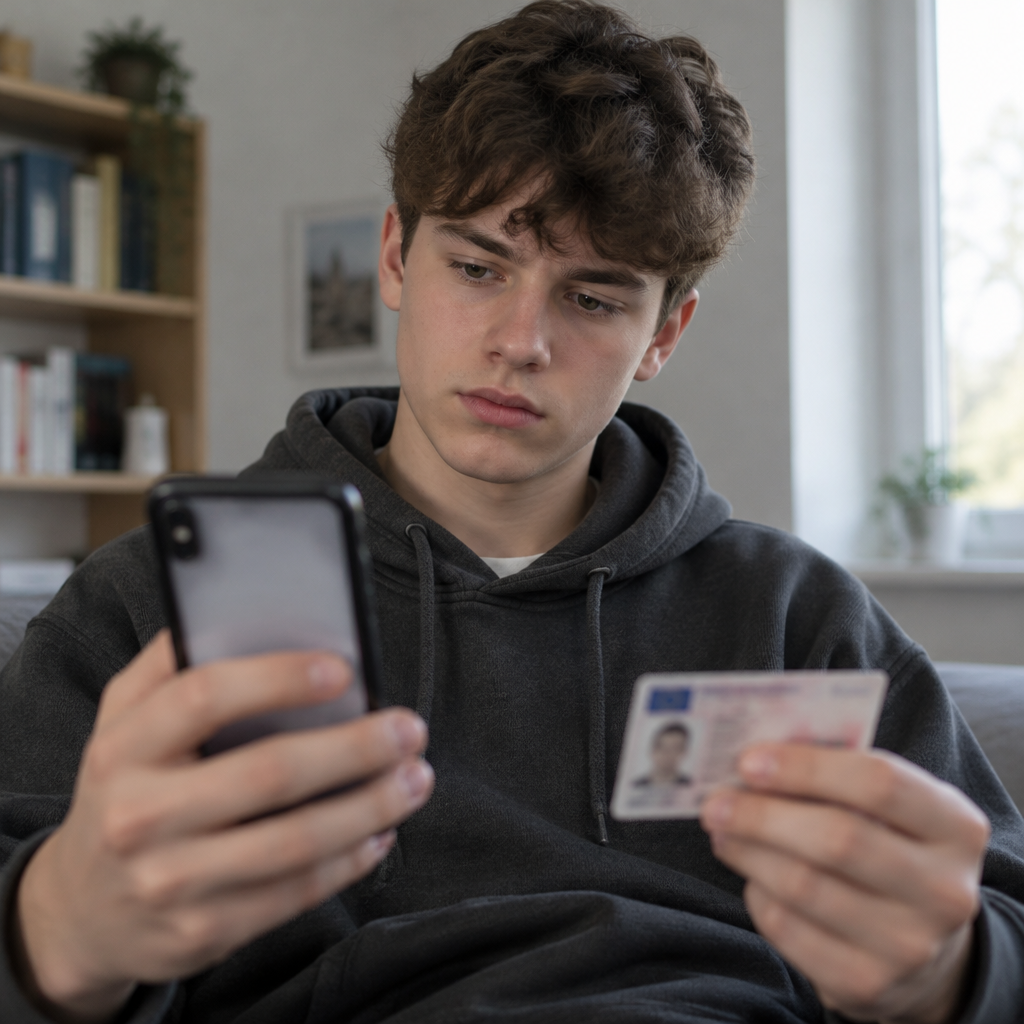
Ofcom acknowledged that not every 16‑year‑old will possess a form of photo ID, which is required for all four HEAA methods. It estimates around 94 percent of 16–17‑year‑olds have photo ID such as a passport, driving licence, or an ID card certified by the Proof of Age Standards Scheme, leaving roughly 150,000 without any such document. Ofcom said those without photo ID will need to acquire one in order to access online services under the proposed approach.
Circumvention, Australia’s experience, and enforcement plans
Ofcom accepted that "the risk of circumvention cannot be entirely eliminated," and explicitly cited Australia — which introduced an under‑16 social media ban in December 2025 — as an example where children have found ways to bypass checks. Ofcom said the UK government intends to "adopt, but learn lessons from, Australia’s rollout," and that it has identified mitigations such as making it easier for users to report suspected underage social media users and "using age inference models." The regulator will closely monitor circumvention for the first 12 months after the ban is enforced to understand methods that could prevent children from bypassing checks.
Responses from campaigners and watchdogs
Big Brother Watch director Silkie Carlo criticised the plan as a back‑door national ID scheme: "This plan for a government 'social media ban' is a national ID system by the back door. Both the government and Ofcom have admitted that children will get around the ban, which means the real effect will be normalizing adults and children alike to handing over their passports just to get online." Carlo warned that "hundreds of thousands of people without ID, who tend to be poorer people, and many more who don’t want to risk handing their passports over to foreign tech companies will be locked out of huge parts of the internet," and called the policy "an Orwellian assault on free speech and privacy."
England’s Children’s Commissioner, Dame Rachel de Souza, is quoted as saying the Online Safety Act "has made absolutely no difference" to children’s ability to access potentially harmful online content. Ofcom’s chief executive Dame Melanie Dawes framed the effort as a broad societal task: "This ban will shape the future of children’s lives online, so it’s important to get it right," she said. "It can work if social media firms do highly effective age checks properly... When it comes into force next year, we’ll be ready to take swift and firm action against any company that fails to comply." Dawes added: "We should expect that motivated children will seek to bypass the restrictions — just like alcohol laws can’t completely eradicate underage drinking — but there’ll be ways for platforms to mitigate this risk."
How social platforms, banks, and young people will be affected
- Social platforms: Platforms will need to adopt HEAA methods (photo‑ID matching, banking checks, digital ID reuse, or facial age estimation plus a second check) and prepare for Ofcom enforcement when the ban takes effect next year. They will also be expected to implement mitigations and monitoring for circumvention during the first 12 months.
- Banks and mobile network operators: Banks’ identity records are explicitly listed as a verification route for 16–17‑year‑olds, and MNOs are named for 18+ checks because they already require proof of adulthood to remove content blocks.
- Young people and those without ID: Ofcom’s figures leave an estimated 150,000 16–17‑year‑olds without photo ID; those individuals face the prospect of obtaining official ID to access social platforms if the HEAA framework is implemented as described.
The UK government is expected to publish the first set of regulations on the under‑16 social media ban by the end of the year, and Ofcom is developing draft guidance for platforms. The regulator also noted past weaknesses: researchers found that, after the Online Safety Act’s age‑verification requirements kicked in, existing checks were largely ineffective at keeping under‑18s away from adult content, with some reports of simple circumvention techniques. That patchwork of technical limits, social objections, and a stated plan for a 12‑month crackdown period frames a contentious policy experiment: can a system that depends on photo ID, banking records and automated age estimates both limit access for children and avoid excluding the poorest and most privacy‑conscious adults?