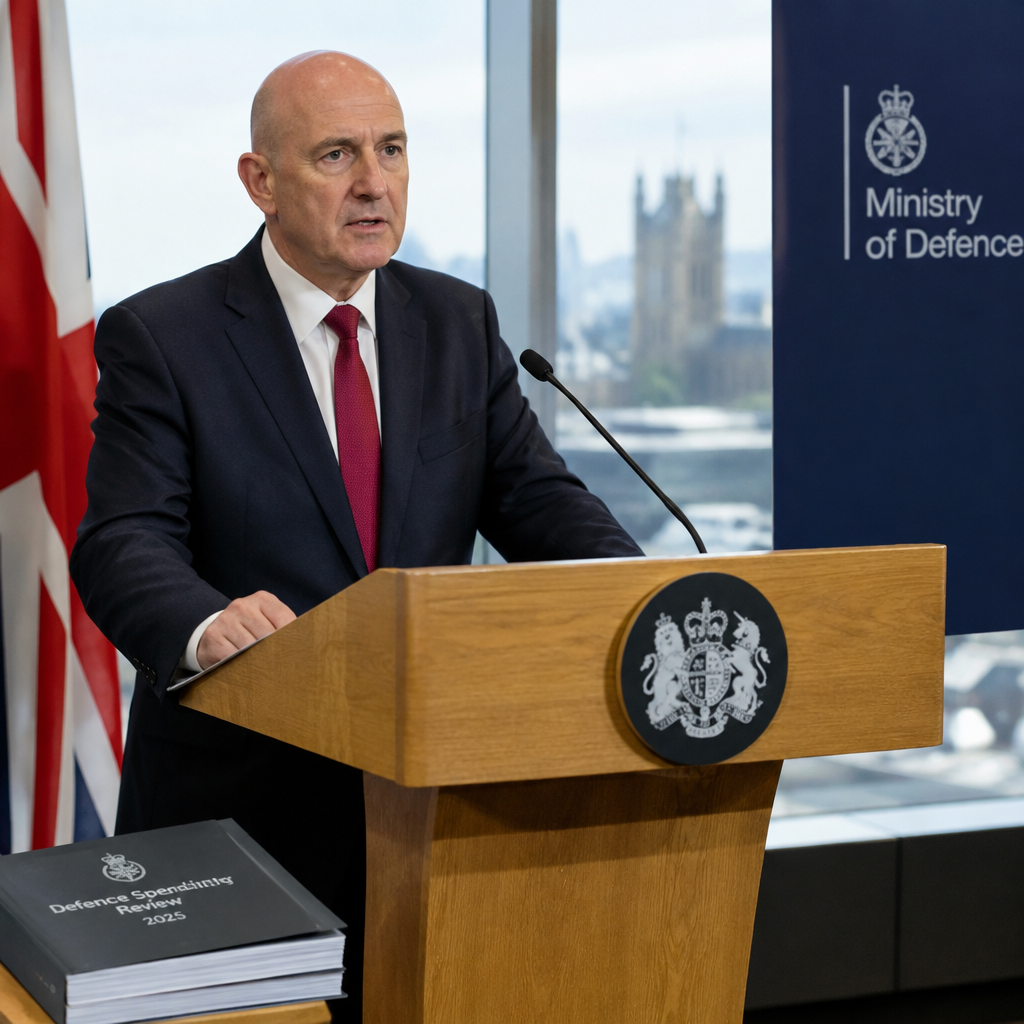
"The UK’s recent Defence Investment Plan would be 'fully' funded," Chancellor John Healey said in a speech today, marking a clear signal that the government will reallocate domestic priorities to boost defence spending to new levels.
Healey’s pledge and the political backstory
Chancellor John Healey announced the commitments as part of a broader budget statement that tied expanded defence spending to cuts elsewhere. The speech carried extra weight because Healey previously served as defence secretary under Prime Minister Keir Starmer and publicly resigned over what he described as underfunding the military. According to the budget documents, Healey's resignation "triggered several others, which ultimately pushed Starmer to resign and be replaced by Burnham — who then brought Healey back as his main financial officer."
Targets: 3 percent by 2030, 3.5 percent NATO path by 2035
Healey said the government will aim to reach 3 percent GDP on defence by 2030, and that next year’s spending review would set out exactly how the UK plans to hit the NATO commitment of spending 3.5 percent GDP on defence by 2035. The budget materials say the money for defence increases will come from "cuts to other priorities," and that the Defence Investment Plan will be "fully" funded under this approach.

This site is the portfolio.
OSINTSights runs on Cloudflare Workers, D1, R2, and Vectorize, with an AI pipeline on Hetzner ARM. Nubivance designed, built, and operates it. We do the same for clients.
See what we buildNew finance mechanisms and multinational pooling
The budget papers outline several initiatives to leverage private and international capital for defence. They announce the standup of an Innovative Defence Financing Taskforce to "maximise the contribution of private and international finance to UK defence." Officials say the National Wealth Fund and British Business Bank will be positioned to "deploy up to £5 billion over the next four years into defence, dual-use and other sectors that support our national security, sovereign capability and resilience."
Separately, the government has opened discussions with Finland, Poland and the Netherlands to pool funding for "defence investment and joint procurement across NATO allies," a step that aims to combine partners' buying power and investment plans.
Ministry of Defence-led drone regulation unit
The budget creates a Ministry of Defence-led "drone regulation unit" intended to work across agencies to cut "red tape and create clearer routes for testing uncrewed and autonomous systems." The documents note that this approach "would seem to mirror some of the concerns about regulation authorities over UAVs in the United States," linking the new unit’s purpose to a broader regulatory challenge for unmanned systems testing.
Ukraine assistance and the Rolls-Royce engine proposal
Included among the defence allocations is £10 billion ($13.3 billion) in additional funds for Ukraine. The papers also describe a proposed, currently-unfunded 10-year, £2.5 billion programme with Rolls-Royce to develop a next-generation gas turbine engine intended to be dual-use. The documents are explicit about the programme’s status: "This has not been contracted and funding is subject to award, negotiations and relevant legal processes."
What this means for technologists, policymakers, and defence industry
- Technologists and testing teams will focus on the new drone regulation unit’s rules and the "clearer routes for testing uncrewed and autonomous systems," watching for regulatory changes that could alter test access and certification timelines.
- Policymakers and finance officials will have to translate Healey’s verbal commitments into the spending review next year, specifying how cuts to other priorities will fund the move to 3 percent by 2030 and the path to 3.5 percent by 2035.
- Procurement leaders and defence firms will watch the Innovative Defence Financing Taskforce, the £5 billion deployment through the National Wealth Fund and British Business Bank, and the multinational pooling talks with Finland, Poland and the Netherlands for new investment and joint-procurement opportunities—while noting that high-profile projects such as the Rolls-Royce engine remain uncontracted and subject to negotiation.
Healey’s announcement ties an ambitious numerical target to concrete delivery mechanisms: reallocated domestic budgets, new financing vehicles, multinational purchasing talks, and regulatory reform for unmanned systems. The most immediate checkpoint is next year’s spending review, which the government says will “spell out exactly how” it will meet the NATO and 2030 commitments. Until that review and any subsequent contracts or legal agreements are published, several major items—most notably the Rolls-Royce programme—remain proposed rather than secured.