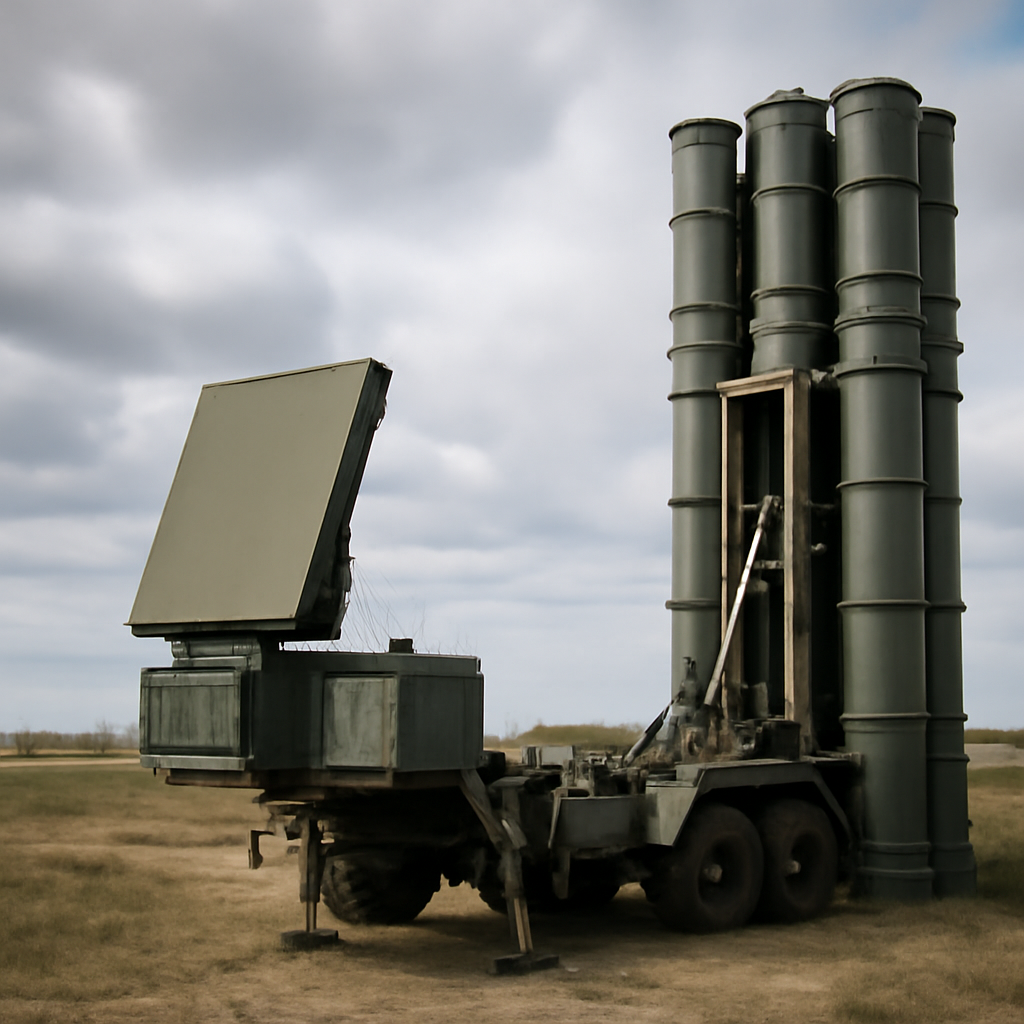
Britain’s opposition Conservatives have pledged a £10 billion “Britannia Shield” to expand ground-based air defenses — a proposal the party says would be funded over a decade and aimed at protecting the United Kingdom from “drone & missile attack.”
What the Conservatives are proposing
The Conservative Party announced Britannia Shield as a £10 billion plan intended to combine improved radar, command and control, interceptor missiles, and counter‑drone capabilities into an integrated network. Party messaging tied the pledge to a political commitment to raise defence spending to 3% of GDP, and James Cartlidge MP described the package as only possible because “Kemi Badenoch is willing to take tough decisions to fund 3% on Defence.” The proposal exists for now as a policy commitment rather than an approved Ministry of Defence programme and would enter the MOD acquisition system only if the Conservatives return to government and follow through on funding and procurement decisions.
Which capabilities Britain already has — and their limits
Britain possesses several relevant elements that could be integrated into a larger ground-based architecture. Royal Navy Type 45 destroyers provide long‑range air defence when available through the Sea Viper missile system; the British Army fields Sky Sabre batteries using CAMM missiles for shorter-range engagements; and the RAF supplies combat aircraft and airborne surveillance. Britain is also integrated into NATO’s wider air and missile defence architecture.
But those components were not designed to provide a dense, permanent umbrella over critical infrastructure. The Ministry of Defence’s 2025 Strategic Defence Review acknowledged a changing threat environment and allocated up to £1 billion in new funding for homeland air and missile defence — a far smaller sum than the Conservatives’ ten‑year pledge. The source notes that a ground‑based component “remains relatively limited when compared with the scale of the potential target set.”

This site is the portfolio.
OSINTSights runs on Cloudflare Workers, D1, R2, and Vectorize, with an AI pipeline on Hetzner ARM. Nubivance designed, built, and operates it. We do the same for clients.
See what we buildLessons from Ukraine, the Middle East, and RAF Fairford
The Conservatives frame Britannia Shield in the context of evolving threats demonstrated in Ukraine and recent Middle East fighting. The source highlights Ukraine’s June 2025 operation in which intelligence reportedly launched 117 attack drones from trucks positioned near Russian air bases — an example used to show how relatively inexpensive drones can be moved close to targets and launched with little warning. The piece also cites the 2024 incident in which the Type 45 destroyer HMS Diamond used Sea Viper to shoot down a missile fired by Iran‑backed Houthis in the Red Sea.
An episode at RAF Fairford — where U.S. authorities withdrew a dozen B‑1 bombers from the Gloucestershire base amid reported concerns about a possible Iran‑backed plot while British authorities maintained the base was safe — is used to illustrate how even major military installations can become vulnerable when adversaries seek unconventional attack methods.
Costs, scope and sustainment questions
The £10 billion headline leaves crucial questions about scale and sustainment unanswered. The source stresses the difference between protecting a selected group of critical sites and trying to provide nationwide coverage: Gen. Sir Richard Barrons has estimated that an “entry‑level” system of the kind outlined could cost around £80 billion over a decade, illustrating how quickly requirements and price can rise as mission scope expands. The report also points to ammunition and interceptor stocks as a practical limitation: sophisticated interceptors can be costly to fire against inexpensive drones, and Western countries have struggled to replenish precision munitions at wartime consumption rates during sustained campaigns.
Operational reach is another cost driver. Badenoch has referenced defending installations in Cyprus and the Falkland Islands, which would require dedicated radar coverage, launchers, personnel, ammunition stocks and sustainment arrangements — a much larger logistical and financial commitment than protecting sites on the British mainland.
What this means for the RAF, the Army, and NATO
- RAF: Would have to integrate airbases, airborne surveillance and combat aircraft into an expanded, ground‑based air defence network and contribute to early detection and layered responses.
- Army: Would be asked to expand mobile ground batteries, counter‑drone systems (including guns, electronic warfare and low‑cost interceptors) and possibly directed‑energy systems such as mounted Laser Directed Energy Weapons already trialled on Army vehicles.
- NATO: The UK’s efforts would need to be considered as part of wider European and NATO efforts to rebuild layered air and missile defences; a British programme focused mainly on lower and middle tier threats would not address higher‑end threats such as longer‑range ballistic missiles, a gap the source highlights as significant.
The most revealing details of Britannia Shield — the number of defended sites, radars, launchers, interceptor stockpiles, and the split of spending across sensors, counters, ammunition and sustainment — are yet to be disclosed. If the Conservatives return to government and move to formalise the requirement, those choices will determine whether £10 billion amounts to a meaningful national upgrade or merely the opening tranche of a far larger, long‑term bill.