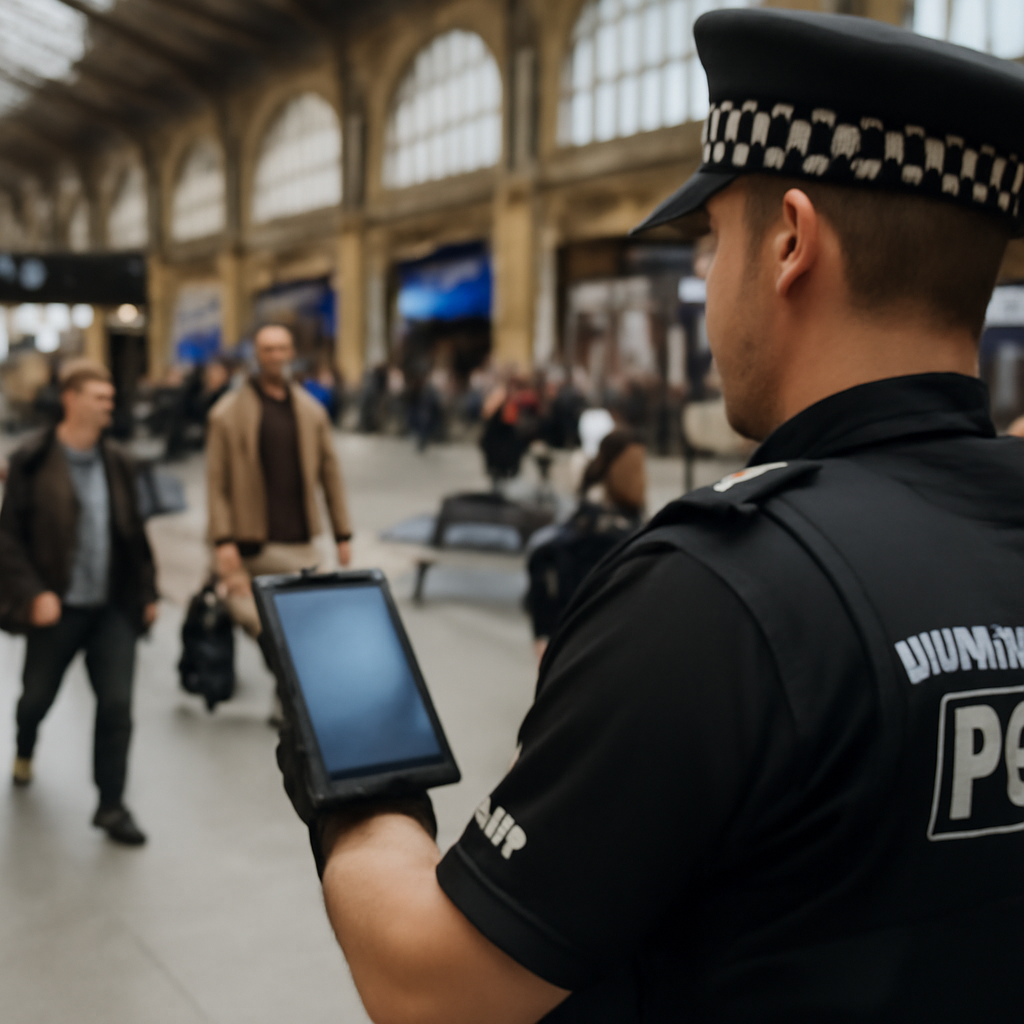
More than 500,000 faces were scanned during a six‑month live facial recognition trial by the British Transport Police — and the system, after generating a single alert, produced no correct matches.
British Transport Police six‑month trial: scope and results
Figures obtained by Liberty and reported by The Guardian show the British Transport Police (BTP) ran a six‑month live facial recognition (LFR) trial that scanned in excess of 500,000 faces at London railway stations. The software produced just one alert; that alert was a false positive. According to the figures, the exercise produced no correct matches and "no arrests directly resulting from an LFR alert."
Spending and officer time: almost 100 hours and £320,000
The deployments consumed "almost 100 hours of police officers' time" and cost more than £320,000. Liberty obtained the information through Freedom of Information requests, and the publicly released figures prompted scrutiny over the value delivered for public funds and officer effort.

Audit-ready is a season. It shouldn't be.
Evidence in spreadsheets, controls drifting between audits, frameworks multiplying on flat headcount. Nubivance runs continuous compliance on Rapid7 Cyber GRC - SOC 2, HIPAA, ISO 27001, PCI, CMMC.
End the scrambleHow the system works and how BTP describes its use
The technology deployed uses NEC's NeoFace M40 facial recognition product. Cameras scan people passing through a designated area and compare captured faces against a police watchlist. When the software flags a potential match, it "generates an alert for an officer to review before deciding whether to stop the person." BTP has said it "cannot identify people who aren't on a watchlist" and that it "immediately deletes their biometric data." The force also characterises deployments as "intelligence‑led and targeted at crime hotspots where officers believe 'high harm offenders' are likely to pass through."
Civil liberties reaction and broader operational concerns
Privacy and civil liberties groups criticised the trial's outcome and the program's continued expansion. Jasleen Chaggar, senior legal and policy officer at Big Brother Watch, said: "The figures from the British Transport Police's live facial recognition pilot would be laughable, if they didn't have such troubling implications for our rights and freedoms." Chaggar also called the deployments an "insult" to the public, arguing: "It's not fair to subject innocent people to intrusive identity checks during their commute, but it's even more insulting to waste almost 100 hours of officers' time and £320,000 of public money when it produces such meagre results." She concluded that "replacing officers with AI surveillance does not improve Londoners' safety and British Transport Police should drop their use of live facial recognition."
Sarah Simms, senior policy officer at Privacy International, emphasised the privacy dimension: "We are deeply concerned by the results of the British Transport Police's live FRT trial. It reaffirms how invasive and disproportionate live facial recognition tech is and why it shouldn't be permitted. Thousands of people have their highly sensitive facial data processed in public spaces as they go about their daily lives, sometimes unknowingly. It also undermines claims of it being a targeted measure." Simms added concern about legal safeguards: "What's further concerning is that they continue to extend these deployments when there is no specific legal framework in place to regulate facial recognition, which is essential to ensure there are restrictions and safeguards on its use to protect people's rights."
The trial's outcome arrives against a backdrop of earlier uncertainty: "Earlier this year, UK police temporarily suspended deployments after independent testing raised concerns about racial bias at some operating thresholds," the reporting notes.
What this means for commuters, the British Transport Police, and policymakers
- Commuters and the public: Large numbers of people have had their faces processed while moving through station spaces; campaigners warn many may have been unaware they were part of a live digital check against a watchlist.
- British Transport Police: Despite the trial's single, incorrect alert and the financial and time costs recorded, BTP has extended the pilot until November and expanded deployments from Network Rail stations onto the London Underground.
- Policymakers and regulators: The trial's results and the noted absence of "a specific legal framework" for facial recognition in the reporting underscore pressure on regulators to consider whether existing rules adequately constrain or govern LFR use in public transport environments.
The record from this pilot is stark: more than half a million scans, one alert, and no verified matches. Yet the force is continuing and expanding the programme. That tension — between a limited operational payoff on one hand and an expanding, intrusive capability on the other — is the concrete choice now before the public, the police and those who would set the legal guardrails for how biometric surveillance is used in public spaces.