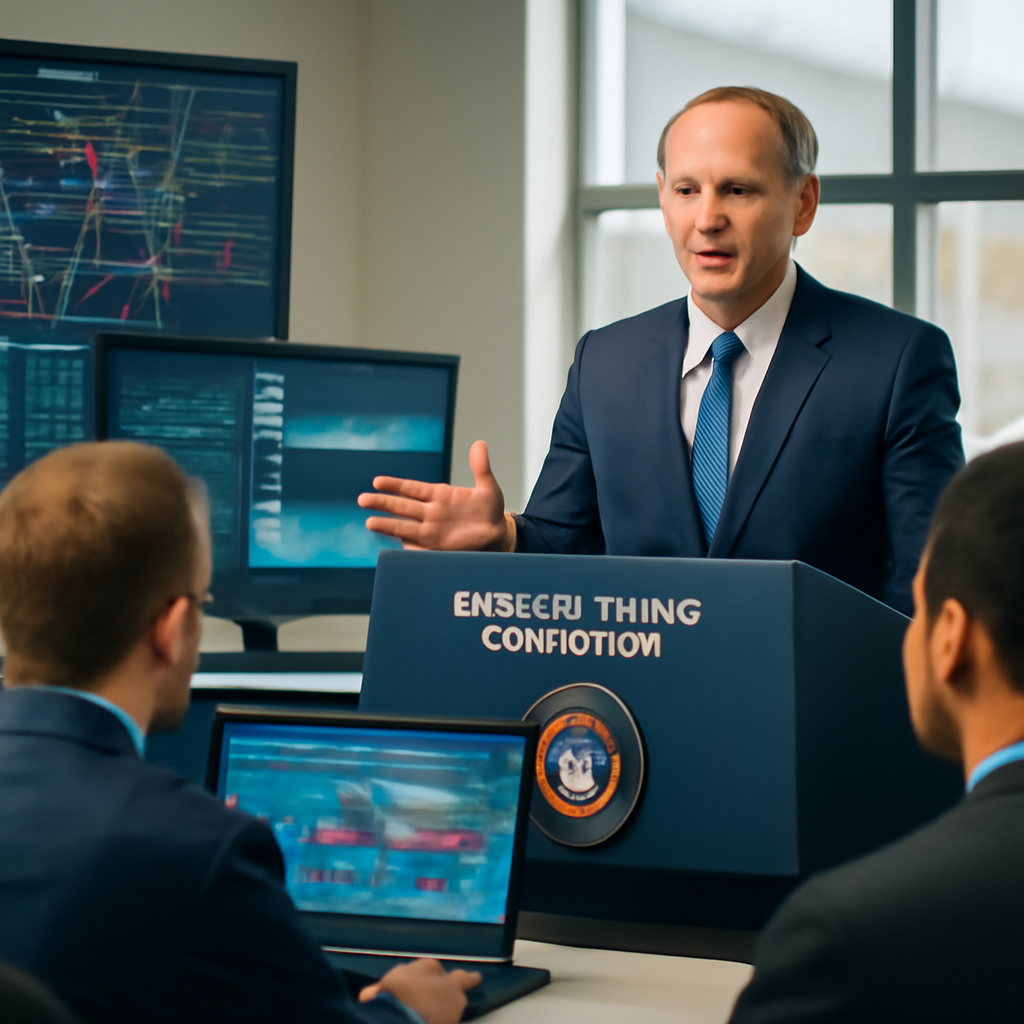
"We have been working closely, and I believe it is functioning well to get models deployed throughout sectors as quickly as possible, and they can be used to secure systems," National Cyber Director Sean Cairncross said Tuesday at a USTelecom event.
Sean Cairncross’s pitch: deploy AI to secure critical systems
Cairncross described a U.S. government effort to integrate artificial intelligence into the nation's critical infrastructure with the explicit aim of strengthening cyber defenses. Speaking at the USTelecom event, he framed the work as a partnership between the federal government and critical infrastructure operators, saying the goal is to get models "deployed throughout sectors as quickly as possible" so they "can be used to secure systems."
He characterized the administration's approach as seeking "pathways where our systems and the services they provide, the daily life that is supported by these systems, can be protected, can be upscaled, can use the the best in class technology as quickly as possible." Cairncross credited interagency effort and industry cooperation in constructing those pathways: "I think there's been an enormous amount of work that's gone in across the interagency, working with industry to get those pathways in place."
Agents, authorization, and supply-chain visibility
Cairncross cautioned business leaders to pay attention to how AI is embedded and operated. He singled out "agents that run on these systems and in your supply chain" and urged firms to have "insight and visibility into who has authorization, what they are authorized to access, and where they are running in your system." The remark positioned access control, provenance, and operational visibility as central to the practical cybersecurity question of embedding AI in critical systems.

Audit-ready is a season. It shouldn't be.
Evidence in spreadsheets, controls drifting between audits, frameworks multiplying on flat headcount. Nubivance runs continuous compliance on Rapid7 Cyber GRC - SOC 2, HIPAA, ISO 27001, PCI, CMMC.
End the scrambleWhite House lunch: regulatory guardrails vs voluntary measures
Cairncross made his remarks shortly before attending a White House lunch that brought top AI technology leaders together with President Donald Trump, Vice President J.D. Vance, and House Speaker Mike Johnson, R-La. The expected topics included a debate over regulatory guardrails that some AI executives have urged and the voluntary, industry-led measures that President Trump and Speaker Johnson have favored.
The public record from the event, as reported, notes that "some lawmakers have proposed stricter rules," setting up a policy tension between proposed legislative/regulatory approaches and the administration's stated preference for pathways that speed adoption while protecting services that rely on those systems.
Replacing aging, unsupported systems as an unglamorous priority
Outside model deployment and access controls, Cairncross emphasized an operationally mundane but strategically important issue: aging, unsupported systems. He called this work "less 'sexy'" than headlines about new AI models, but said creating incentives to replace those legacy components is a "key component" in securing critical infrastructure as AI is woven into it.
The remark underscores a practical constraint on any rapid upgrade: systems that underpin essential services must often be modernized before new AI capabilities can be safely and effectively attached to them.
What this means for technologists, policymakers, and enterprise leaders
- Technologists and security teams: Expect a focus on operational controls for AI agents — who deploy them, what they can access, and where they run — and on integration work to replace unsupported legacy components before model deployment.
- Policymakers and regulators: The White House convening illustrates an active debate between regulatory guardrails and voluntary measures; some lawmakers are already pushing for stricter rules while the administration emphasizes rapid, pathway-driven adoption with industry.
- Enterprise leaders and procurement officials: The message from Cairncross and USTelecom's CEO is to prioritize visibility into supply chains and authorization mechanisms and to weigh replacing aging systems as part of any AI rollout aimed at strengthening cyber defenses.
Jonathan Spalter, CEO of USTelecom, amplified the urgency when he told the event audience that "just in the last six months, the effectiveness of AI models being embedded in much of our critical infrastructure has increased to a stunning degree." Cairncross's public remarks and the White House convening signal an administration actively pursuing accelerated AI deployment across sectors while urging firms to harden access and replacement practices.
The account leaves a clear policy and operational fork: speed deployment to capture defensive gains, or slow adoption under tighter rules — and whether those two paths can be reconciled remains the central question the parties assembled in Washington are trying to answer.