UK clears classified MBDA data to enable local Storm Shadow/SCALP assembly
On August 24, 2026, the United Kingdom authorized defense contractor MBDA to release classified information about British-made components incorporated into the Franco‑British Storm Shadow/SCALP long‑range cruise missile. The U.K. Ministry of Defence framed the move as a deliberate technology transfer intended to allow France and Ukraine to establish local assembly lines for the weapon inside Ukraine. British Prime Minister Andy Burnham travelled to Kyiv for the visit and framed the announcement as tangible evidence of London’s long‑term commitment to Kyiv.
Storm Shadow/SCALP: range, design, and operational role
Storm Shadow (British name) and SCALP (French name) are air‑launched, conventionally armed cruise missiles produced by MBDA that share substantial Franco‑British technology. According to the U.K. Ministry of Defence, Storm Shadow has a range in excess of 300 nautical miles, although its export configuration has an officially stated range of about half that. The weapon is low‑observable, carries a tandem penetrator warhead, and is designed for precision attacks against fixed, high‑value targets such as command facilities and hardened infrastructure. The U.K. MoD material also notes the missile was never cleared for use by the F‑35.

The cyber insurance questionnaire just landed. Now what?
SOC 2, HIPAA, insurance renewals - someone has to own security strategy. Nubivance provides fractional CISO leadership without the full-time salary.
Get a security leadUkraine’s long‑range strike mix: drones, FP‑5 Flamingo, ATACMS and ballistic efforts
Local production of Storm Shadow/SCALP would join a rapidly diversifying Ukrainian deep‑strike toolkit. The source reports that long‑range one‑way attack drones now form the largest and most mature component of Ukraine’s indigenous arsenal, capable of reaching hundreds — and in some cases more than a thousand — kilometers. Ukraine is also advancing domestically developed cruise missiles, notably the FP‑5 Flamingo developed by Fire Point, while domestic ballistic‑missile programs have progressed toward testing and deployment. Western systems such as Storm Shadow/SCALP and the Army Tactical Missile System (ATACMS) have provided immediate strike capability and combat experience as Kyiv develops serial production of indigenous systems; debris from an ATACMS missile was photographed near Voronezh on November 19, 2025.
Platforms, production realities, and possible adaptations inside Ukraine
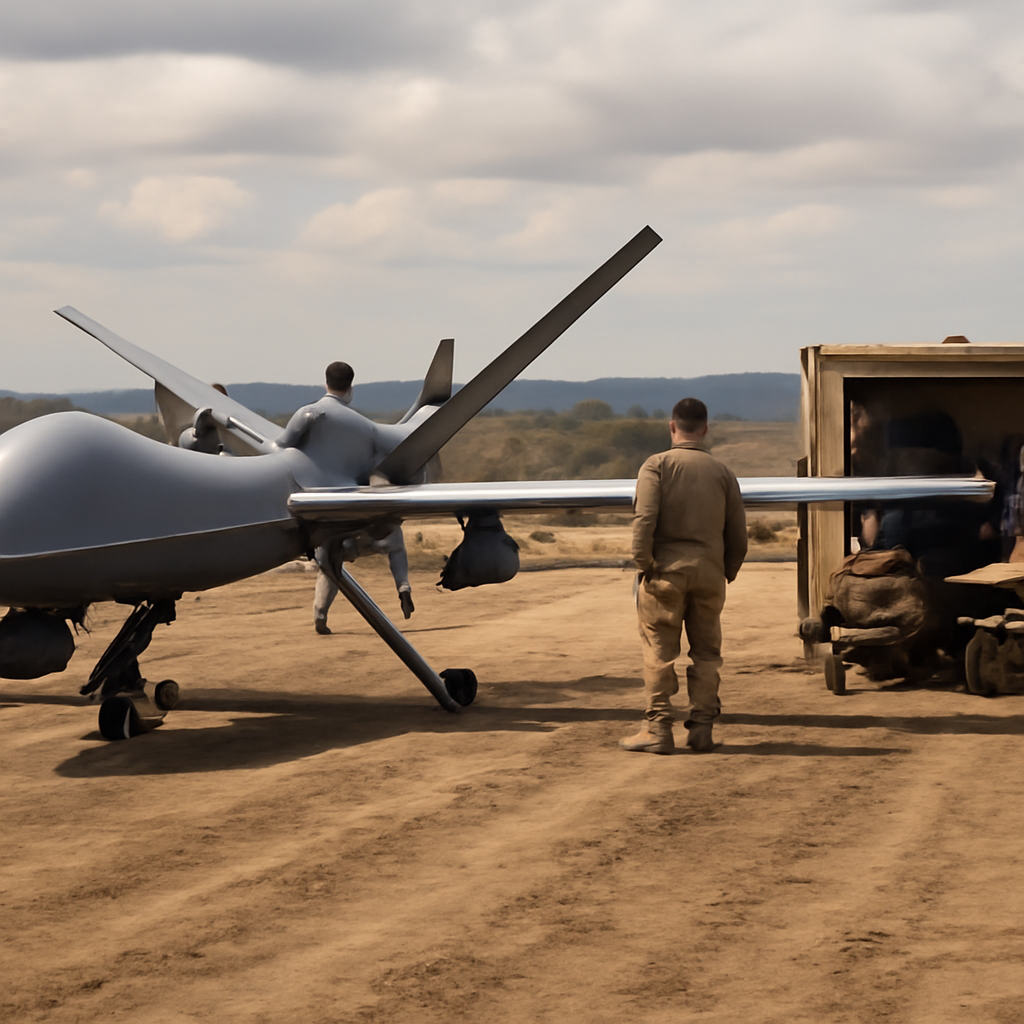
Current Ukrainian launches of Storm Shadow/SCALP have used Su‑24M/MR Fencer swing‑wing jets, but the source notes limited availability of those aircraft is a constraining factor. France was expected to modify transferred Mirage 2000 fighters to carry SCALP, but that modification has not been confirmed. The source adds that planned French transfers of Rafale fighters would provide SCALP compatibility from the outset, should those aircraft be delivered. Local assembly could give Ukraine greater control over production rates and sustainment, and potentially allow adaptations — for example to guidance, warhead type, or even a ground‑launch configuration — although establishing a production line for a sophisticated cruise missile inside a country under sustained Russian missile and drone attack is described as a major undertaking with an unclear timeline.
Kremlin reaction and diplomatic friction with London
Moscow publicly criticized the U.K. decision to facilitate Ukrainian Storm Shadow/SCALP production, accusing Britain of escalating the conflict and warning that Russia is tracking Ukrainian missile‑production facilities. Russia also withdrew its ambassador from London. U.K. Defence Minister Luke Pollard said on Times Radio that Moscow had conducted activities against the United Kingdom — including loitering over undersea cables and cyberattacks — and framed continued support for Ukraine as unchanged despite Russian displeasure. Prime Minister Burnham met President Volodymyr Zelenskyy in Kyiv on Ukraine’s Independence Day and chaired a meeting of the Coalition of the Willing.
How the Ukrainian defence industry, MBDA/the U.K. MoD, and Russia are positioned
- Ukrainian defence industry: Already producing long‑range drones and developing the FP‑5 Flamingo and ballistic systems, Ukrainian industry stands to gain production control and potential design adaptations if local Storm Shadow/SCALP assembly proceeds, but faces the practical difficulties of building complex missiles under sustained attack.
- MBDA and the U.K. Ministry of Defence: By authorizing release of classified British‑origin component data, MBDA and the MoD removed a key technology‑transfer barrier to the Franco‑Ukrainian production project; the U.K. is also pursuing its own Project Brakestop to develop lower‑cost long‑range strike weapons for Ukraine independent of U.S. components.
- Russia: The Kremlin publicly condemned the step, warned about tracking missile facilities, and has already taken diplomatic reprisals by withdrawing its ambassador from London, signalling a further deterioration in bilateral relations tied directly to the decision.
Local assembly of Storm Shadow/SCALP marks a substantive shift: it could supply Kyiv with a replenishable source of a proven deep‑strike weapon, permit tailored adaptations, and reduce immediate dependence on depleted European stockpiles. Yet the effort raises practical and political questions the source leaves open — chiefly when, and at what scale, Ukrainian production can begin amid ongoing attacks — and it has already sharpened diplomatic tensions between London and Moscow.