U.S. Fighter Jet Deployment Signals Escalating Tensions Near Iran
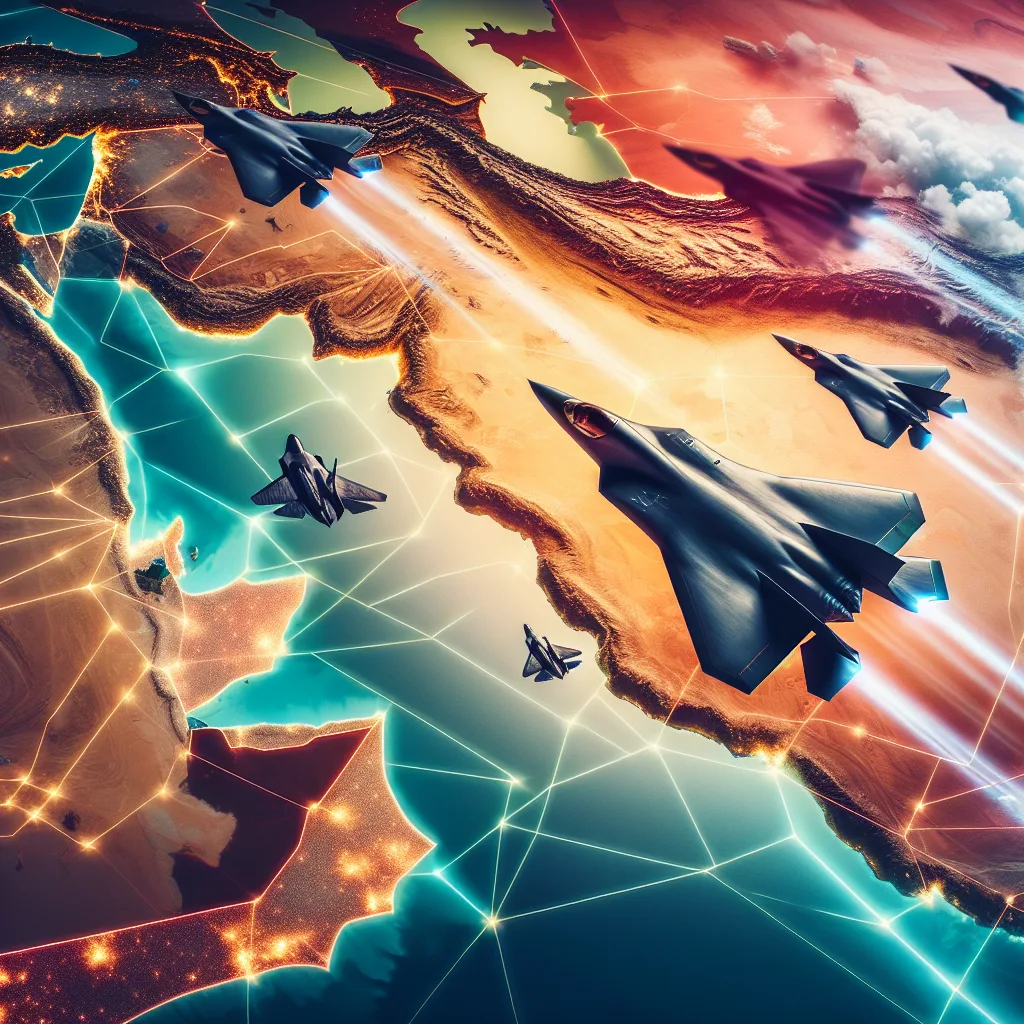
As military tensions in the Middle East reach a fever pitch, the United States has undertaken a significant shift in its strategic posture. The rapid deployment of F-22 Raptors and F-35 Lightning II jets to bases closer to Iran is not merely a routine enhancement but a clear signal of increased readiness in response to evolving threats. In a recent statement, Defense Secretary Pete Hegseth characterized this move as an “enhancement of our deterrent capabilities” amid growing concerns about Iranian activities.
To understand the implications of this deployment, one must first consider the historical context surrounding U.S.-Iranian relations. Since the 1979 Iranian Revolution, relations between Washington and Tehran have been characterized by mutual suspicion and hostility. The U.S. has imposed extensive sanctions on Iran, aimed primarily at curbing its nuclear ambitions and regional influence. In recent years, various incidents—such as attacks on oil tankers and escalating militia activities linked to Iran—have heightened the stakes for U.S. forces stationed throughout the region.
Currently, squadrons of advanced fighter jets are being dispatched to bases that are significantly closer to Iran’s borders. Official sources indicate that this operational maneuver is part of a broader strategy to ensure not just deterrence but also rapid response capabilities should provocations arise. The Pentagon aims to showcase its commitment to protecting both U.S. interests and those of allies in the region.
The stakes are particularly high for several reasons. First and foremost, this deployment represents a direct assertion of military power that could deter Iranian provocations. As one senior defense analyst noted, “The presence of advanced aircraft like the F-35 enhances situational awareness and allows for quick strike capabilities.” Such an approach not only aims to reassure allies but also serves as a warning to adversaries contemplating aggressive moves.
This situation is further complicated by varying perspectives from stakeholders involved in this geopolitical landscape. On one hand, U.S. officials emphasize the necessity of maintaining a robust military presence as a counterbalance against Iranian actions; on the other hand, some experts argue that increased military maneuvers could provoke rather than prevent conflict. As tensions escalate, it becomes essential to recognize that both sides view these developments through fundamentally different lenses.
The expert consensus suggests that while immediate threats may warrant enhanced military readiness, long-term security rests on diplomacy and dialogue rather than posturing alone. One defense strategist remarked, “While showing strength can be crucial, history teaches us that escalation often leads to unintended consequences.” This sentiment reflects an understanding that military solutions alone will not resolve deep-rooted issues within U.S.-Iran relations.
Looking ahead, several outcomes are plausible depending on how both Washington and Tehran respond in the coming months. If negotiations remain stalled or if provocations continue unchecked, we may see further military build-ups or aggressive posturing from both sides—an arms race where each action prompts an equal reaction can ensue.
The public should remain attentive to shifts not just in military activity but also in diplomatic efforts—or lack thereof—between the two nations. The ongoing situation serves as a reminder of the fragile balance that characterizes international relations in this volatile region.
In conclusion, while the deployment of F-22s and F-35s near Iran’s borders signals U.S. determination to safeguard its interests and those of its allies, it also raises profound questions about efficacy and potential repercussions. Will increased military readiness ultimately lead to stability—or will it exacerbate tensions? With so much at stake, one cannot help but wonder whether dialogue can still find its place amid such formidable displays of force.