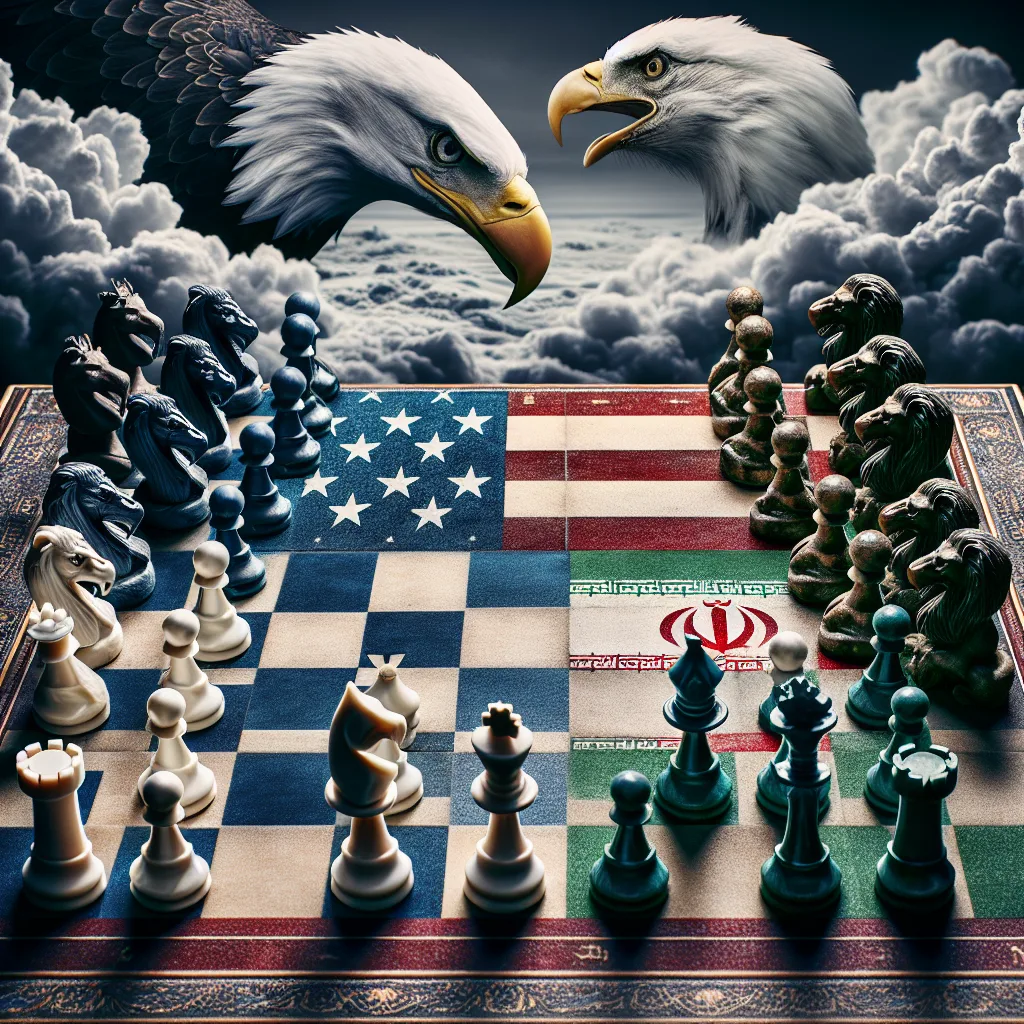
U.S. Military Set for Heightened Tensions as Iranian Aggression Looms
The United States finds itself on the precipice of escalating hostilities in the Middle East as Iranian threats against U.S. military installations prompt a shored-up defense posture. Reports indicate that U.S. forces, along with diplomatic missions, are preparing for potential strikes against American bases—a development that underscores the fragile balance in the region. Officials familiar with the situation, including those cited by Reuters, have confirmed planned evacuations at the U.S. Embassy in Iraq amid rising concerns over security.
In recent weeks, multiple agencies have documented a worrying increase in military maneuvers and hostile rhetoric in the Middle East. The possibility of Iranian-led strikes has intensified U.S. defensive measures, a policy response reflective of the increasingly volatile environment. Furthermore, with longstanding regional dynamics and historical grievances contributing to unrest, this latest posture signalizes an urgent need to revisit established strategic priorities.
Historically, U.S.–Iran relations have been fraught with periods of open hostility and indirect confrontations. The legacy of the 1979 Iranian Revolution, subsequent hostage crisis, and the protracted influence of proxy conflicts have collectively left an indelible mark on the strategic calculus of Washington. Over the past few decades, successive administrations have oscillated between diplomatic engagement and deterrence, yet the current level of preparedness suggests a recalibration in response to evolving threats.
The immediate concerns center on the defense of U.S. military bases in the region, which have become symbolic flashpoints in the broader struggle for regional supremacy. With the U.S. Embassy in Iraq taking steps to evacuate staff, the situation has galvanized policymakers and defense strategists on both sides of the aisle to consider the broader implications of potential Iranian military action.
According to recent statements by defense officials, the planned evacuation from Iraq is one measure among several designed to safeguard American lives and assets. This move reflects an evolving threat landscape where regional instability is not merely a backdrop but an active catalyst for recalibrated U.S. military and diplomatic operations. Active measures include the repositioning of key assets along strategically important bases and reinforced security protocols designed to deter any prospective aggression.
Understanding the gravity of these developments requires a look at several critical dimensions:
- Geopolitical Stakes: The balance of power in the Middle East is intricately tied to the interests of global superpowers, with U.S. commitments in the region serving as bulwarks against broader instability.
- Military Readiness: U.S. forces in the region are undergoing heightened alert as intelligence reports suggest that any miscalculation could provoke rapid escalation into armed conflict.
- Diplomatic Considerations: U.S. diplomatic missions, while working to de-escalate tensions, must also contend with the realities of a potentially adversarial environment where long-term partnerships could be jeopardized.
An analysis from experts such as the late Lt. General Charles “Chuck” Wald, who once emphasized measured responses to regional threats, reminds us that “vigilance coupled with clear, strategic communication is key to averting full-scale conflict.” Though General Wald is no longer with us, his perspective continues to resonate in current military circles, reflecting lessons learned over decades of tension in the Middle East.
In addition to military maneuvers, U.S. policymakers recognize that the current posture has significant diplomatic, economic, and security ramifications. Former U.S. Secretary of State Antony Blinken has underscored the need for balancing deterrence with strategic dialogue, noting that an isolated escalation could unravel years of delicate diplomacy and risk wider regional instability. As Washington navigates this labyrinth of countermeasures and strategic recalibrations, the emphasis remains on clear communication with both allies and adversaries to manage expectations and prevent misinformation from exacerbating the crisis further.
The human cost of such heightened military alert cannot be overlooked. Families of deployed service members, local populations living near U.S. installations, and communities in regions like Iraq are all tightly entwined in the broader narrative of security and risk. The looming threat of escalation serves as a reminder that behind every policy decision lies the real-life impact on individuals who confront fear, uncertainty, and disruption in their daily lives.
So why does this development matter on a broader scale? First, it exposes vulnerabilities in established security frameworks at a time when information warfare and rapid mobilization have redefined traditional conflict. Second, it directly impacts international confidence in U.S. commitments abroad, particularly in an era where global alliances are constantly being tested by shifting power dynamics. Finally, these tensions have the potential to set off a chain reaction, influencing not only military engagements but also economic and political stability in an already unpredictable region.
Experts who have tracked the arc of U.S.–Iran relations, including senior analysts from the Council on Foreign Relations and the Atlantic Council, suggest that the current situation may well be a precursor to more systematic shifts in U.S. defense and foreign policy. They note that the delicate balance between deterrence and diplomacy is under unprecedented strain. As shadows lengthen over strategic interests in the Middle East, policymakers stress the need to prioritize transparency and coordinated action among allies—a strategy which may help to mitigate the risks of misinterpretation and unwarranted escalation.
Looking ahead, the unfolding diplomatic and military maneuvers in the region will likely serve as a bellwether for future U.S. strategy. As Washington continues to monitor Iranian activities through intelligence-sharing agreements and allied cooperation, upcoming policy decisions should be watched closely. Will Washington pivot towards renewed diplomatic engagement, or will further tightening of military readiness define its posture? The answers are likely to influence not only U.S. and Iranian relations but also the broader equilibrium in the Middle East.
While the situation remains fluid, one takeaway is clear: the nexus of military preparedness and diplomatic finesse is becoming ever more critical in preventing an inadvertent slide into conflict. As global security experts like those at the U.S. Department of Defense weigh the costs and benefits of various responses, everyday citizens must be reminded that the stakes extend well beyond political rhetoric. Real families, communities, and global stability hang in the balance.
In these tense moments, one is left to wonder: How will history remember this juncture in U.S.–Iran relations? The answer, as should always be the case in international affairs, will hinge on the delicate interplay between measured restraint and decisive action—the kind of balance that defines not only strategic military decisions but also the human quest for security and peace. Amid the uncertainty, the pursuit of stability remains the ultimate challenge for policymakers and the international community alike.



