"Turkish defence original equipment manufacturers (OEMs) signed more than USD $15 billion in export contracts," the Presidency of Defence Industries (SSB) reports, with the agency expecting foreign order intake to reach $20 billion by the end of 2026.
Export bookings outpace deliveries: the arithmetic of a backlog
Since 2023, Turkish contractors have accumulated roughly $53.1 billion in foreign agreements while delivering $30.1 billion, leaving approximately $23 billion in unfulfilled export work. That backlog reflects a persistent imbalance: bookings have outstripped deliveries by roughly two to one for four consecutive years. Annual snapshots from the source material make the trend concrete — in 2023 Türkiye booked $10.2 billion and shipped $5.5 billion; in 2024 it booked about $10 billion and delivered $7.15 billion; and in 2025 new contracts reached $17.9 billion against $10.05 billion in completed deliveries.
Physical export deliveries stood at $7.4 billion by mid-October 2026. That figure follows $6.93 billion in actual shipments during the first nine months of 2026, a 15.6% year-on-year increase. Nevertheless, given the size of outstanding contracts and the current pace of deliveries, the balance represents more than two full years of foreign work yet to be fulfilled.
Domestic demand: Steel Dome (Çelik Kubbe) and the squeeze on capacity
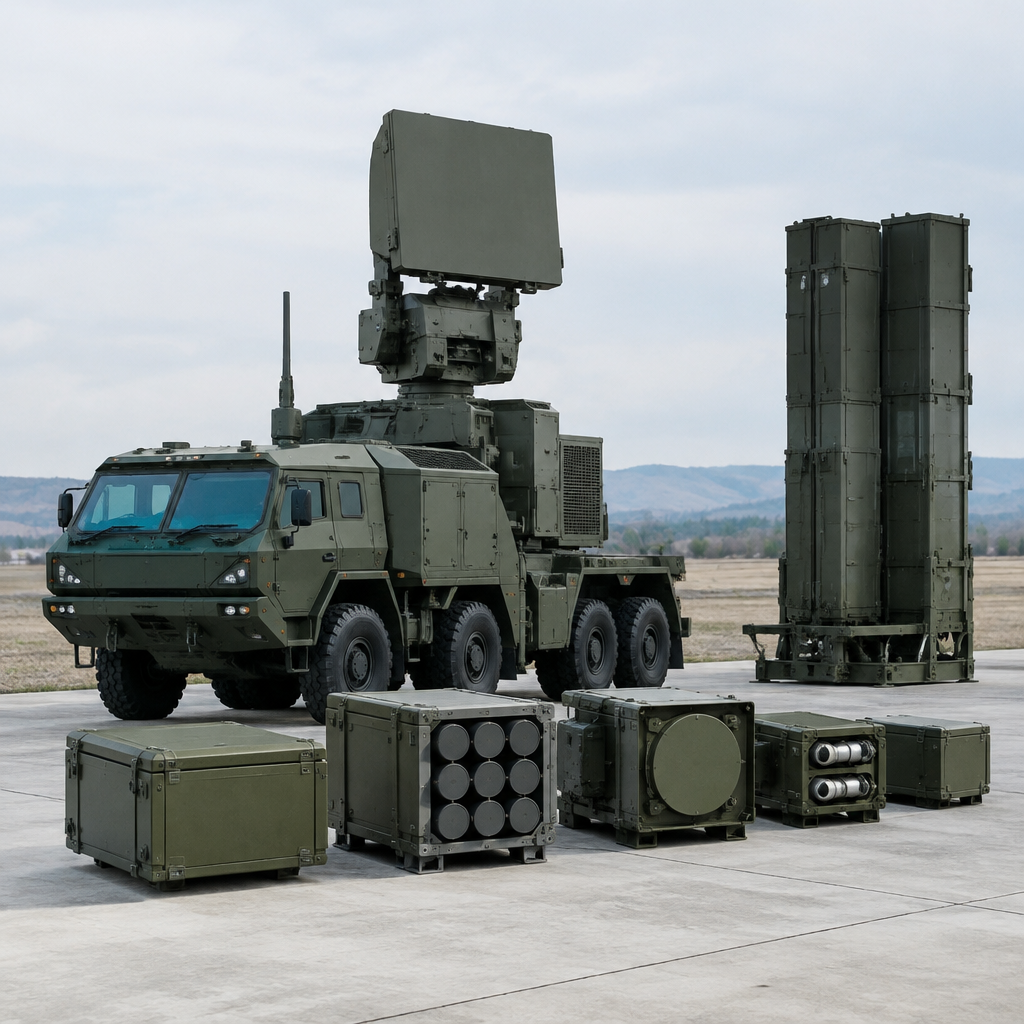
Domestic programmes are absorbing a large share of industrial capacity. Ankara’s development goals — notably its emerging multi-layered Steel Dome (Çelik Kubbe) integrated air defence network — account for between 70% and 85% of leading OEM orders, particularly for Aselsan, Havelsan, and Roketsan. That concentration of domestic demand is a central reason the national industrial base is approaching its production limits while also pursuing expanding export markets.

The cyber insurance questionnaire just landed. Now what?
SOC 2, HIPAA, insurance renewals - someone has to own security strategy. Nubivance provides fractional CISO leadership without the full-time salary.
Get a security leadLong-lead export platforms and a crowded delivery calendar (2027–2030)
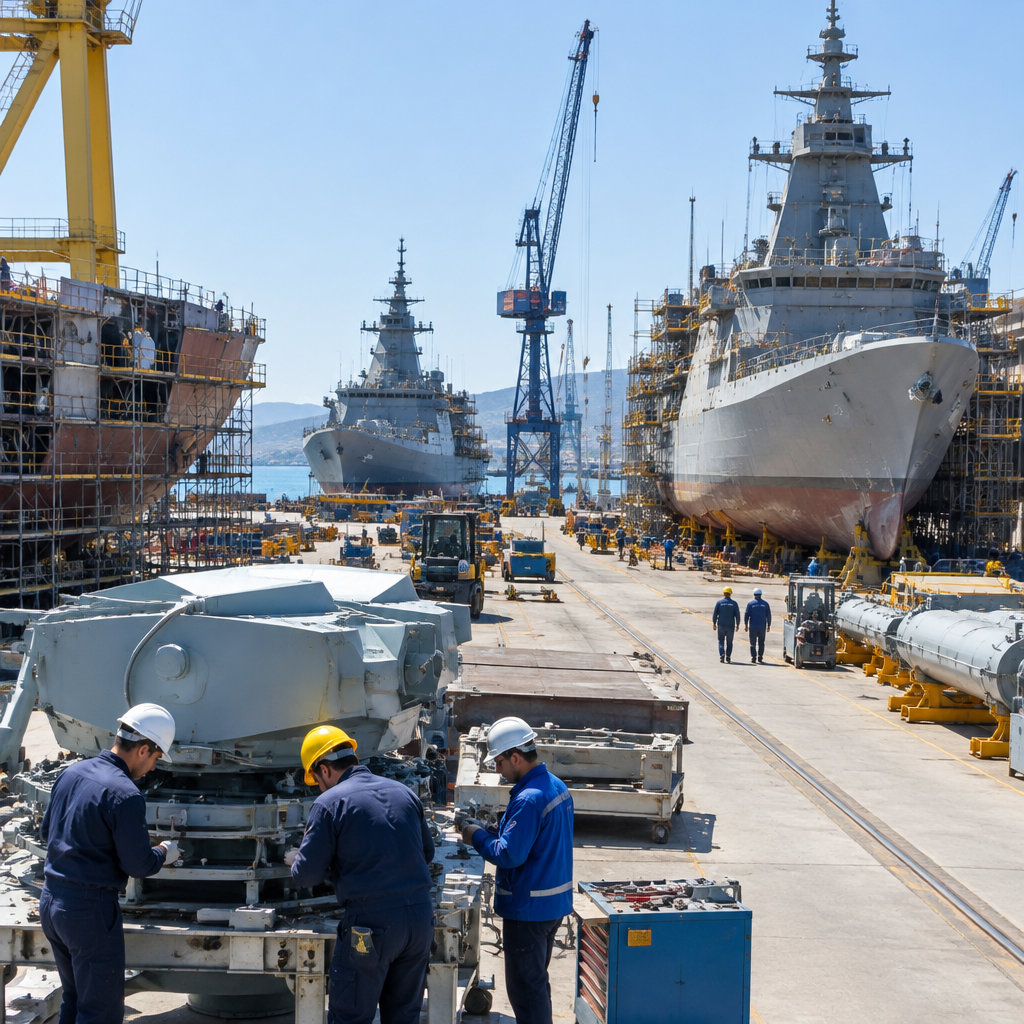
Compounding the backlog are major export platforms with long lead times that are slated to enter serial delivery between 2027 and 2030. The source names Indonesia’s KAAN fighters as an example alongside naval combatants and heavy armoured vehicles. These programmes, by design, create clustered delivery obligations across a narrow window — a pressure point the industry has framed as a delivery-wall risk around the 2027–2030 period.
Offshoring, industrial offsets, and co-production as production policy
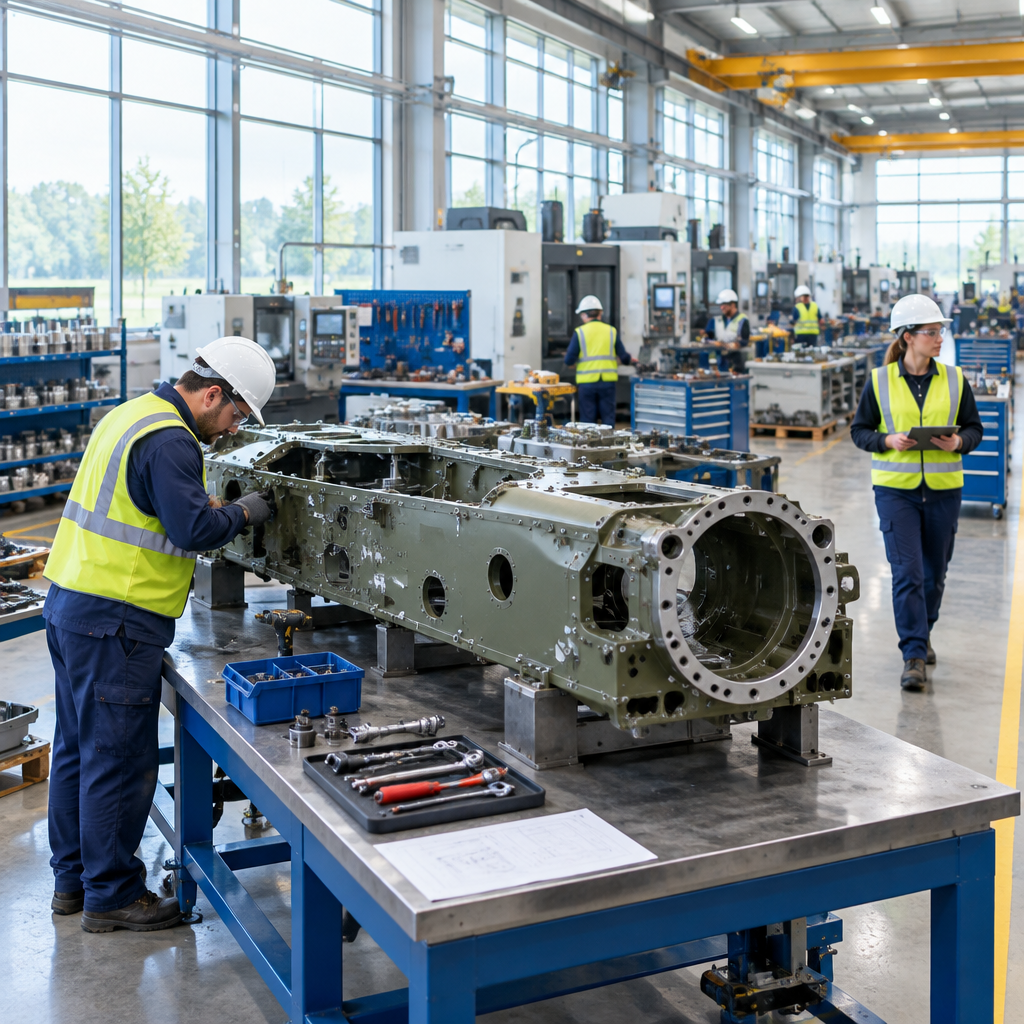
To prevent foreign backlogs from turning into delay liabilities, Turkish defence planners and OEM leaders are reorganising production. Industrial offsets and co-production — historically used as commercial concessions to close sales — are being repositioned as instruments to expand aggregate production capacity. That strategic shift means manufacturers are moving parts of production offshore to partners and customers, creating capacity outside Türkiye that can speed fulfillment and secure revenue and market share.
The trade-off is explicit in the source: offshoring and co-production can help guarantee Turkish OEM revenue and protect market position, but they carry the potential risk of losing future job growth inside Türkiye. In short, the policy calculus has shifted from using offsets purely as sales sweeteners to treating them as capacity-expansion tools.
What this means for the SSB, Aselsan/Havelsan/Roketsan, and export customers (e.g., Indonesia)
- The Presidency of Defence Industries (SSB): will be managing expectations and schedules as it seeks to meet its target of $20 billion in foreign order intake for 2026 while overseeing fulfillment against a multi-year backlog.
- Aselsan, Havelsan, and Roketsan (leading Turkish OEMs): must balance heavy domestic commitments — notably Steel Dome work that comprises 70–85% of leading orders — against large and growing export contracts, and will continue to use offsets and co-production to expand effective output.
- Export customers (for example, Indonesia): will see delivery schedules concentrated in the 2027–2030 window for long-lead platforms such as KAAN fighters, naval combatants, and heavy armoured vehicles, and may receive production or assembly responsibility through offset and co-production arrangements intended to accelerate serial deliveries.
The arithmetic is blunt: more than $15 billion in contracts already signed in 2026, $7.4 billion in deliveries by mid-October, and a $23 billion unfulfilled stockpile built since 2023. Faced with clustered serial deliveries from 2027 to 2030 and heavy domestic programmes absorbing core industrial capacity, Turkish defence industry leaders are effectively exporting production capacity alongside platforms. That approach eases the immediate delivery problem and locks in revenue and market share — but it also shifts some future industrial benefits out of Türkiye. Whether that trade-off preserves the country’s exporter momentum without hollowing domestic job growth will be a key measure of success as serial deliveries begin in the 2027–2030 window and as the SSB pursues its $20 billion target for 2026.