"Drones are putting new pressure on short-range air defense, especially for maneuver forces that can’t be tied to a proprietary platform," Breaking Defense reported.
What the report identifies: pressure on short-range air defense
The Breaking Defense piece frames the problem succinctly: unmanned aerial systems — described in the article simply as "drones" — are creating new demands on short-range air defense. The report singles out one particular operational constraint: maneuver forces that cannot be tied to a proprietary platform face heightened challenges in meeting those demands. That sentence is the central factual claim the story advances.
SAIC’s Reconfigurable Air Defense (RAD)
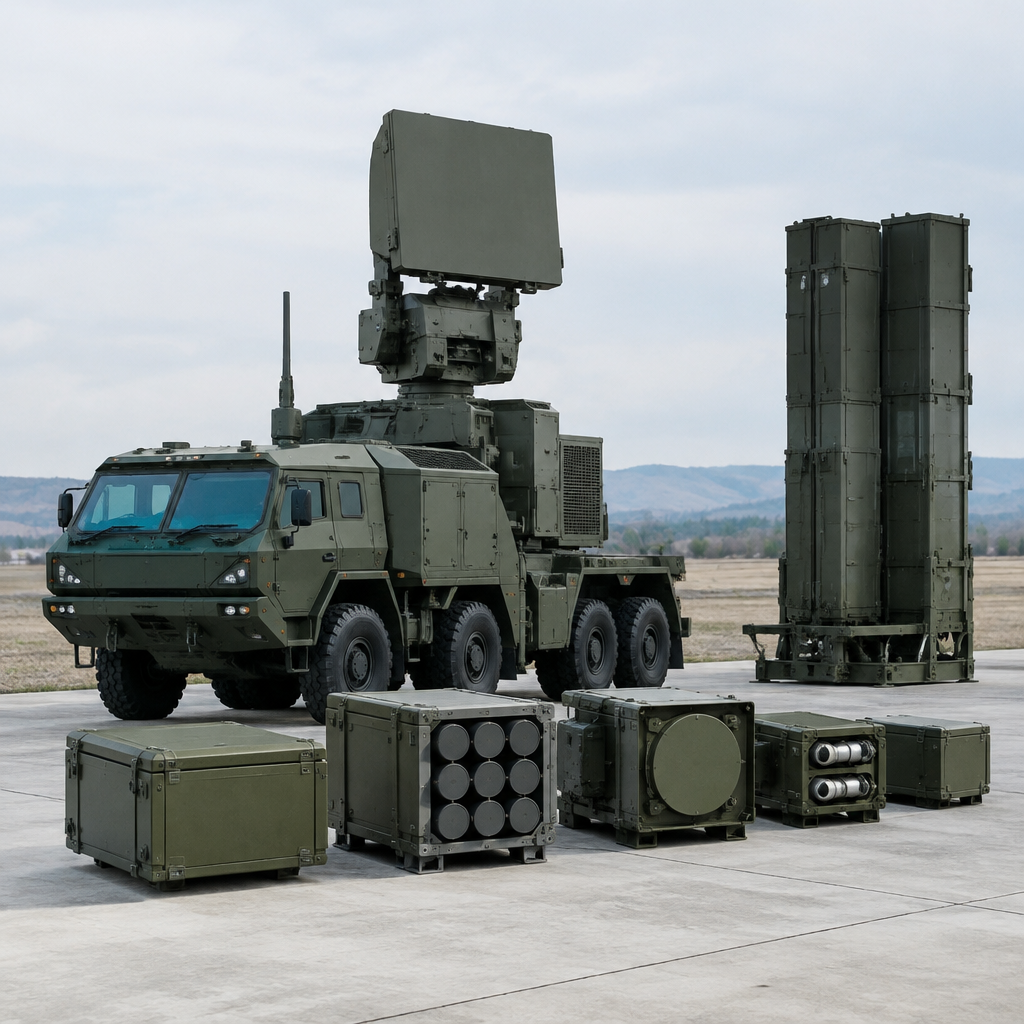
Breaking Defense notes that the company SAIC has a response in development: Reconfigurable Air Defense, or RAD. The story identifies RAD by name and connects it explicitly to SAIC, saying the reporting included a conversation with SAIC’s Mike Tomlinson about the system. Beyond the name, the article does not provide technical specifications or deployment timelines; it frames RAD as the vendor response discussed in the interview.

Audit-ready is a season. It shouldn't be.
Evidence in spreadsheets, controls drifting between audits, frameworks multiplying on flat headcount. Nubivance runs continuous compliance on Rapid7 Cyber GRC - SOC 2, HIPAA, ISO 27001, PCI, CMMC.
End the scrambleThe modular approach, as described in the reporting
The reporting highlights a single design principle tied to RAD: modularity. Breaking Defense connects that modular approach to the problem the article opens with — the need to support maneuver forces that cannot be tied to a single proprietary platform. The piece presents modularity as a way to avoid platform lock-in, positioning RAD as intended to be reconfigurable rather than fixed to one host system.
How this story lands for maneuver forces, SAIC, and platform-centric vendors
- Maneuver forces: The article identifies them as the operational group under new pressure from drones because they "can’t be tied to a proprietary platform." The reporting implies maneuver units will be attentive to solutions that can be reconfigured and integrated without forcing a single-platform dependency.
- SAIC and its spokespeople: Breaking Defense says the outlet spoke with SAIC’s Mike Tomlinson about RAD and its modular approach, positioning SAIC as an active vendor pitching a reconfigurable short-range air defense option.
- Platform-centric short-range air defense vendors: The story sets up a contrast between proprietary, platform-tied systems and modular, reconfigurable ones, suggesting the latter are being promoted as an answer to the constraints the report highlights.
Reporting limits and the central unanswered operational questions
The article concentrates on the problem statement and on SAIC’s RAD as a modular response, but it does not present further operational details: there are no specifications, performance metrics, integration plans, fielding schedules, or first-hand quotes from Mike Tomlinson provided in the short report. Those gaps leave open critical questions about how RAD would be integrated with maneuver formations, what trade-offs modularity imposes, and how rapidly such solutions could be adopted — questions the piece raises by implication but does not resolve.
Conclusion
Breaking Defense’s brief report places a clear, narrow fact set at the center: drones are increasing pressure on short-range air defense, especially for maneuver forces that cannot be tied to a proprietary platform, and SAIC has advanced a modular option called Reconfigurable Air Defense (RAD), which the outlet discussed with SAIC’s Mike Tomlinson. The modular-versus-proprietary distinction is the article’s operative frame; the practical implications — how RAD performs, how it will be fielded, and how maneuver forces will adopt it — remain to be demonstrated in further reporting or vendor disclosures.
Read the original story: https://breakingdefense.com/2026/10/a-more-flexible-way-to-defend-maneuver-forces-from-drones-that-doesnt-tie-them-down/