Turkey Strengthens Regional Defense Ties with Romania Through COBRA II Production Initiative
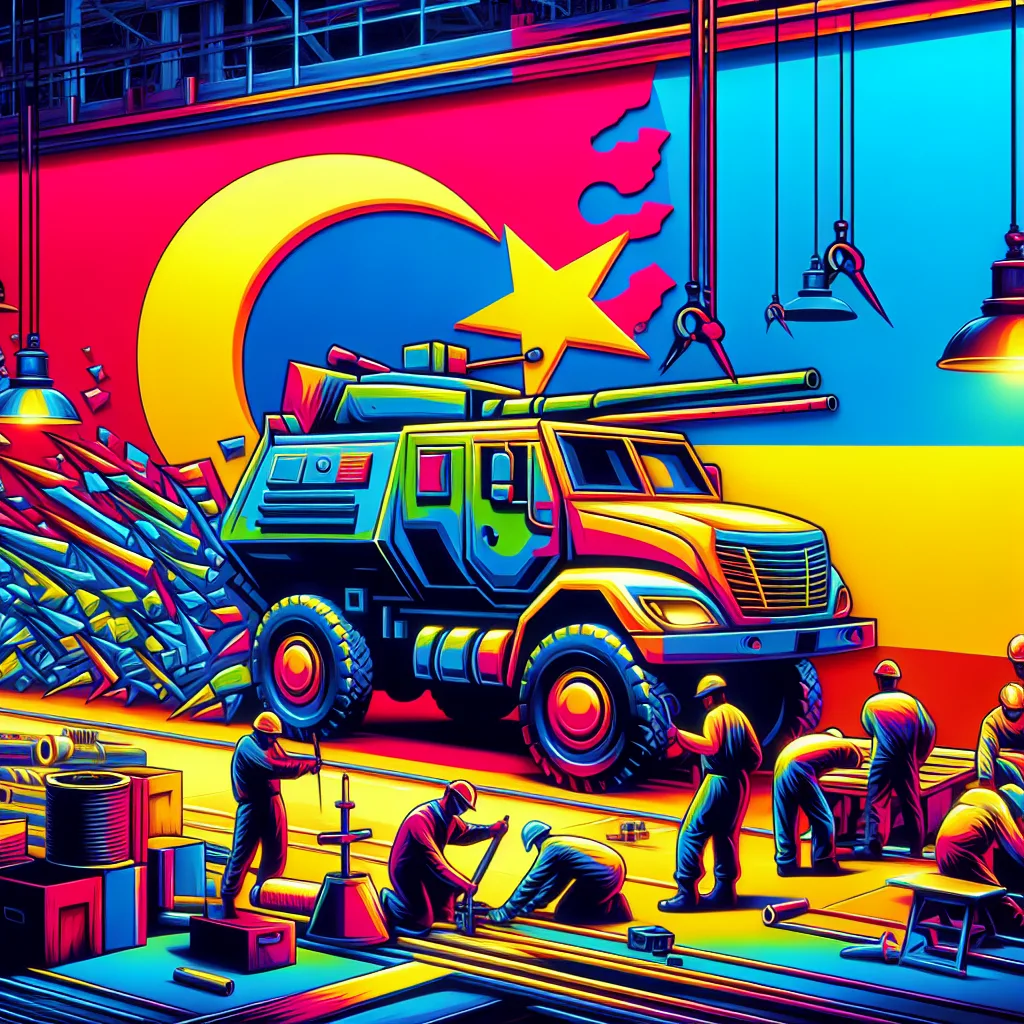
In a move that underscores a deepening defense collaboration in southeastern Europe, Turkish defense manufacturer Otokar has initiated production of the first batch of COBRA II armored vehicles aimed at fortifying Romania’s tactical capabilities. The announcement, which has reverberated across industry circles, sees an initial output of 278 COBRA II 4×4 Tactical Wheeled Light Armored Vehicles produced at Otokar’s facilities in Turkey—with plans for the remaining 781 units to be manufactured locally in Romania under a strategic localization agreement.
This dual-track production strategy is not just an industrial decision—it is emblematic of a broader geopolitical alignment, one where defense modernization and regional security interests converge. As European countries reassess their strategic partnerships, Romania’s embrace of Turkish defense technology speaks volumes about shifting paradigms in military procurement and cooperative manufacturing.
Otokar, well known for its innovation in armored vehicle design and production, has long been at the center of Turkey’s ambition to position itself as a reliable supplier to allied nations. Romania, on its part, has increasingly looked to international partners to modernize its defense forces amid evolving regional security challenges. The localization agreement, in particular, aims to bolster Romania’s industrial base while simultaneously ensuring a seamless supply chain of critical military assets.
Historically, Romania’s defense procurement strategy has often sought a balance between indigenous production and foreign acquisition. With its recent steps towards localizing production in cooperation with Otokar, the Romanian government appears determined to upgrade its national defense framework by integrating advanced technology while nurturing local industrial expertise. Such initiatives are not without precedent; similar arrangements across Europe have provided both technological and economic dividends.
At the heart of this development is the COBRA II—a vehicle that blends mobility, protection, and firepower into a compact yet adaptable platform suitable for a range of tactical scenarios. Designed for modern asymmetric conflicts, the COBRA II is well suited for rapid deployment, urban operations, and border security missions. With defense experts noting a marked increase in demand for light armored vehicles that can be quickly reconfigured according to operational requirements, this venture comes at a time when the need for adaptable military assets is more pronounced than ever.
In concrete terms, Otokar’s announcement details a two-pronged manufacturing strategy: the initial batch of 278 vehicles will be wholly produced at its established facilities in Turkey, ensuring that the highest standards of quality and consistency are maintained from the first production run. Subsequent batches are set to roll off assembly lines in Romania—a move that promises to transfer technological knowledge, create local jobs, and integrate Romanian suppliers into a global value chain. This production model echoes previous successful localization initiatives in the defense sector, where partnerships between established manufacturers and emerging defense markets have yielded mutual benefits in terms of cost, innovation, and strategic resilience.
The current venture is significant not only from a military equipment standpoint but also for its broader implications on regional industrial dynamics. By choosing a localization model, Romania is effectively hedging against potential supply chain vulnerabilities. This approach also aligns with European Union priorities on enhancing industrial sovereignty—of which defense is an integral part—as well as reinforcing the transatlantic security framework.
Some key aspects of this initiative include:
- Enhanced Industrial Collaboration: The localization agreement is set to transfer critical manufacturing know-how to Romania, bolstering local industry and diversifying defense procurement sources.
- Operational Flexibility: The COBRA II’s capabilities – including high mobility, defensive armor, and modular design – address the evolving tactical requirements of modern militaries, ensuring that end-users have a platform that can adapt to various combat environments.
- Economic Impact: Local production of nearly 781 vehicles in Romania is expected to generate significant economic activity in the region, underlining the role of defense contracts in national economic growth.
- Strategic Partnership: The deal not only reflects a commitment from both countries to strengthen their bilateral ties but also signals a broader realignment within regional defense networks amidst changing geopolitical realities.
Industry analysts and defense strategists have closely monitored this development. The integration of a Turkish defense product into a European security framework represents an intriguing synergy that could lead to further collaborative ventures across the region. Publications such as Defence Blog have highlighted the deal as part of a trend where regional partners are increasingly looking to leverage each other’s technological strengths, rather than solely relying on traditional Western defense suppliers.
In context, this move by Otokar is a well-calculated step in Turkey’s export strategy, tapping into markets that demand high-end, flexible armored solutions. For Romania, the production agreement is a twofold win: it not only secures access to a proven military asset but also invigorates domestic production capabilities. With Romania’s ongoing efforts to modernize its armed forces, the localization of defense equipment manufacturing is further seen as a strategic buffer, reducing reliance on external suppliers and fostering greater autonomy.
Experts within the defense community have observed that this partnership is also likely to serve as a model for future engagements between Turkey and its European counterparts. Detailed analyses in defense journals have noted that the success of such partnerships could prompt similar agreements elsewhere, particularly in countries seeking to balance modernization with economic development. The operational experience gained through a local production line may even accelerate subsequent upgrades and modifications based on user feedback—a practical benefit for military operators.
Looking ahead, the ramifications of Otokar’s production initiative are manifold. Should the venture prove successful, it could inspire further integration between local industries and international defense manufacturers. Additionally, the move may encourage other nations in the region to pursue similar arrangements—leveraging foreign design expertise while cultivating domestic industrial strengths.
Policymakers will no doubt keep a close watch on the implementation of the localization agreement. Its progress will serve as a barometer for the broader relationship between Turkey and Romania, as well as the evolving nature of defense procurement within Europe. On a strategic level, as nations across the continent bolster their defense capabilities in the face of new security challenges, innovations in production methods such as this one stand out for their blend of economic pragmatism and technological advancement.
For military planners and policymakers alike, the initiative invites a series of questions: How will this cooperation influence future defense contracts? Might localized production further enhance Romania’s operational readiness in regional conflicts? And, more broadly, to what extent can such collaborations serve as a blueprint for the modernization efforts of other European states?
While definitive answers to these questions will unfold over time, the current agreement is a reminder that in the realm of defense, technological prowess must go hand in hand with industrial agility and strategic foresight. As the first vehicles roll off the assembly lines, they carry more than just armor and engines—they embody a shared vision for a more integrated and resilient European defense landscape.
In the final analysis, the COBRA II production initiative reflects an era where national security concerns, local economic benefits, and international cooperation are indistinguishably intertwined. The move is a pragmatic, if bold, assertion that in the modern battlefield, strength is measured not only by advanced weaponry but also by the ability to forge strategic alliances that span borders and blend expertise. The coming months will reveal whether this partnership becomes a defining chapter in regional defense modernization, or simply one of many steps on the road to an increasingly interconnected security framework.