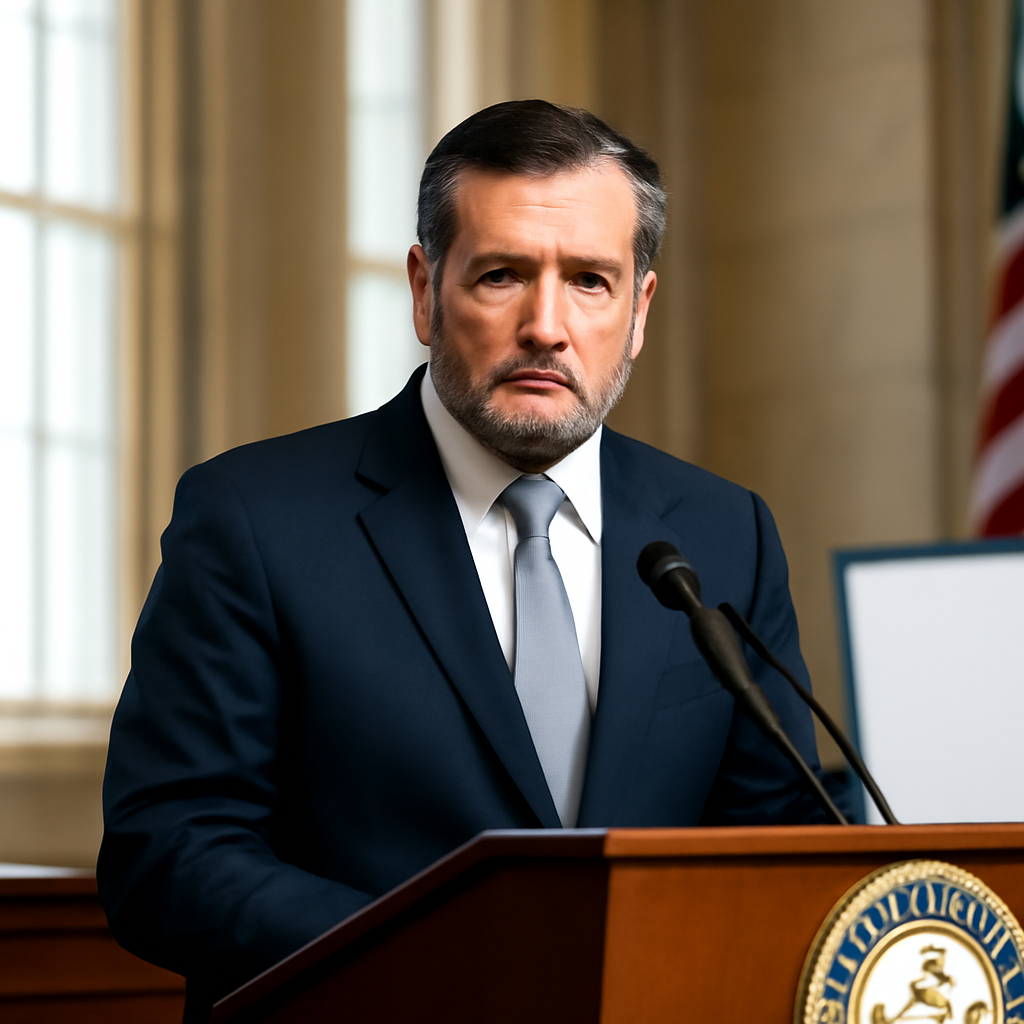
"A disastrous mistake," says Senator Ted Cruz, from Texas.
Republican backlash: Cruz, Cassidy and Pence
The earliest reactions from fellow Republicans to President Donald Trump’s leaked, 14‑point memorandum of understanding with Iran are uniformly harsh. Senator Ted Cruz called it "a disastrous mistake." Senator Bill Cassidy of Louisiana labelled it "the worst foreign policy blunder in decades," and former vice president Mike Pence warned the MOU would be "essentially a lifeline to the Iranian regime." Those criticisms focus squarely on the substance of the memorandum, signed on 17 June, which appears to offer Iran large financial benefits in exchange for what critics describe as vague promises about its nuclear program and the Strait of Hormuz.
Democratic criticism: Kaine, Shaheen and Warner
Democrats have also been highly critical, arguing the MOU yields far less than prior diplomacy achieved. Senator Tim Kaine said, "We are giving a lot more to get a lot less than we got in the JCPOA." Senator Jeanne Shaheen, the ranking Democrat on the Foreign Relations Committee, called Trump’s deal "much worse than Obama’s." Senator Mark Warner, ranking Democrat on the intelligence committee, contrasted the MOU with the 2015 Joint Comprehensive Plan of Action, noting that "we had international observers, we actually had an alliance there that included the Europeans, and Russia and China were all signatories."

This site is the portfolio.
OSINTSights runs on Cloudflare Workers, D1, R2, and Vectorize, with an AI pipeline on Hetzner ARM. Nubivance designed, built, and operates it. We do the same for clients.
See what we buildOperational gains from Midnight Hammer and Epic Fury vs. MOU concessions
Republican frustration is sharpened because those who supported the 2025 Midnight Hammer attack on Iran’s nuclear program and the larger Epic Fury attack in 2026 see the MOU as undoing battlefield gains. The attacks are credited in the source with achieving "numerous operational goals – the decapitation of national leadership, sinking of Iran’s navy, crushing of its air defence, severe degradation of its missile inventory." Conservatives argue the MOU appears to give life back to a regime they describe as "odious" after those outcomes were achieved.
Proxies, the Strait of Hormuz and the $300 billion question
Financial details in the leaked MOU are a central flashpoint. The memorandum appears to create a US$300 billion fund for Iran’s reconstruction — noted in the source as twice the amount Iran received after the 2015 JCPOA — and that figure "doesn’t count the release of frozen Iranian funds in foreign banks and the value of sanctions relief, also promised in the leaked MOU." Conservatives also object that the agreement, like the JCPOA a decade ago, "does not address Iran’s support for terrorist and proxy forces across the region – Hamas, Hezbollah, Houthis, and Shia militias in Iraq." The source poses the question explicitly: "Could Iran use its new financial resources to revive these groups? Perhaps."
How Israel, the US Republican Party, and Iran are positioned
- Israel: The source states Israel "has proven itself quite willing and capable — with some top cover from the United States — of addressing these challenges directly," suggesting a regional actor prepared to act against proxy threats if they re-emerge.
- The US Republican Party: The episode is refracting intra‑party competition. Vice President JD Vance is "positioning himself as the champion of the new MOU," while Secretary of State Marco Rubio has been "relatively silent." The source describes the Republican Party in the age of Trump as "more blue‑collar, more ethnically diverse and vastly more sceptical of foreign entanglements," language used to explain why Vance’s anti‑war posture could be electorally advantageous.
- Iran: The leaked MOU’s financial provisions — the US$300 billion reconstruction fund plus released frozen assets and sanctions relief — are presented as substantial economic lifelines whose ultimate use and political effects are the core of critics’ concern.
The MOU also includes a 60‑day period of negotiation "on the many details of reining in Iran’s nuclear program." The source stresses there is "no guarantee this negotiation will succeed" and that "many Iran watchers believe it will ultimately fail," producing instead "a muddled grey zone of Iranian belligerence and occasional American strikes on Iranian strategic positions, much like the pre‑February 2026 period." Yet the source also records an opposing conservative judgement that as anger fades some on the right will embrace the agreement as proof that President Trump’s willingness to use military force "has restored deterrence to the American playbook," and that deterrence plus retained military options — rather than any deal — is the ultimate guarantee against a nuclear Iran.
Politically, the episode is already reshaping Republican positioning ahead of the next presidential contest. The source frames this as "the beginning of the real contest" between Vice President JD Vance and Secretary of State Marco Rubio, with Trump‑sceptical conservatives hoping Rubio will revive a Reagan‑style global leadership while Vance trades on the party’s evolving skepticism of foreign entanglements. The immediate test, the source makes clear, is the 60‑day negotiation window: whether it yields durable constraints on Iran or instead leaves an uneasy balance between renewed Iranian resources and continued military deterrence.



