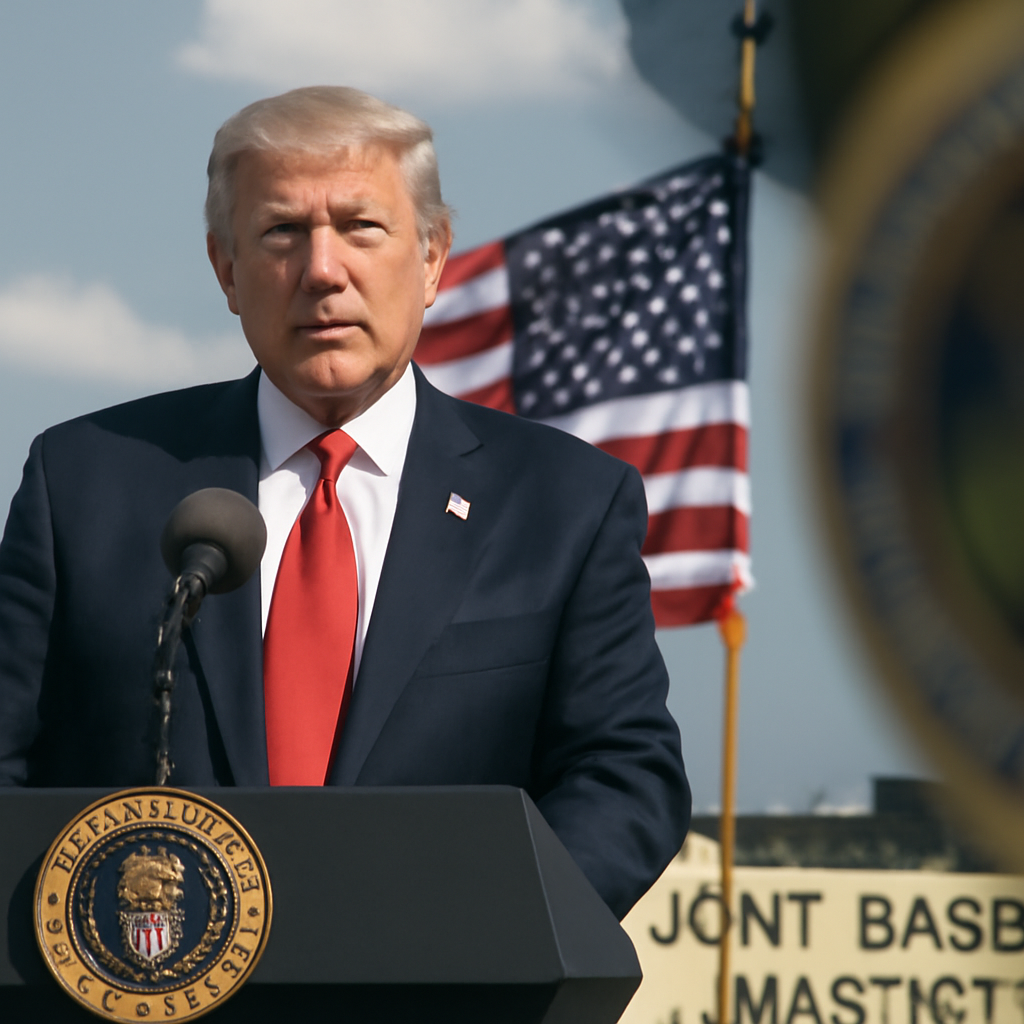
“But while he’s there, I said you can declassify whatever you want,” President Donald Trump told reporters at Joint Base Andrews, announcing a sweeping, public green light for acting Director of National Intelligence Bill Pulte to release classified records during a brief, interim tenure.
Trump’s public authorization for Bill Pulte
Speaking July 1, the president framed Pulte’s expected short stint as acting chief — “a month or two months or something” — and said he has permission to declassify “almost everything” while in the role. The comments give Pulte overt political backing to move faster on releasing records than might otherwise occur, but they do not, in the president’s remarks recorded in the reporting, describe any procedural steps for consulting other agencies whose materials could be involved.
How U.S. law and usual practice contrast with the announcement
The reporting notes that under U.S. law, records declassification is typically handled through a structured review process intended to identify national security risks before materials are released. Intelligence records are “typically reviewed by the agency that produced them before release,” particularly when disclosure could expose that agency’s operations — a review that former officials fear could be bypassed under Pulte’s approach.

Audit-ready is a season. It shouldn't be.
Evidence in spreadsheets, controls drifting between audits, frameworks multiplying on flat headcount. Nubivance runs continuous compliance on Rapid7 Cyber GRC - SOC 2, HIPAA, ISO 27001, PCI, CMMC.
End the scrambleFormer intelligence officials warn of operational and diplomatic risks
Current and former intelligence officials quoted in the reporting voiced alarm. “My guess is that NSA and CIA are losing their minds at the idea of Pulte declassifying a lot of stuff,” a former official said, arguing that reckless declassification could “blow up cyber exploits, putting foreign relationships at risk, or getting people killed.” Another former official said the president’s statement alone could deter people from volunteering intelligence to the United States: “any person thinking about volunteering or working with the United States might think twice now, and is more likely to go to the Brits or another service.”
Personnel moves at ODNI under Pulte
Pulte’s short tenure has already prompted staffing changes inside the Office of the Director of National Intelligence. The reporting says around 50 career and political staff have been removed from their roles at ODNI, continuing a downsizing campaign that began under former DNI Tulsi Gabbard. Pulte sidelined Will Ruger, the deputy director for mission integration, and installed Christina Norton as his chief of staff — Norton previously served as Pulte’s chief of staff at the Federal Housing Finance Agency and as the RNC’s election integrity director, where she helped oversee the party’s 2024 poll-watching operation. Those moves, the reporting says, have sharpened concerns that ODNI could be drawn further into revisiting election-related claims.
How NSA, CIA, and foreign partners may react
- NSA and CIA: Former officials in the reporting anticipate alarm inside the agencies whose operations could be exposed, stressing that agency-by-agency review is the norm and could be skipped under an aggressive declassification push.
- Foreign partners and sources: A former official warned that the president’s public authorization could signal to potential intelligence providers that their contributions to the U.S. might be disclosed “at Pulte’s whim,” making them more likely to work with other services instead.
- Intelligence community volunteers and contractors: The report quotes concern that the signal to prospective sources and partners could reduce cooperation and endanger ongoing operations.
Political friction and effects on surveillance legislation
The president’s decision to keep Pulte in place followed his pause of a Senate push to confirm Jay Clayton as permanent DNI; Trump said Clayton would get a Senate hearing in two weeks. Clayton’s nomination has drawn a generally positive response from senators, the reporting says, but Democrats reacted furiously to Pulte’s elevation and even some Republicans expressed concern about installing someone with no prior intelligence-community experience as acting DNI. That fight has already affected Section 702 reauthorization: the surveillance authority had seemed headed for reauthorization in early June before Democrats balked in protest of moving forward with Pulte at ODNI’s helm.
The White House has also assembled a task force collecting thousands of pages of intelligence and law-enforcement documents, mostly related to the 2020 election, with plans to declassify some of them in ways that could support the president’s claims about election irregularities, the reporting adds. The declassification push follows earlier releases under Tulsi Gabbard’s tenure at ODNI, which the office said exposed alleged efforts by intelligence officials to undermine Mr. Trump’s 2016 victory and material it said related to his 2019 impeachment proceedings.
Whether Pulte will exercise the broad latitude the president publicly described, or whether internal legal and interagency checks will restrain disclosures, remains the central, unresolved question left by the record presented: Pulte’s authority has been publicly widened, but the mechanisms and consequences of exercising it have yet to be tested.