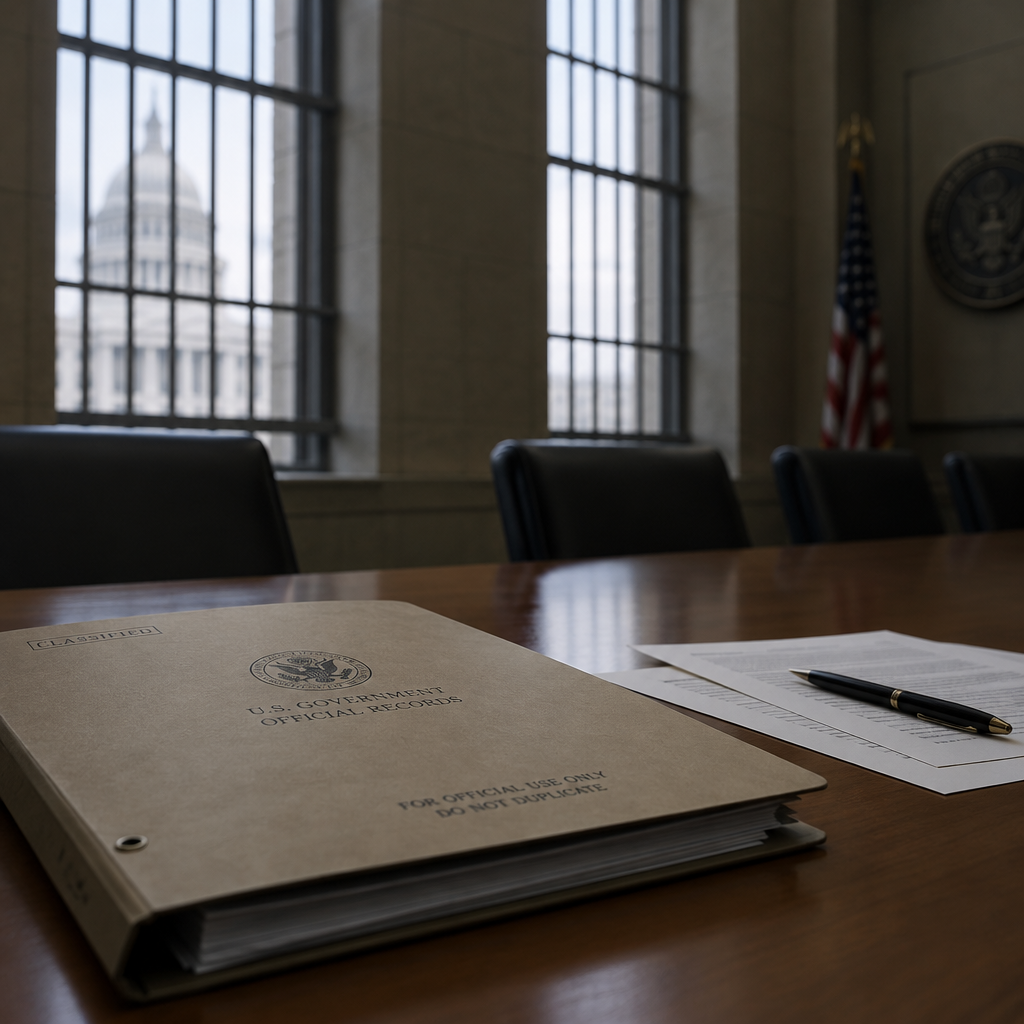
What the withheld FISC opinion reportedly describes
The opinion, which the administration has not declassified and which officials are legally required to release, includes a judge’s objection to tools the government has created to let analysts process messages. According to the reporting, the objection focused on a filtering system that allowed analysts to obtain information in a way that “should be counted as a query of Americans’ information,” a category that is subject to heightened protections.
Legal deadlines and a missed statutory requirement
Senators and civil liberties groups say the administration is breaking the law by failing to meet the declassification deadline. Under the law, the letter to lawmakers was due Sept. 13; the Senate duo and the coalition said the administration is now more than a month overdue. Attorney General Todd Blanche had previously committed to declassify the opinion to lawmakers by the statutory deadline, but the document has not appeared publicly.

The cyber insurance questionnaire just landed. Now what?
SOC 2, HIPAA, insurance renewals - someone has to own security strategy. Nubivance provides fractional CISO leadership without the full-time salary.
Get a security leadSection 702’s status and the timing pressure on Congress
Section 702 of the Foreign Intelligence Surveillance Act—whose reauthorization has been closely tied to the FISC opinion—lapsed this summer, the reporting notes. Collection authority has continued under another court ruling that runs through March of next year, but the lapse has left Congress arguing over whether to reauthorize the authority and under what terms. Senator Wyden had objected to a short‑term reauthorization until officials agreed to release the opinion, saying the document shows “major compliance problems.”
Responses from Capitol Hill and civil liberties groups
Wyden and Schiff asked Director of National Intelligence Jay Clayton and Attorney General Todd Blanche to act. A spokesperson for Senate Intelligence Chairman Tom Cotton, R‑Ark., did not respond to a request for comment; by contrast, Senator Mark Warner’s office—through spokesperson Rachel Cohen—reiterated that the vice chairman supports transparency and expects DNI Clayton to declassify the March 17 FISC opinion “consistent with the bipartisan SSCI letter and as required by law.” Cohen added that Senator Warner and Chairman Cotton had urged then‑DNI Tulsi Gabbard in March to declassify the opinion, and that neither Director Gabbard nor Acting Director Bill Pulte were responsive then.
Civil liberties groups pressed a harder line: they wrote that failure to declassify the opinion should be fatal to any reauthorization of Section 702. “Congress should refuse to support any reauthorization of Section 702 while the administration actively withholds legally mandated information about how the surveillance program operates,” they wrote, and urged that Congress “stop relying on executive branch self‑policing to protect Americans’ rights and reauthorize Section 702 only with a warrant requirement to access Americans’ private communications.”
How Congress, civil liberties groups, and intelligence officials are positioned
- Congressional leaders and committees: Senators Wyden and Schiff have demanded the document; Senate Intelligence leaders urged declassification earlier in the year and expected the opinion to be released by May 15. Those timelines have not produced a public opinion to date, increasing pressure on lawmakers debating reauthorization.
- Civil liberties organizations: They view the withheld opinion as decisive. The groups argue the document’s nondisclosure should block reauthorization and insist on statutory changes—specifically a warrant requirement—before any further approval.
- Intelligence community and executive branch officials: The Office of the Director of National Intelligence and the Justice Department did not immediately respond to requests for comment, while Attorney General Blanche had told lawmakers he would meet the statutory deadline—an expectation that, per the senators and groups, has not been met.
The withheld opinion sits at the intersection of law, oversight and policy: lawmakers say it is legally mandated and necessary to evaluate whether Section 702 can be trusted; civil liberties groups say its nondisclosure should preclude reauthorization; the administration, according to reporting, has not produced it despite promises. With the alternate court ruling that permits collection through March still in force, the immediate operational pressure on intelligence collection is limited, but the political and legal stakes in Congress remain acute.
Requests to the Office of the Director of National Intelligence and the Justice Department for comment were not immediately answered, and the question at the center of this dispute—whether the FISC opinion will be declassified and, if so, how its findings will shape Section 702—remains unresolved.
Source: CyberScoop — Wyden, Schiff: FISA Section 702 declassification