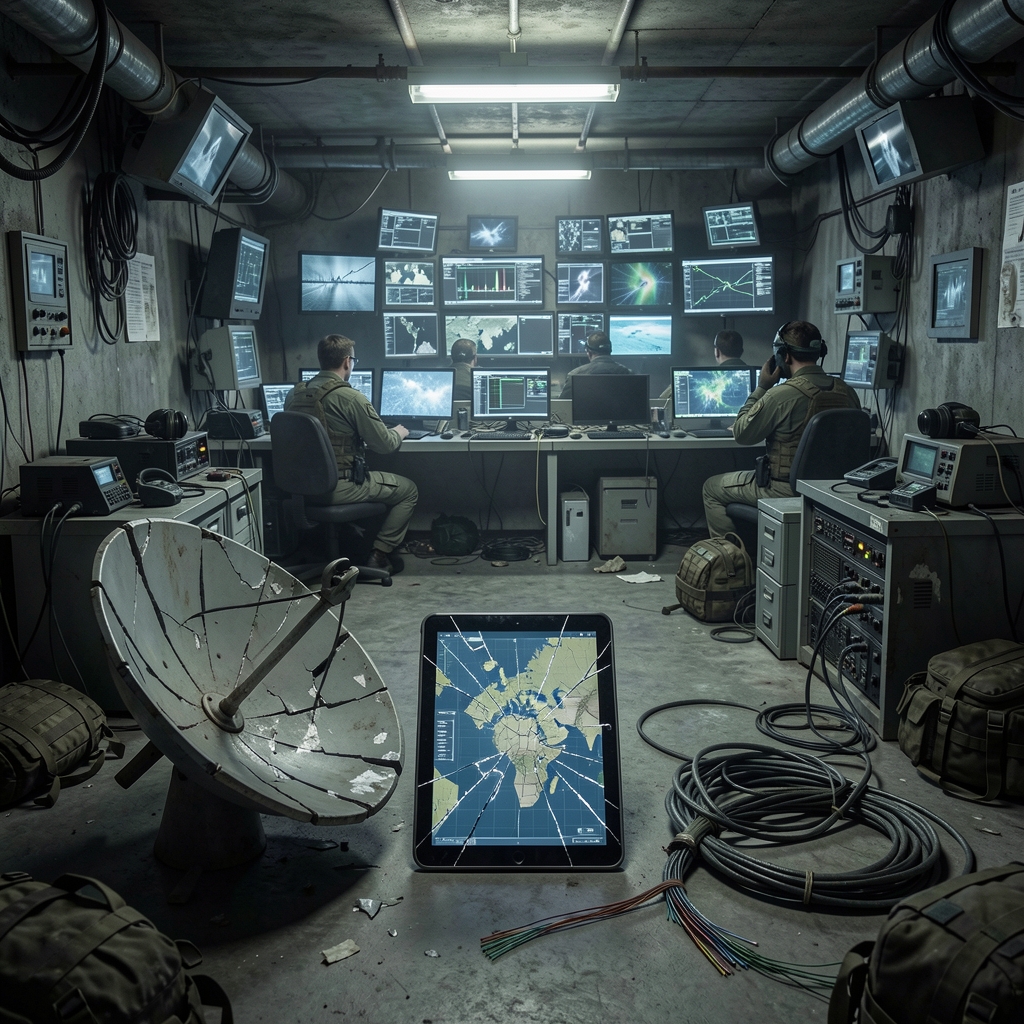
“In the chaos of modern warfare, how does a commander maintain clarity?” This question has become increasingly urgent as battlefields evolve into multifaceted arenas where technology, strategy, and human judgment collide. The ongoing war in Ukraine has served as a sobering case study, exposing critical vulnerabilities and demanding rapid adaptation from command and control (C2) centers worldwide.
The Ukrainian conflict is unlike many wars before it, combining asymmetric warfare with conventional and aerial combat, all within a congested electromagnetic environment. As Colonel James Haslam, a defense analyst at the Center for Strategic and International Studies, notes, “The battlefield is no longer just physical terrain; it’s also digital, cybernetic, and electromagnetic. Commanders need systems that not only withstand disruption but also provide actionable intelligence swiftly.” This has pushed modern C2 centers into uncharted waters, where traditional methods often fall short.
One of the foremost challenges is managing information overload amidst complex communication networks. Modern sensors, drones, satellites, and human intelligence sources generate vast quantities of data—information that is both a blessing and a curse. According to a recent report by the RAND Corporation, C2 centers must sift through terabytes of data daily to identify credible threats and opportunities. The difficulty lies in ensuring that commanders receive timely, accurate, and relevant information without being overwhelmed.
Secondly, the threat of cyber and electronic warfare has emerged as a formidable adversary. The Russian military’s use of sophisticated electronic jamming and cyberattacks against Ukrainian communication nodes has demonstrated how easily C2 infrastructures can be compromised. The Department of Defense’s 2023 Annual Report highlights that disruptions to data links and command networks can lead to delays or errors with potentially catastrophic consequences. As Brigadier General Christine Abizaid, director of the U.S. Army Cyber Command, asserts, “Securing our command networks against increasingly sophisticated attacks is a top priority, but the threat environment changes daily.”
Finally, interoperability challenges continue to plague joint and coalition operations. Allied forces must synchronize efforts across varied platforms, services, and national doctrines. The diverse hardware and software ecosystems complicate seamless communication, particularly under the duress of combat. A report from NATO’s Joint Warfare Centre underscores that while strides have been made in developing common standards, gaps remain that adversaries can exploit, resulting in delays and misaligned actions on the battlefield.
Why do these challenges matter beyond the immediate theater of conflict? Because modern warfare no longer respects borders or traditional paradigms. The ability of C2 centers to adapt and innovate directly impacts not only military success but also geopolitical stability. As Lieutenant General Michael Lundy, former commanding general of the U.S. Army Combined Arms Center, explains, “Our adversaries seek to paralyze our decision-making processes. If we lose that edge, we lose not just battles, but strategic influence.”
From the perspective of technologists, the race is on to develop artificial intelligence and machine learning tools that can automate data analysis and support faster decision cycles. Policymakers, on the other hand, grapple with balancing investment priorities and operational readiness in an era of constrained budgets. Meanwhile, users on the ground demand intuitive systems that enhance—not hinder—their situational awareness and response capabilities.
The war in Ukraine has also served as a cautionary tale for adversaries and allies alike. It signals a shift toward multidomain conflict, where success hinges on agility, resilience, and cooperation. For C2 centers, the path forward demands a holistic approach: integrating robust cybersecurity measures, enhancing data management and fusion capabilities, and fostering interoperability at every level.
As the nature of war continues to evolve, one question remains: can command and control centers keep pace with the rapidly shifting battlegrounds of the twenty-first century, or will they become the next critical vulnerability? The answer may well determine the future not only of military engagements but of global security itself.



