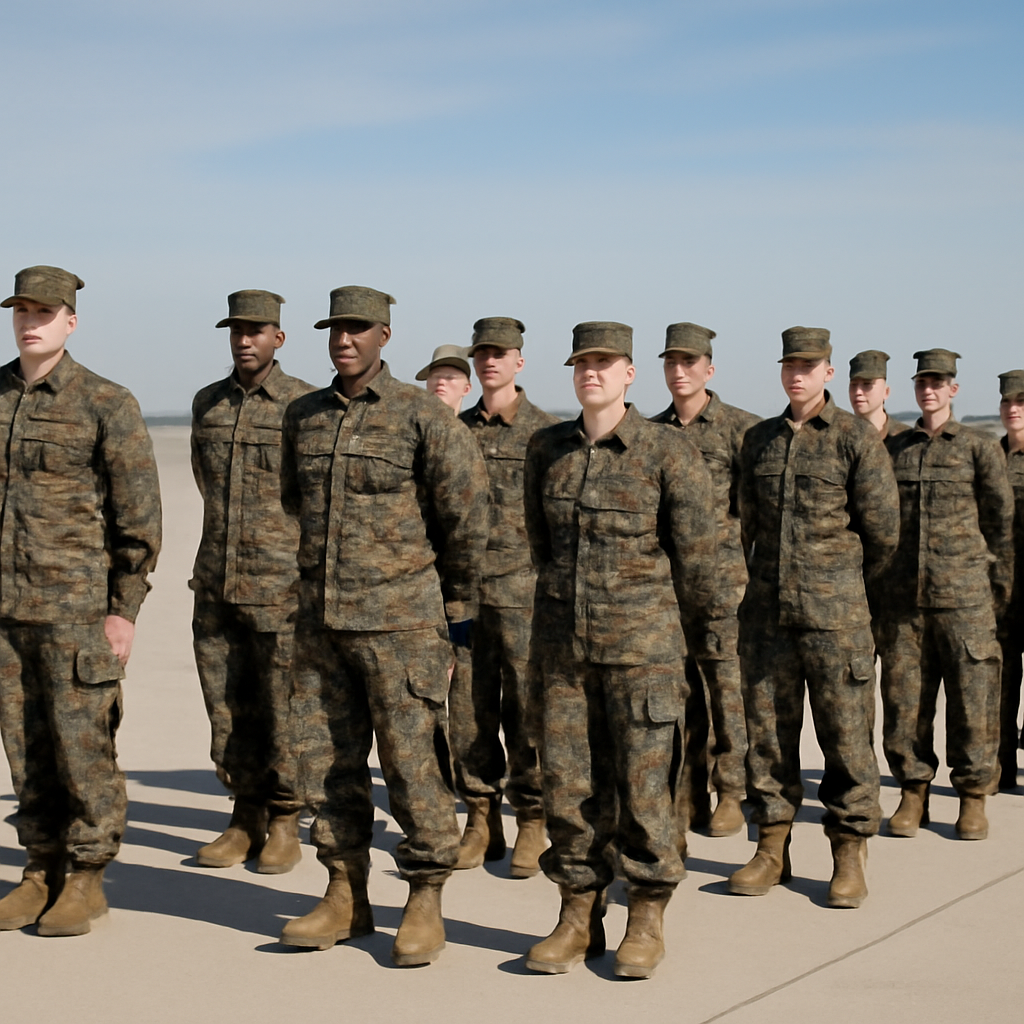
The Taliban has created a 4,000-member military formation known as the Hebati Unit, a force organized into four 1,000-man elements and headquartered at Kandahar International Airport.
The unit’s structure, base, and name
Taliban military sources describe the Hebati Unit as a dedicated formation split into four 1,000-member contingents with its headquarters at Kandahar International Airport, the same military hub that hosts the elite 444 National Unit. Although co-located, the Hebati Unit is a distinct organization with an exclusive mission focused on Afghanistan’s side of the Durand Line.
Taliban sources say the name “Hebati” draws in part from the Arabic word haybah, conveying prestige, authority, and deterrence. The designation also appears linked to Taliban Supreme Leader Hibatullah Akhundzada — following a naming pattern that earlier associated Omari formations with Mullah Omar and Mansouri formations with Mullah Akhtar Mohammad Mansour — implying a level of leadership ownership beyond routine reorganization.
Leadership signals a combat-oriented mandate
The choice of commanders points away from conventional border policing and toward a combat- and operations-focused mission. The Hebati Unit is commanded by Mullah Hamidullah Musafir, who simultaneously leads the Panjshir Special Brigade and has directed Taliban campaigns against the Afghanistan Freedom Front (AFF) and the National Resistance Front (NRF). His background centers on intelligence collection, raids, and disruption of opposition hideouts rather than customs enforcement.
Serving as deputy commander is Haji Musa Aka, the former commander of Kandahar Province’s Eighth Security District and a figure reportedly close to Akhundzada. The unit’s second deputy commander, Mullah Mohammadzai Akhund, is reported to have served in the Zarqawi Unit and to have overseen training and logistical support linked to Tehreek-e-Taliban Pakistan (TTP) camps in Kandahar Province. Logistics responsibilities fall to Mullah Hizbullah Afghan, a senior border commander from Spin Boldak with a long history of managing frontier operations.
The leaders’ combat, counterinsurgency, and logistics experience contrasts with earlier arrangements in which border operations were overseen by senior Ministry of Defense officials, including Second Deputy Minister of Defense Mullah Abdul Qayyum Zakir. That contrast suggests the Hebati Unit is intended to operate where military command and centralized coordination are essential.

Audit-ready is a season. It shouldn't be.
Evidence in spreadsheets, controls drifting between audits, frameworks multiplying on flat headcount. Nubivance runs continuous compliance on Rapid7 Cyber GRC - SOC 2, HIPAA, ISO 27001, PCI, CMMC.
End the scrambleContext: Pakistan’s expanding campaign against cross-border networks
Pakistan has intensified strikes and operations against networks operating from Afghan territory. The source links airstrikes in Nangarhar, Khost, and Paktika in February 2026, the launch of Operation Ghazab lil-Haq, and precision strikes in Khost, Kunar, and Paktika in June 2026 to a shift from reactive defense toward a more proactive campaign aimed at militants and the infrastructure that supports them.
That pressure comes amid a worsening security environment in Pakistan: the TTP continues to conduct attacks across Khyber Pakhtunkhwa and the former tribal areas; the Balochistan Liberation Army (BLA) has demonstrated an ability to coordinate large-scale operations including its Herof 2.0 campaign; and Islamic State Khorasan Province (ISKP) remains active on both sides of the border. All of these organizations rely on the same operating environment — terrain, facilitators, safe houses, logistics and transit routes linking Afghan border regions to operational areas inside Pakistan — and Pakistan’s campaign targets those enabling elements.
What the Hebati Unit appears designed to protect
Officially the Hebati Unit was created to secure Afghanistan’s border and manage what Taliban officials describe as border warfare. But the appointments and structure suggest the force is meant to preserve Taliban control over the broader border environment under growing external pressure. A commander experienced in counterinsurgency, deputies tied to both provincial security and networks associated with TTP logistics, and a logistics chief steeped in frontier operations together point to an effort to safeguard facilitators, transit corridors, and support networks that militants and opposition groups rely upon.
Four thousand fighters are unlikely to shift the broader military balance between Afghanistan and Pakistan on their own. Their significance lies in the Taliban leadership’s conclusion that the Durand Line now requires centralized operational command, specialized forces, and direct senior attention — a signal that the frontier is viewed as a contested military theater rather than merely an administrative boundary.
What this means for Pakistan, AFF/NRF, and militant networks
- Pakistan’s security forces: expect a Taliban response calibrated to preserve cross-border operating environments even as Pakistan expands precision strikes and operations aimed at transit and logistics. The Hebati Unit’s creation signals Taliban leadership attention that could complicate Pakistan’s campaign.
- AFF and NRF (Afghan opposition groups): commanders experienced in counterinsurgency — notably Mullah Hamidullah Musafir — now hold responsibility for frontier forces, suggesting Taliban operations that mix border management with efforts to detect and disrupt opposition hideouts and movement.
- TTP, BLA, and ISKP (militant networks): all depend on the same facilitators and corridors. The Hebati Unit’s focus on managing and defending those elements underlines how Taliban choices about force posture will affect militant freedom of movement and the resilience of cross-border networks.
The Hebati Unit’s formation is, in the words of Taliban sources, both a reorganization and a statement of priority: the Durand Line has moved to the center of Taliban strategic concern at a moment when Pakistan is striking the networks that use Afghan terrain to sustain attacks inside Pakistan. Whether the Hebati Unit will be deployed primarily to secure trade and crossings, to contest Pakistani operations directly, or to preserve Taliban influence over facilitators and logistics remains the concrete question those facts leave open.