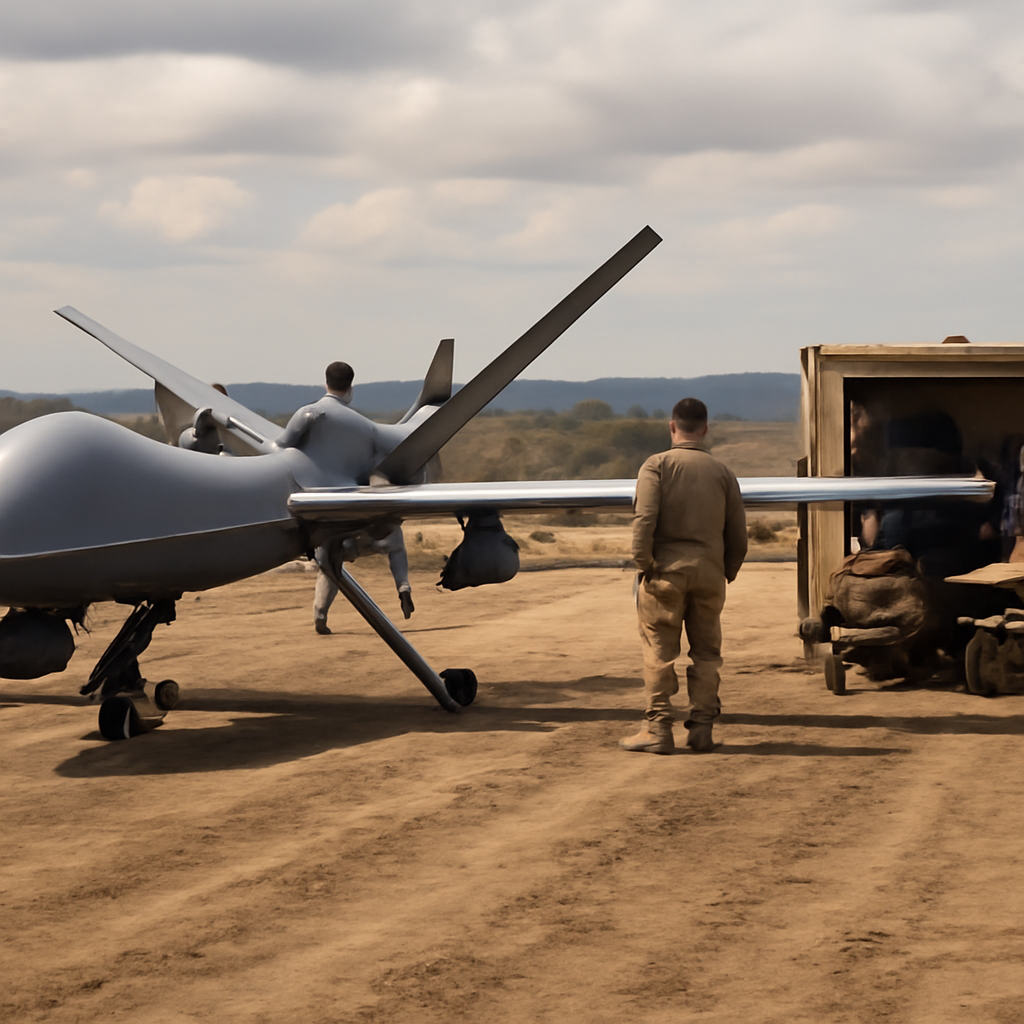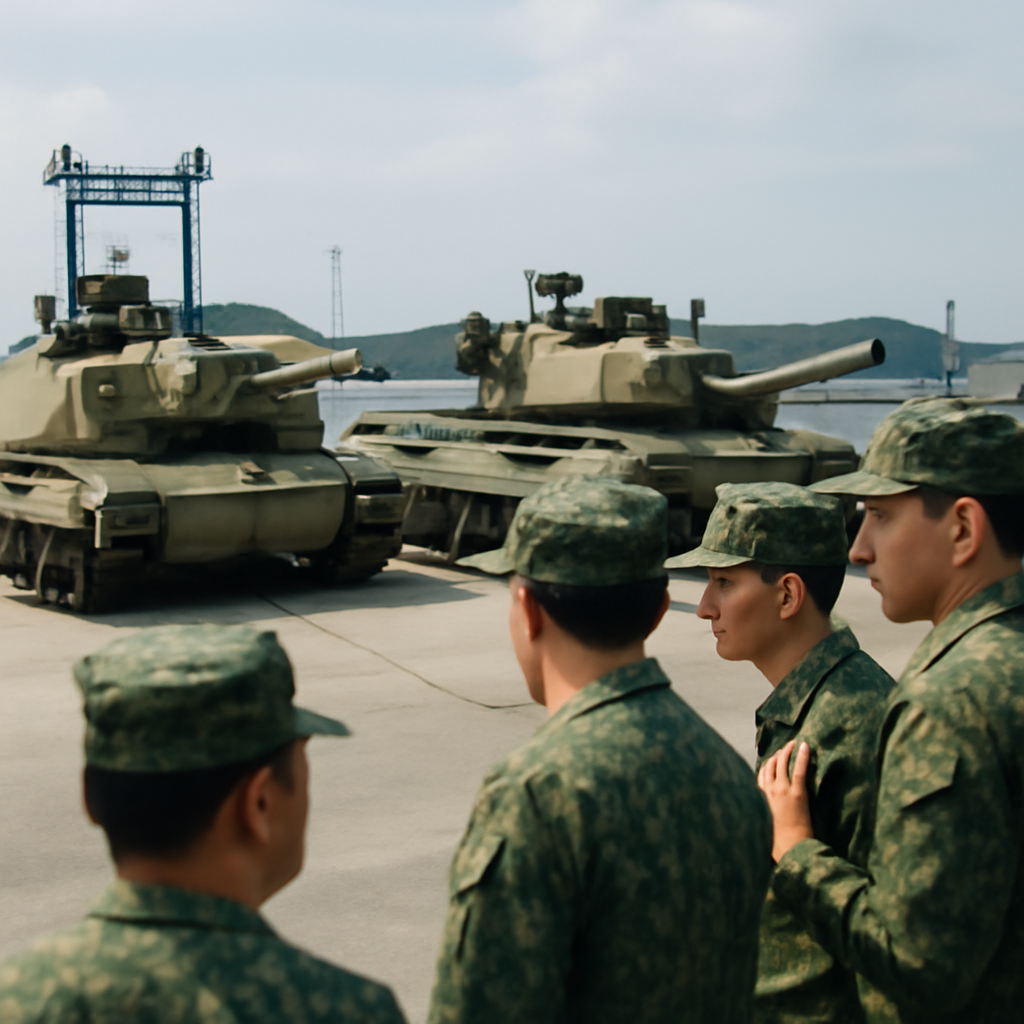
Late in April, 28 American-made M1A2 Abrams tanks arrived by sea in the Port of Taipei — the final tranche of 108 Abrams Taipei purchased in 2019 for US$1.3 billion (A$1.8 billion). Sophisticated and heavy, they have become a blunt emblem of a deeper problem: much of Taiwan’s legacy armour and supporting systems look increasingly like deadweight in the era of cheap, autonomous strike weapons.
The M1A2 arrival and the paradox of modern symbolism
The new M1A2s are among the world’s most capable main battle tanks: 74 tons, four crew members, and designed for high-intensity manoeuvre against peer opponents. But the tanks’ arrival comes as Taiwan debates a shift toward smaller, cheaper and more numerous autonomous systems — propeller-driven strike missiles, remotely deployed mines, explosive robotic boats, long‑range jet cruise missiles and scalable defences against them, all cited by Taipei’s planners as the forces best suited to make the island a porcupine.
The paradox is visible: a multimillion‑dollar tank purchase intended as a deterrent now sits beside a proposed US$40 billion special defence budget that was heavily weighted toward drones and missiles — a budget that opposition lawmakers from the China‑friendly KMT party then pared back. The tanks therefore function less as a clear answer to Taiwan’s current threat environment than as a marker of the political and doctrinal tensions within Taipei.
Tanks: lessons from Ukraine and how that reframes utility
Taiwan’s ground forces also retain hundreds of older M60A3 and CM‑11 tanks. The source material references Ukraine’s and Russia’s wars as a laboratory: both sides lost thousands of tanks and now use survivors mostly as engineering support, “glorified engineering vehicles” fitted with anti‑drone armour and mine‑clearing kits to shepherd lighter formations through drone‑patrolled ground.
The lesson drawn for Taiwan is stark. Absent the time or force density to create a prolonged, mined no‑man’s‑land like eastern Ukraine’s, the tactical niches that heavy tanks fill are narrowing. If tiny explosive drones can neutralize tanks in Europe and the Middle East, Taiwan’s outnumbered defenders cannot assume their tanks will change the operational calculus on the island unless those vehicles are reimagined or repurposed.

Audit-ready is a season. It shouldn't be.
Evidence in spreadsheets, controls drifting between audits, frameworks multiplying on flat headcount. Nubivance runs continuous compliance on Rapid7 Cyber GRC - SOC 2, HIPAA, ISO 27001, PCI, CMMC.
End the scrambleArtillery: self-propelled guns versus the drone hunter
Artillery remains central to land combat, but counter‑drone realities have altered what kinds of guns make sense. The Taiwanese army and marine corps operate hundreds of self‑propelled howitzers — American M109s and M110s among them. Those complex, costly, mobile guns were procured in an era when counterbattery return fire was the dominant risk and “shoot and scoot” mobility was the defence.
Now, drones that hunt moving artillery force crews to dig in and fortify rather than rely on rapid displacement. The article singles out recent and planned purchases that suggest continued faith in mobile guns: 40 M109A6s ordered in 2021 for US$750 million and a plan to buy 60 M109A7s as part of the stalled special budget. In a counter‑drone environment, the piece argues, smaller, simpler towed guns — easier to conceal in dugouts — may be more cost‑effective than the self‑propelled batteries Taipei has long favoured.
Helicopters: vulnerability and an unmade doctrinal choice
Helicopters have long been vulnerable to ground defences; the arrival of cheap interceptor drones that collide with crewed aircraft has magnified that vulnerability. The source notes that both Russia and Ukraine have largely withdrawn helicopters from front‑line roles and redeployed them to rear‑area air defences against slow surveillance and attack drones. It also cites broader international moves: Tokyo plans to retire roughly 60 manned attack helicopters and shift funds to unmanned systems, and the United States is cutting attack helicopters in favour of unmanned alternatives.
Taipei currently fields more than 120 attack and armed observation helicopters. The piece says Taipei has not proposed buying more attack helicopters — a prudent procurement choice, it implies — yet it also has not signalled a policy to ground these vulnerable platforms and reallocate their budgets to drones.
What this means for President Lai Ching‑te, the KMT, and Taiwan’s armed forces
- President Lai Ching‑te: The president’s US$40 billion special defence budget was “heavily weighted toward drones and missiles,” reflecting an intentional pivot to autonomous, distributable defences. Restoring that budget’s elements would directly enable the shift toward the small‑munition posture advocated in the piece.
- The KMT: Opposition lawmakers from the China‑friendly KMT party have already slashed some elements of the special budget. The article frames the KMT’s actions as a primary political barrier delaying a transformation that many defence planners see as urgent.
- Taiwan’s army and marine corps: Forced by politics to continue operating legacy stocks, they “must plan to fight China’s overwhelmingly more numerous ships, planes, missiles and troops with the weapons it already has.” Some systems remain useful; others are described as deadweight unless repurposed, upgraded for counter‑drone protection, or subordinated to new concepts of defence.
The sight of M1A2s docked in Taipei is meant to reassure; in the present military environment the article argues they instead highlight a fraught transition. The concrete next step the piece leaves on the table is political and doctrinal: will Taipei restore and implement the drone‑and‑missile elements of the special defence budget, or will the island continue to fund heavy, legacy platforms whose battlefield utility is increasingly contested?