What happens when the world’s most valuable chipmakers sit on an island that a rising power says it will one day reclaim? That question moved from hypothetical to urgent this week when a congressional hearing examined why Taiwanese semiconductors are more prized than ever — not just by consumers and cloud providers, but by militaries and strategists.
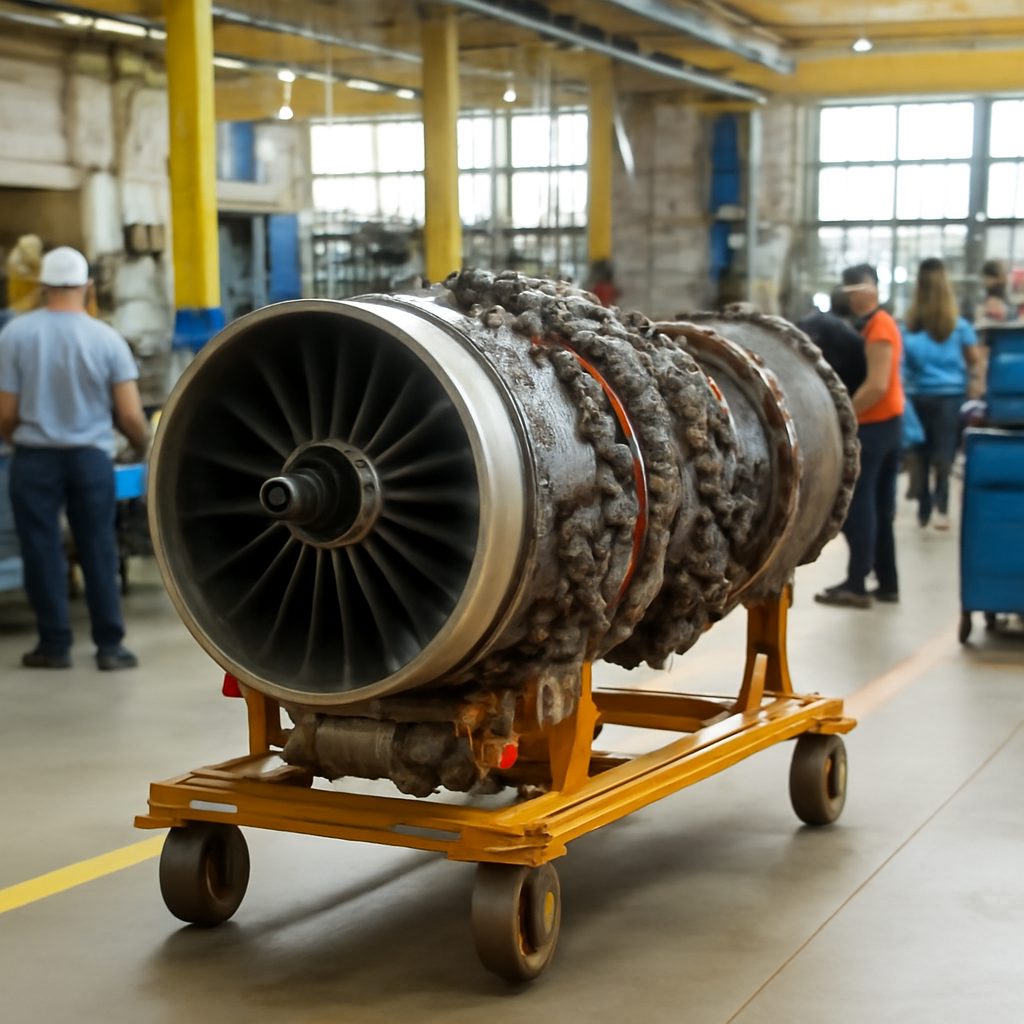
At the center of the debate is Taiwan Semiconductor Manufacturing Company (TSMC) and the broader Taiwanese ecosystem that produces the advanced logic chips powering modern artificial intelligence. Those chips — fabricated at nodes measured in single-digit nanometers and enabled by extreme ultraviolet lithography from firms such as ASML — are the engines behind large-scale neural networks, real-time sensor fusion, and autonomous systems. In short, they are what make the latest AI advances fast, dense, and deployable.
Technologists at the hearing and in private briefings argued that the pace of AI development has increased demand for the most advanced chips to an unprecedented degree. AI models that once required weeks of training now complete in hours when run on modern accelerators; inference at the edge requires compact, highly efficient silicon. That reality elevates the strategic value of Taiwan’s fabs: they are not just components of a consumer market, they are linchpins in defense and intelligence architectures worldwide.
Policy makers have recognized this for years. The United States and its allies have tightened export controls on advanced chips and the equipment needed to make them, curtailing sales to China in an effort to slow the transfer of capabilities that could enable next-generation weapons, surveillance systems, and autonomous strike platforms. The CHIPS and Science Act and a string of Commerce Department restrictions are intended to preserve a technological edge, but they do not sever the underlying dependence on Taiwan’s manufacturing prowess.
China, for its part, has pursued a two-track response: a massive, state-directed push to build a domestic semiconductor base and a parallel effort to secure access to foreign technology through legal investment, talent recruitment, and espionage. Yet even with tens of billions in subsidies, mainland Chinese firms such as SMIC have struggled to close the gap at the leading process nodes — the most advanced patterns of silicon remain largely produced in Taiwan and South Korea, with critical equipment manufactured in Europe and the United States.
Why does this matter beyond economic leverage? Because the accelerating capabilities of AI compress decision timelines. Where human operators once had minutes or hours to interpret imagery or coordinate strikes, AI-enabled systems promise near-instant analysis, target identification, and weapons direction. That shortens the window for political deliberation and increases the risk of miscalculation in a crisis.
Analysts at the hearing highlighted several concrete vectors by which advanced chips amplify the threat:
/
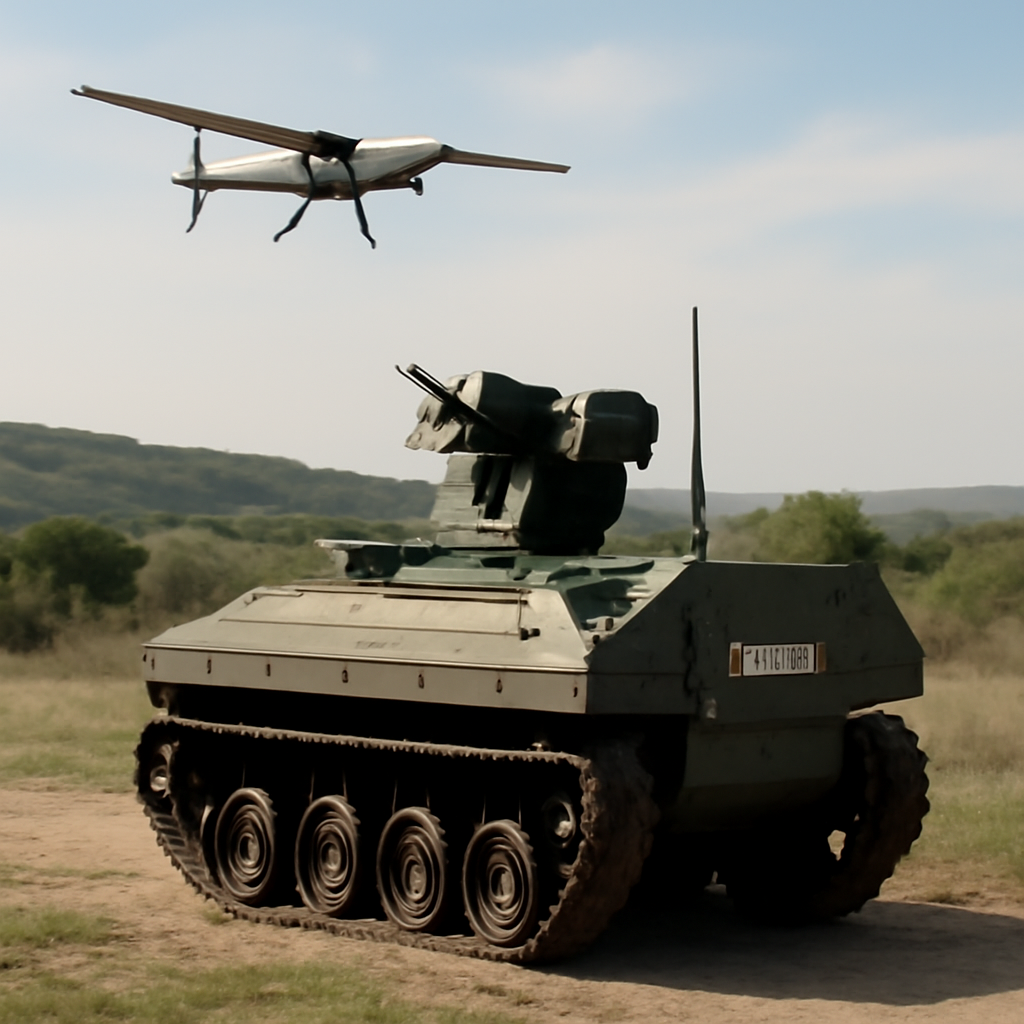
High-speed targeting and fire-control systems that use machine learning to fuse satellite, drone, and radar feeds;
/
Autonomous or semi-autonomous swarms that rely on distributed compute to coordinate maneuvers;
/
Faster training of electronic warfare and cyber tools that can adapt to countermeasures in real time;
/
Improved logistics and personnel-sensing capabilities that make denial and blockade strategies more effective.
Those capabilities are not purely hypothetical. Military modernization in the region has increasingly prioritized data-centric architectures and AI-enabled platforms. For Taiwan and its partners, the immediate worry is not only the prospect of a kinetic invasion but also the ways in which AI could make coercion and gray-zone campaigns more effective — a hybrid of cyber disruption, economic pressure, and targeted strikes that could precede or substitute for full-scale conflict.
There are countervailing forces and policy levers. Resilience efforts include diversifying supply chains, onshoring and ally-shoring chip manufacturing, increasing private-sector investment in domestic foundries, and hardening critical infrastructure against cyberattack. The U.S. and its partners are also exploring mechanisms to keep advanced manufacturing capacity out of reach of potential adversaries without undermining global commerce.
Technologists point out that chips alone do not make a weapon. Software, data, trained personnel, and doctrine are complementary components. AI systems require quality data, validation, and operational integration; they also remain brittle in novel conditions. Some analysts argue that export controls and cooperation can buy time for allies to build up complementary strengths in sensors, satellite resilience, and electronic countermeasures.
Yet policymakers face hard trade-offs. Heavy-handed restrictions can accelerate efforts by target states to go it alone, motivate more aggressive industrial policy, and create economic blowback for U.S. allies whose firms depend on Taiwanese production. Conversely, too little constraint risks enabling capabilities that could be used to coerce or attack.
From Beijing’s perspective, access to advanced chips is both an economic imperative and a national-security priority. State actors see semiconductors as foundational to future prosperity and military power; every delay in domestic capability is framed as strategic vulnerability. For Taipei, the calculus is existential: industry dominance offers both deterrence through economic integration and exposure — the island’s factories are prime strategic prizes in any conflict scenario.
Citizens and enterprise users are affected in subtler ways. The nearest-term impact of any supply disruption would be economic: higher costs for cloud services, delays in hardware, and stiffer competition for computing capacity. Over time, if advanced manufacturing migrates or fragments, the pace of AI innovation could slow or become more uneven, with security and ethical oversight varying dramatically across jurisdictions.
The hearing underscored that strategy cannot be limited to sanctions and subsidies. It highlighted the need for layered deterrence: diplomatic alignment with friendly suppliers, resilient and dispersed production capacity, norms governing the military use of AI, and improved crisis communications to prevent accidental escalation. Strengthening alliances with Japan, South Korea, and European partners — all integral to the semiconductor ecosystem — remains essential.
There is no single technological fix. Investment in alternative architectures, secure supply-chain tracking, and systems that can operate with less dependence on the latest process nodes can mitigate some risks. But those are medium- to long-term efforts; the near term will be defined by how policy choices shape incentives and how quickly adversaries can adapt.
In the end, the strategic value of Taiwanese chips is not only their density of transistors but the geopolitical circumstances that elevate their importance. Defense planners, industry leaders, and diplomats are now wrestling with a simple, uncomfortable fact: the faster AI advances, the more the balance of power hinges on a handful of factories on a small island.
As the hearing made clear, the question is not whether chips matter — it is how the international community will manage that dependence without pushing the region toward the very instability it seeks to prevent. Can alliances and policies keep the lights on for innovation without turning semiconductors into a casus belli?
Source: https://www.defenseone.com/technology/2025/09/what-rapid-pace-ai-means-chinas-threats-toward-taiwan/408220/