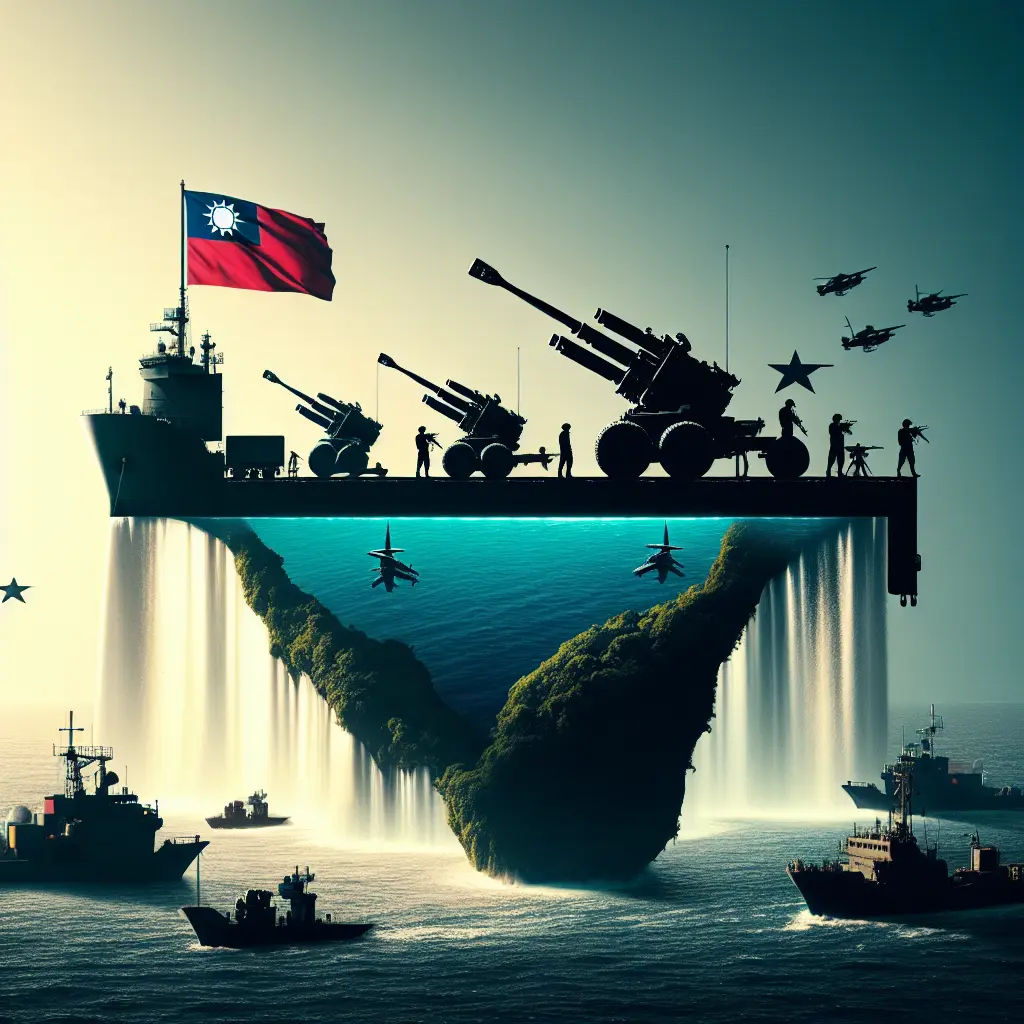
Taiwan’s Strategic Artillery Upgrade: The Case for M109A7 Howitzers
In a bold maneuver that underscores its commitment to national defense, Taiwan’s Ministry of National Defense is reportedly moving forward with a substantial arms procurement initiative. This plan includes an ambitious increase in the order of M109A7 self-propelled howitzers from the United States, elevating its initial procurement from 40 units to a striking 168. As tensions in the Taiwan Strait continue to rise, this decision poses pressing questions about military preparedness and regional stability.
The backdrop of this development is steeped in history and geopolitics. Since the end of the Chinese Civil War in 1949, Taiwan has maintained a precarious existence, marked by its contentious relationship with the People’s Republic of China. While Taiwan operates as a sovereign state with its own democratic government, Beijing considers it a breakaway province and has not ruled out the use of force for reunification. In this context, enhancing military capabilities has become critical for Taipei, especially in light of increased military maneuvers and diplomatic pressures from Beijing.
At present, Taiwan is navigating a complex security landscape characterized by frequent aerial incursions and maritime challenges posed by Chinese forces. Recent reports suggest that as China’s military capabilities expand—both quantitatively and qualitatively—Taiwan is recalibrating its defense strategy to deter potential aggression. The M109A7 howitzer represents a significant upgrade from its predecessors, featuring enhanced range, accuracy, and mobility that are vital for modern warfare.
The current initiative is not merely a reflection of Taiwan’s desire to build up its arsenal but rather a response to palpable threats. Official statements indicate that these self-propelled howitzers will bolster ground forces during potential conflicts by providing sustained artillery support while ensuring rapid repositioning across varied terrains. According to experts familiar with Taiwan’s defense priorities, this acquisition aligns with broader efforts to modernize the armed forces and integrate advanced technology into existing systems.
- Regional Implications: The procurement signals to both allies and adversaries that Taiwan remains resolute in its defense posture. A robust artillery capability could serve as both a deterrent against aggression and an assurance to U.S. partners in the Indo-Pacific region.
- Military Readiness: Equipping Taiwanese forces with M109A7s not only enhances their combat readiness but also allows for improved interoperability with U.S. forces during joint exercises.
- Strategic Deterrence: Increased artillery capacity may alter strategic calculations for Beijing as it weighs options in relation to Taiwan’s defense posture.
This move has drawn varying reactions domestically and internationally. Some local analysts believe that bolstering artillery power will send a strong message about Taiwan’s determination to defend itself against potential incursions from China. Conversely, there are concerns among certain political factions within Taiwan regarding escalating arms purchases at such a scale; they caution against provoking further tensions with Beijing.
Looking ahead, observers should anticipate heightened scrutiny on both sides of the Taiwan Strait as this arms acquisition unfolds. While it reinforces Taiwan’s defensive capabilities, it may also catalyze countermeasures from China—such as intensified military drills or public condemnations—which could affect regional dynamics further.
As discussions surrounding military readiness evolve, one must consider: what is at stake if deterrence fails? With heightened ambitions on both sides, navigating these waters necessitates more than just hardware upgrades—it demands astute diplomacy and proactive engagement on all fronts.