Tag: national security
2628 articles

US Missile Shortfalls Strain Indo-Pacific Deterrence
The US military's dwindling missile stockpile, depleted by a staggering 30% in recent operations against Iran, has sparked a pressing concern: can the Indo-Pacific region's defenses be maintained? A critical delay in delivering Tomahawk cruise missiles to Japan has exposed a capability gap, threatening the stability of the region.

China Exploits Job Platforms to Recruit State Secret Leakers
MI5 warns that China's military intelligence is using popular job platforms like LinkedIn, Indeed, and Upwork to recruit individuals with access to classified information, targeting those in foreign policy, defence, and other sensitive fields. The goal is to gather privileged military, political, and economic intelligence.
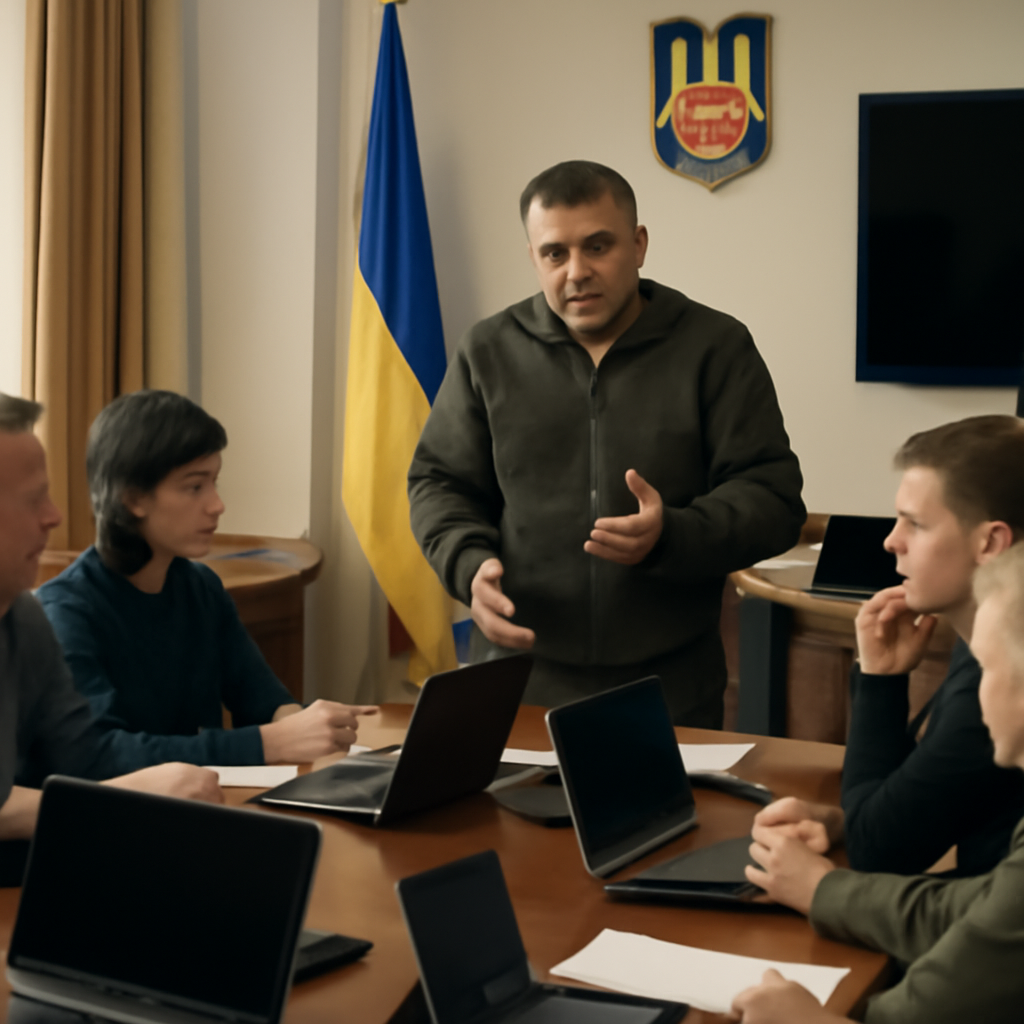
Ukraine's Cybersecurity War: Resilience Trumps Reaction
In the face of uncertainty, cybersecurity experts can develop essential habits through practice, brainstorming, and preparation, turning crisis response into muscle memory. By focusing on preparation, resilience, and self-reliance, organisations and individuals can build the instincts needed to navigate turbulent times.

Trump's Pick for Intel Chief Jeopardizes Surveillance Powers Deal
President Trump's surprise pick for intel chief, William Pulte, has thrown a wrench into a fragile deal to extend a critical surveillance authority, sparking concerns from lawmakers that his appointment could put politics over national security. With Pulte's lack of experience and questionable past, some are worried that the nation's intelligence operations may be weaponized for personal gain.

US Military Weighs Standalone Cyber Force by 2028
The US military is considering a game-changing move: creating a standalone Cyber Force by 2028, but its success hinges on a crucial decision from Congress or the White House this year. A recent report outlines a bold plan to overcome longstanding structural challenges in cyber operations and make this vision a reality.

Ukraine Strikes Russian Baltic Fleet Base with Drones
Ukraine's precision drone strike on a Russian Baltic Fleet base has brought the conflict to a new level, with President Volodymyr Zelensky hailing the attack as a crucial step towards peace. The daring raid, which set a Russian corvette ablaze in a Kronstadt dry dock, is part of Ukraine's long-range strategy to counter Russian aggression.

Mullin Targets 2,800 Staff for Optimal CISA Operations
Department of Homeland Security Secretary Markwayne Mullin aims to boost the Cybersecurity and Infrastructure Security Agency's effectiveness with a targeted workforce of 2,800 personnel, leveraging public partnerships and strategic grant usage to fortify national security.

Taiwan's Frontline Experience Fortifies Australia's Undersea Defenses
As Deputy Prime Minister Richard Marles warned, the seabed is rapidly becoming a battlefield, posing a stark threat to Australia's undersea defenses, with a whopping 99 percent of the country's internet traffic relying on just 15 vulnerable subsea cables. This alarming exposure puts everything from financial services to healthcare and communications at risk of disruption.
Lawmakers Probe Pentagon Loan to Firm Tied to Trump Jr.
Democratic lawmakers are raising red flags over a $620 million Pentagon loan to Vulcan Elements, a small North Carolina startup, after it emerged that a top White House aide, and friend of Trump Jr., intervened to secure the deal. The loan has sparked questions about favoritism and undue influence at the highest levels.

Antarctic Treaty System Frays Amid Global Geopolitical Tensions
The Antarctic Treaty, meant to keep the continent out of global conflicts, is showing signs of fraying as geopolitical tensions rise, with recent talks in Hiroshima failing to yield consensus on crucial issues like protecting emperor penguins and regulating tourism. Despite a gathering of over 400 international delegates, key measures were left unadopted, leaving the treaty's future uncertain.

Trump's AI Order Falls Short on Safety, Security Oversight
As President Trump recently issued an executive order calling on AI companies to voluntarily share their most powerful models with the US government, concerns linger about the lack of concrete safety and security oversight. It's now up to Congress to step in and address the potential risks without stifling innovation or compromising free expression.

China Mounts High-Energy Laser on Tactical Vehicle
China just took its high-energy laser game to the next level by mounting a 20 kW laser turret on a Dongfeng Mengshi-like 4×4 tactical vehicle - a surprisingly roadworthy ride that looks like it could blend in with civilian traffic. This unusual combo raises eyebrows about its potential uses, beyond just military might.

Cyber Force Plan Unveils $10 Billion Budget Requirement
The Commission on US Cyber Force Generation is proposing a bold new vision: a separate Cyber Force military service that could require a whopping $10 billion to get off the ground. This game-changing plan outlines what it would take to create a distinct military branch focused on cyber operations.

US Invites AI Developers to Voluntary Cybersecurity Review
The US government is taking a collaborative approach to AI cybersecurity, inviting developers to voluntarily review their most powerful models and give the government a 30-day heads-up before releasing them to trusted partners. This move aims to create accountability and ensure responsible AI development, with experts agreeing that real accountability is key to making voluntary security programs effective.

AI-Powered Cybercrime Tools Flood Dark Web Marketplaces
The dark web has seen a staggering 3,810% surge in AI-powered cybercrime tools, with posts skyrocketing from 38 in December to 1,486 in February, signaling a new wave of threats. This alarming trend has experts like Cynthia Kaiser, SVP of the Ransomware Research Center at Halcyon, warning that cyber threats have become the "national security challenge of our lifetime."

Trump Appoints Unlikely Official to Lead National Intelligence
President Trump has tapped William Pulte, a seasoned expert with a track record of handling America's most sensitive matters, to lead national intelligence on an acting basis. Pulte brings unparalleled experience to the role, having spearheaded the administration's mortgage fraud efforts and managed high-stakes initiatives.

US Special Ops Scraps Plans for U-28 Surveillance Plane Replacement
The US Special Operations Command has scrapped plans to replace its U-28 surveillance planes, with a full divestment of the fleet expected by 2029. Instead, the command will rely on alternative assets for intelligence, surveillance, and reconnaissance missions.

US Issues Revised AI Executive Order With Weaker Oversight
The US has released a revised AI executive order that takes a lighter touch on regulation, embracing a hands-off approach that aims to foster innovation without stifling the industry's growth. This scaled-back directive focuses on a voluntary framework, allowing companies to collaborate with the federal government on AI development.

Trump Orders Federal Agencies to Oversee AI Systems Amid Cyber Fears
The White House has issued a new directive requiring companies to give the federal government 30 days' notice before publicly releasing advanced AI systems, a move aimed at balancing innovation with cybersecurity concerns. This change, down from a proposed 90 days, marks a significant shift in federal oversight of AI technology.

Iran Escalates Attacks on Kuwait, Bahrain Amid Ceasefire Tensions
Tensions escalate in the region as Iran launches a barrage of ballistic missiles and drones at Kuwait and Bahrain, only to be thwarted by swift countermeasures from US and regional forces. The US Central Command reports that all Iranian missiles and drones were successfully intercepted or failed to reach their targets.

Senate Bill Targets Military AI Use with Stricter Regulations
Senator Kirsten Gillibrand is taking a stand against the Pentagon's rapid deployment of powerful AI technology without safeguards, introducing the Secure and Accountable Military AI Act to impose stricter regulations and prevent potentially catastrophic consequences. The proposed legislation aims to restrict AI use in autonomous weapons, domestic surveillance, and nuclear applications.

AI Reshapes Geospatial Intelligence Landscape
The GEOINT conference has emerged as a pivotal event for the intelligence community, offering a unique glimpse into the priorities of top agencies like the National Reconnaissance Office and National Geospatial-Intelligence Agency. This year's gathering presents a strategic window into the future of geospatial intelligence, where AI adoption and data sharing will shape the industry landscape.

Pentagon Integrates Cyber into Operations, Prioritizes AI Security
The Pentagon is revolutionizing its approach to cyber operations, shifting away from treating it as a separate entity and instead weaving it into every military operation from the ground up. By doing so, the Defense Department aims to harness the full power of information on the battlefield, with AI security at the forefront of this strategic evolution.

NCSC Warns of Rising Uncertainty, Urges Immediate Cyber Resilience Boost
With 77% of British organizations hit by a cyber incident in the past year, the National Cyber Security Centre is sounding the alarm: it's time to supercharge your cyber resilience now more than ever. The rapidly changing threat landscape demands immediate action to protect your business.