“In the last six to 12 years, I would say that the performance of the services has been an obstruction to success. And that's a tough thing to say because services don't want to be an obstruction…they want to do the right thing,” Mark Montgomery told reporters.
CSIS and FDD lay out a path for a separate Cyber Force
A commission convened by the Center for Strategic and International Studies (CSIS), working with the Foundation for Defense of Democracies (FDD), concluded that the United States could stand up a separate Title 10 cyber service by 2028 — provided either Congress or the White House commits to that decision this year. The report outlines a multi-phase force-generation model intended to address “longstanding structural challenges” in how cyber operations are organized and resourced.
What the report says about scale and timing
The commission estimated a Cyber Force of roughly 30,000 people. That total would break down to about 20,000 active-duty troops and warrant officers drawn from across the services, up to 5,000 National Guard members, and up to 6,000 civilians and contractors. The report says reaching initial operating capacity (IOC) would require between 12 and 18 months and would proceed through sequential phases: setting conditions; fielding the IOC; iterative growth over several years; and institutional refinement.

Your town's IT department is one person. Maybe.
Ransomware crews target small municipalities because nobody's watching. Nubivance gives Maine and New Hampshire towns a security program sized to a town budget.
Protect the town officeRecruiting, budgets and culture: the barriers named
Mark Montgomery, who leads FDD’s cyber center and previously led the Cyberspace Solarium Commission, argued the current services have struggled to recruit, train, maintain, and retain a modern cyber force. He said recruiting “has never focused on—none of the services' recruiting efforts focus on: ‘Can you code Python?’” CSIS deputy director Lauryn Williams emphasized the institutional implications of a new service: it would give cyber operators “their own budget—and their own culture,” and require “a lot of deliberation and discussion around what a cyber force culture and doctrine should look like, not least because it would be drawing personnel from every other military service, so would be a mishmash of cultures, maybe, to start.”
GDIT’s virtual submarine training and tangible hiring gains
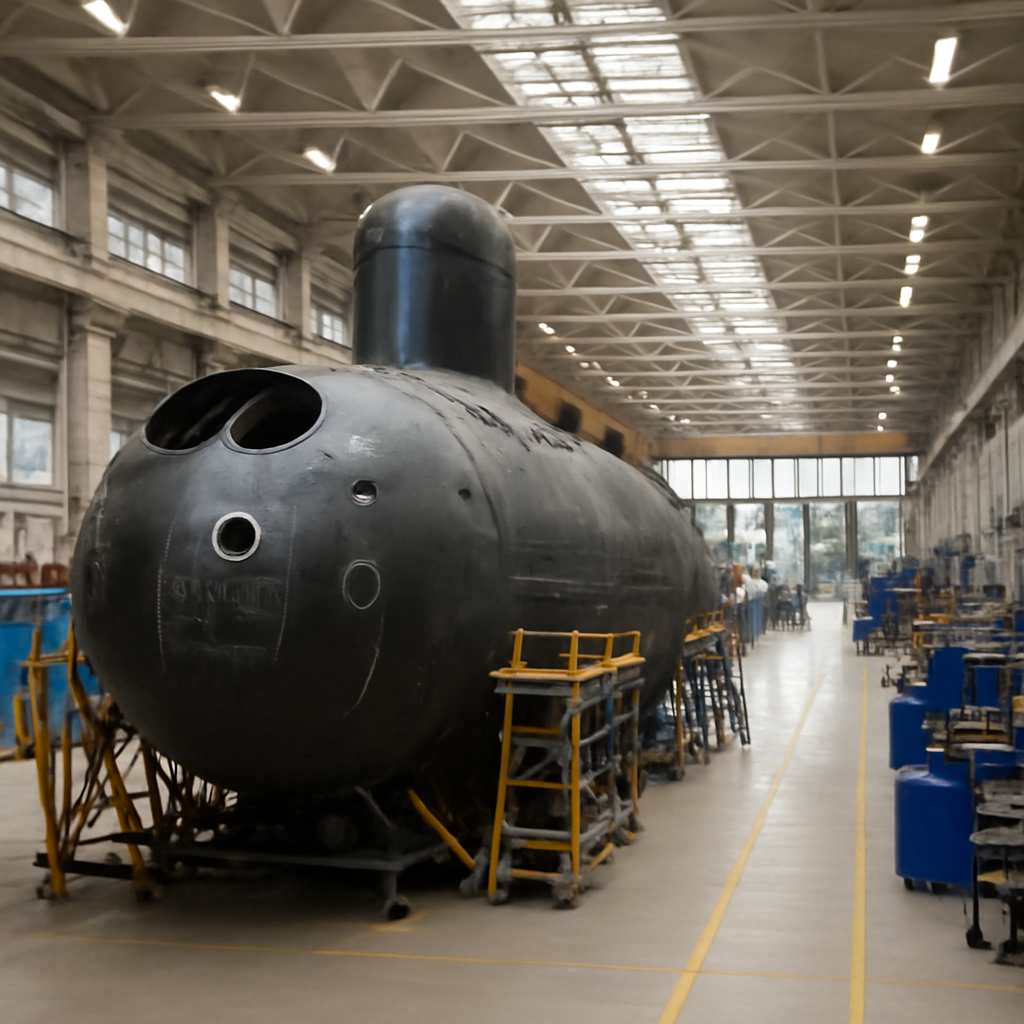
At General Dynamics Information Technology’s Emerge event, GDIT demonstrated a virtual training tool for new submarine shipbuilders that imports full design elements of Columbia- and Virginia-class submarines into a navigable learning environment. The demo used the older USS Holland as the tourable model. Using an Xbox controller, new hires can tour the submarine and point-and-click on parts to learn their function; the Holland has about 20,000 parts, the Columbia class millions.
“It goes down to each nut, bolts, screw, washer. We have all that detail, because we control the design database, we make the design. So with the modern era, we can take those same models that are made to build the boat, and then create tools to help the guys figure out what they're doing,” said Eric Banach, a software engineer for General Dynamics Electric Boat.
Recruiting metrics shared at the event show traction: buildsubmarines.com receives about 75,000 application clicks a month, and “somewhere between 5.7 and 6 percent of those that click ‘apply’ are going to continue on to a job interview and offer inside the submarine industrial base,” Josh Sturgill, workforce development coordinator for the Submarine Industrial Base Program Office, said.
General Dynamics executives credited investments in housing, wellness, childcare and higher wages for improving retention. Ray Steen, vice president of human resources at General Dynamics Bath Iron Works, said, “We broke ground this year on a housing project…housing in Maine is the single biggest barrier to growing this workforce in terms of attracting talent. So, we—General Dynamics and the Navy—we worked with a developer to put in 85 units of housing that are going to be focused on entry-level positions to have,” and noted attrition that was previously in the high 20 percent range is now around 5 percent. Steen pointed to those workforce changes as part of the reason the shipyard delivered USS Patrick Gallagher two months ahead of schedule.
Marine Corps JLTV RFI, munitions plant changes, and MUSV demos
The Marine Corps released a request for information (RFI) seeking a new supplier for the Joint Light Tactical Vehicle (JLTV), a program the source describes as more than a year behind schedule. Responses to the RFI are due June 10. The report notes the Army canceled its JLTV program last year, but the Marine Corps requested about $245 million to buy 341 units in the 2027 budget proposal.
In related industrial news, General Dynamics is spending $200 million to “unwind a partnership with Turkish defense contractor Repkon in a bid to finally start producing 155mm artillery shells at a Texas plant that’s been beset by delays.” Repkon had acquired the Garland, Texas plant that manufactures metal parts for munitions, a shift that “also raised concerns about potential foreign influence in domestic defense supply chains,” the source reports.
Separately, the Navy selected seven vendors to demonstrate medium unmanned surface vessels (MUSVs) at sea from June through October. Successful demonstrations will receive $15 million and be eligible for a production contract. The selected contenders are Birdon, Galliano Marine Services, HII, Leidos, PacMar Technologies, Saronic Technologies, and Sea Machines.
What this means for policymakers, shipbuilders, and the Marine Corps
- Policymakers: The CSIS–FDD recommendation creates a clear decision point this year—either legislative action or a presidential decision would trigger the 12–18 month IOC timeline and set debates over budgets, force structure, and doctrine in motion.
- Shipbuilders and industrial managers: Virtual training tools and targeted workforce investments are already translating to measurable hiring and retention improvements; continued emphasis on housing, childcare, and detailed digital models will be key to sustaining those gains.
- Marine Corps acquisition teams: The JLTV RFI with a June 10 response deadline and the $245 million buy request in the 2027 budget proposal are immediate procurement milestones, while munitions production and MUSV demonstrations will affect near-term industrial base readiness and capability fielding.
The record laid out here tightens two calendars: a national decision point on whether to create a separate Cyber Force this year, and a string of industrial and procurement deadlines — from a June 10 JLTV RFI cutoff to MUSV demos running through October — that will shape who builds, trains, and equips forces over the next months. The next steps are now plainly scheduled; what remains is whether political will, industrial capacity, and recruiting practices align to meet them.