Tag: executive order
25 articles
Tech Giants Commit to AI Safety Accord
Six of the world's largest AI companies have committed to a groundbreaking safety accord, pledging to prioritize the responsible development of super intelligence. This historic agreement, signed on September 29, marks a major step forward in ensuring the safe and ethical advancement of AI technology.
Trump Orders Space Academy to Bolster US Military's Space Workforce
President Trump has signed an executive order to establish a national Space Academy, aiming to educate and train the next generation of skilled space professionals. The new academy will help bolster the US military's space workforce and support ambitious goals to explore the Moon and beyond.

Trump Signs Order to Mitigate Foreign Cyber Risks in US Energy Infrastructure
President Trump has signed an executive order declaring a national emergency to shield America's energy infrastructure from foreign cyber threats, specifically targeting malicious activities that could compromise the bulk-power system. This move aims to block risky foreign-produced equipment, software, and systems from being installed in US energy infrastructure.
Supreme Court Upholds Trump Mail-in Ballot Rules
The Supreme Court has ruled in favor of the Trump administration's mail-in ballot rules, dismissing a lawsuit that sought to block changes to US Postal Service policies. In a 6-3 decision, the court decided that states don't have the grounds to challenge the White House's executive order.

Trump Orders Navy to Reinstate Steam Catapults on Aircraft Carriers
President Trump has signed an executive order directing the Navy to bring back steam catapults for its Ford-class aircraft carriers, aiming to boost performance and reliability. This move reverses a previous decision, with the President confident that steam power will eliminate problems with the catapults.

Judge Blocks Trump Mail-In Voting Directive Again
A federal judge has once again blocked President Trump's executive order on mail-in voting, reaffirming that the executive branch has no authority to regulate elections. Judge Indira Talwani issued a second injunction, providing clarity for the millions of citizens who rely on mail voting ahead of the midterms.
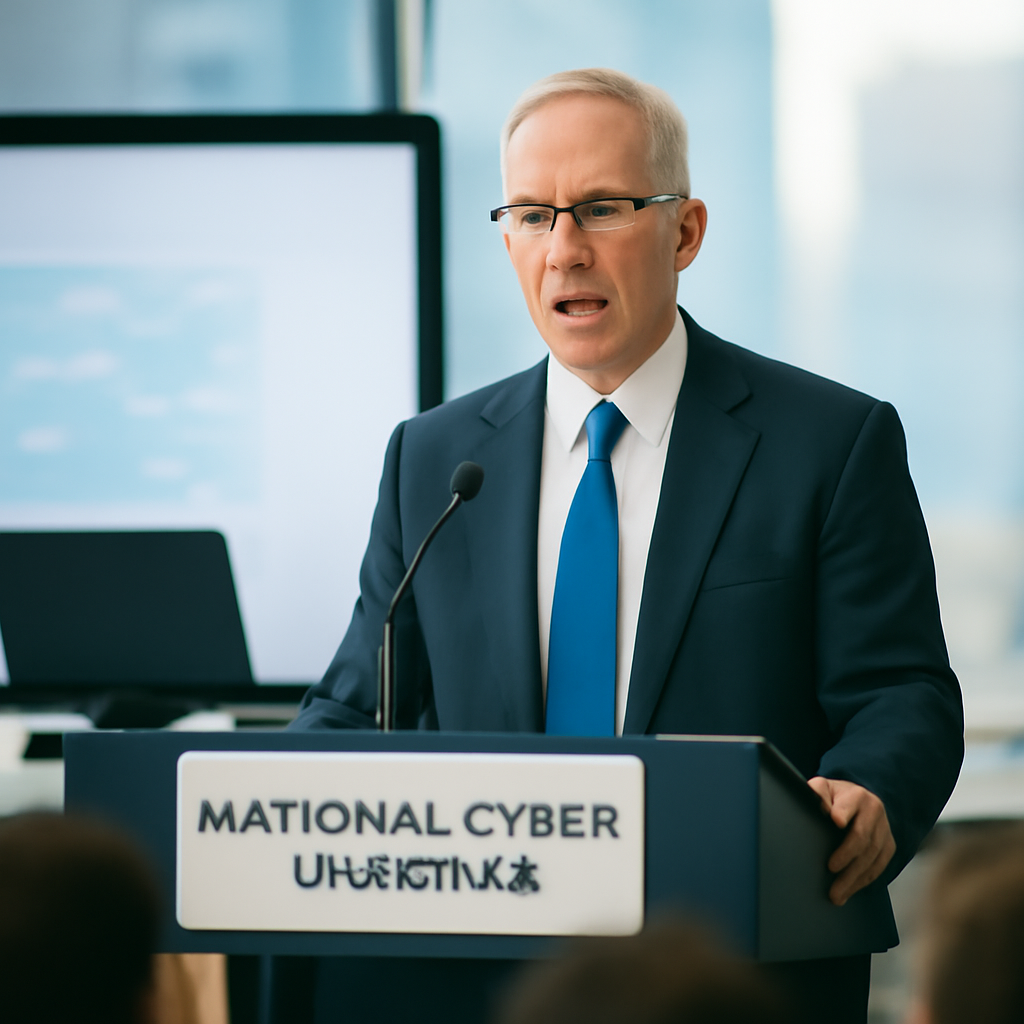
White House Charts Course to Secure AI with Flexible Framework
The White House is taking a bold step towards securing AI, with National Cyber Director Sean Cairncross emphasizing the importance of speed, adaptability, and partnership with private-sector defenders to protect the country's systems. By striking a balance between responsible use, security, and mutual benefit, the administration aims to foster a flexible framework that prioritizes collaboration over regulation.

Pentagon Tightens Rules on Critical Mineral Waivers
The Pentagon is tightening its rules on critical mineral waivers, following President Trump's executive order aimed at securing America's defense supply chains and prioritizing domestic acquisition of critical materials. This move closes a loophole that previously allowed the Pentagon to bypass restrictions on buying strategic materials from certain countries.

US Government Accelerates Post-Quantum Cryptography Transition
The US government is taking a proactive approach to stay ahead of emerging threats by accelerating its transition to post-quantum cryptography, a critical step in safeguarding federal systems against advanced cryptographic attacks. A new Executive Order is driving this effort, requiring federal agencies to rapidly adopt this next-generation security measure.

Trump Administration Seeks to Revive Mail-In Voting Restrictions
The Trump administration is pushing to revive restrictions on mail-in voting, with the Solicitor General asking the Supreme Court to allow an executive order to take effect, potentially reshaping how Americans cast their ballots in the November midterms. The order, signed in March, aims to tighten mail-in voting rules and verify voter eligibility.

Pentagon Seeks Industry Cooperation on Critical Mineral Supply Chain Overhaul
The Pentagon is calling on industry partners to collaborate on a critical mineral supply chain overhaul, with a focus on friendshoring, domestic shoring, and supplier changes to reduce reliance on high-risk foreign sources. By presenting credible plans, contractors may be able to negotiate flexible timelines with the Pentagon, ahead of the 2027 deadline set by a new executive order.

US AI Clearinghouse Must Bridge Vulnerability Gap
The US AI cybersecurity clearinghouse has a crucial role to play in bridging the vulnerability gap, but time is of the essence - AI tools are surfacing vulnerabilities at a pace that's outstripping our ability to act on them. With a 30-day deadline now expired, the clearinghouse must swiftly coordinate efforts to scan, discover, and prioritize critical infrastructure vulnerabilities.

Quantum Deadline Looms: CISOs Face Post-Quantum Readiness Mandate
The clock is ticking: by December 31, 2030, federal high-value systems must adopt post-quantum cryptography for key establishment, and by December 31, 2031, for digital signatures too. Are your systems ready to beat the quantum deadline?

Judge Strikes Down Trump's Election-Focused Executive Order
In a major blow to Trump's agenda, a federal judge has ruled that the President has no constitutional power over elections, striking down key sections of an executive order aimed at reshaping ballot and voter list management. The decision declares that presidential actions are not above review, and that the administration cannot dictate how states manage their elections.

Trump Order Accelerates Federal Post-Quantum Crypto Migration by 2030
The clock is ticking: by December 31, 2030, federal agencies must upgrade their cryptography to protect high-value assets from the looming threat of quantum computers, with digital signatures following suit by December 31, 2031. This executive order accelerates the migration to post-quantum cryptography, compressing the government's previous timeline by four to five years.

US Accelerates Post-Quantum Cryptography Migration with 2030 Deadline
The White House is taking a major step to protect America's sensitive data and digital economy by mandating a rapid migration to quantum-safe encryption, with a deadline of 2030 for key establishment and 2031 for digital signatures. This move aims to safeguard critical infrastructure, jobs, and growth by future-proofing the nation's cybersecurity.

Trump Order Strips 8,000 Federal Workers of Civil Service Protections
In just one week, 8,000 federal workers face a major shake-up that could strip them of their civil service protections, a change that's sparked fierce opposition from unions, employees, and watchdogs. The Trump order requires agencies to reclassify these workers into a new category that leaves them vulnerable to removal without the usual safeguards.

Trump's AI Order Falls Short on Safety, Security Oversight
As President Trump recently issued an executive order calling on AI companies to voluntarily share their most powerful models with the US government, concerns linger about the lack of concrete safety and security oversight. It's now up to Congress to step in and address the potential risks without stifling innovation or compromising free expression.

US Invites AI Developers to Voluntary Cybersecurity Review
The US government is taking a collaborative approach to AI cybersecurity, inviting developers to voluntarily review their most powerful models and give the government a 30-day heads-up before releasing them to trusted partners. This move aims to create accountability and ensure responsible AI development, with experts agreeing that real accountability is key to making voluntary security programs effective.

NSA to Play Central Role in Overseeing AI Development
The White House has issued an executive order establishing a voluntary framework for AI oversight, with the NSA at the helm, to assess and benchmark the cyber capabilities of advanced AI models. This move puts the NSA in a central role in shaping the development of AI, sparking debate about the implications of government oversight.

US Issues Revised AI Executive Order With Weaker Oversight
The US has released a revised AI executive order that takes a lighter touch on regulation, embracing a hands-off approach that aims to foster innovation without stifling the industry's growth. This scaled-back directive focuses on a voluntary framework, allowing companies to collaborate with the federal government on AI development.

Trump Orders Federal Agencies to Oversee AI Systems Amid Cyber Fears
The White House has issued a new directive requiring companies to give the federal government 30 days' notice before publicly releasing advanced AI systems, a move aimed at balancing innovation with cybersecurity concerns. This change, down from a proposed 90 days, marks a significant shift in federal oversight of AI technology.

US Tightens Oversight of AI Models with New Executive Order
The US government's new executive order marks a major shift in AI oversight, requiring companies to submit advanced models for review before release, effectively ending the Wild West era of AI development. This move has drawn support from security leaders, who see it as a crucial step towards ensuring AI safety and security.

Trump Delays AI Security Order Amid Industry Competition Concerns
President Donald Trump has delayed an executive order aimed at regulating frontier AI models, citing concerns over certain aspects of the proposal, which would have required a 90-day testing and vetting regime for new AI models. The order would have allowed federal agencies to study new models before public release and facilitated access for cybersecurity testers.