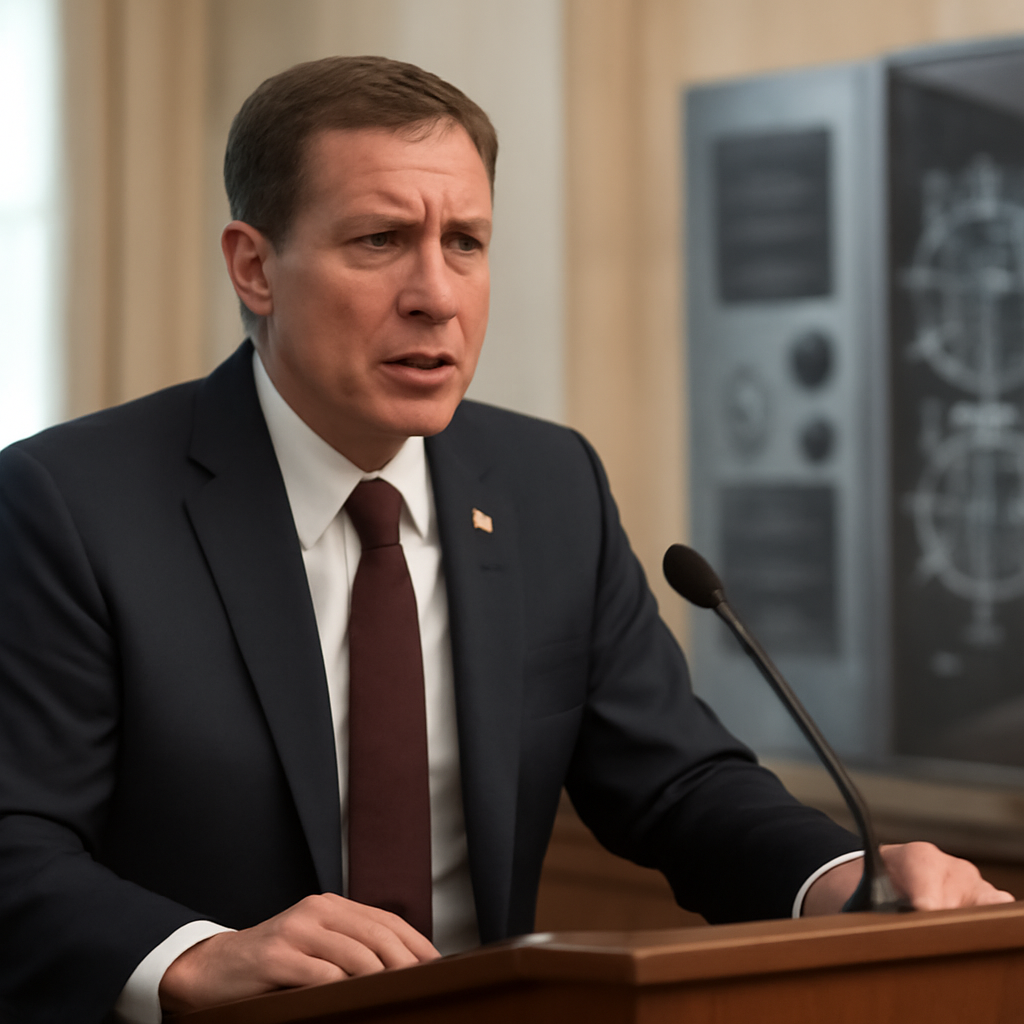
"Because I didn’t like certain aspects of it," President Donald Trump told reporters in the Oval Office on Thursday, explaining why he postponed an executive order that would have created a 90-day testing and vetting regime for so-called "frontier" AI models.
What the draft order would have required: a 90‑day, voluntary testing regime
According to multiple sources, a draft version of the executive order circulating in the 24 hours before the planned announcement would have established a voluntary testing regime between the U.S. federal government and frontier AI companies. Under that draft, federal agencies would be able to study new models for 90 days before they were publicly released. The draft also envisioned facilitating access to models for cybersecurity testers in critical infrastructure sectors such as finance and healthcare.
The draft assigned specific responsibilities across agencies: the National Security Agency would be empowered to conduct classified evaluations of frontier AI models, and the Department of the Treasury would create a new information‑sharing agreement between AI companies and cybersecurity defenders in critical infrastructure. Other agencies named as participants included the Office of the National Cyber Director, the Cybersecurity and Infrastructure Security Agency, and the National Institute for Standards and Technology.
Why the president postponed it: competitiveness and tone
President Trump said he delayed the order “because I didn’t like certain aspects of it,” and expressed concern the measures could harm U.S. AI industry competition with countries like China. Officials familiar with the draft told CyberScoop the move reflects a broader tension inside the administration: while the administration intends to avoid being seen as imposing “guardrails,” it has signaled interest in formalizing testing and evaluation practices.
A former federal official who reviewed the circulated draft, speaking on background, said the order was intended to enable more robust government testing than had occurred for earlier models. The official described prior arrangements as “containerized optionality” in which intelligence and other agencies received hand‑holding and self‑explanations from companies, and contrasted that with the administration’s push to receive direct access: “now we feel we’re prepared enough for you to just give us your tool…and we’ll go from there.”

Audit-ready is a season. It shouldn't be.
Evidence in spreadsheets, controls drifting between audits, frameworks multiplying on flat headcount. Nubivance runs continuous compliance on Rapid7 Cyber GRC - SOC 2, HIPAA, ISO 27001, PCI, CMMC.
End the scrambleSecurity stakes: military use, cyberattacks, and expertise building
The draft order intersected with an expanding set of national‑security and cybersecurity concerns discussed by experts. CyberScoop reported that the United States, along with Israel, Russia, Ukraine and others, have already deployed AI in targeted military operations or integrated the technology into broader command and control structures. AI is being used in drone warfare, global hacking campaigns, and sophisticated surveillance and targeting of military personnel and civilians.
Ram Shankar Siva Kumar, founder of Microsoft’s AI red team, told CyberScoop that his unit has grown from “himself and a few other security and machine learning specialists” in 2019 to a much larger staff supported by specialists in psychology, linguistics, bioweapons and other fields — a change he attributed to “frontier harms” and the way red‑team work has “morphed.”
Vulnerabilities and the criminal market: model capabilities that matter
Cybersecurity experts cited in the reporting warned that current models are adept at finding software bugs and vulnerabilities, and that newer models — identified by name in the piece as Anthropic’s Mythos and OpenAI’s Daybreak — are capable of chaining together multiple exploits to create more sophisticated attacks. While state‑sponsored actors are experimenting with the technology to gain efficiencies, private‑sector and law enforcement specialists told CyberScoop that the technology “has mostly benefitted cybercriminals and scammers.”
How AI companies, cybersecurity defenders, and lawmakers are positioned
- AI companies: The draft would have formalized access that some companies already provide to U.S. and allied governments, but the president’s competitiveness concerns suggest Washington is weighing voluntary cooperation against the risk of constraining U.S. firms relative to foreign rivals.
- Cybersecurity defenders and critical infrastructure operators: The order aimed to give testers in finance and healthcare explicit access for pre‑release evaluation and to create Treasury‑led information sharing; defenders will watch whether any future proposal preserves that operational access.
- Lawmakers and national‑security voices: Some Congressional figures are recalibrating policy views in light of military applications. Rep. Don Beyer, D‑Va., quoted at an AI conference, said he worries about dehumanizing battlefield decisions yet also warned that if U.S. forces require a human in the loop while adversaries do not, “the non‑human one will beat the human one every time.”
The executive order was to be publicly signed hours after a draft circulated; its postponement underscores a central friction in current U.S. thinking about frontier AI — how to test and constrain risky capabilities without impairing industry competition with nations like China. The White House did not proceed with the signing on Thursday, leaving open whether future versions will reconcile those competing priorities or shift the balance further toward voluntary cooperation or stricter vetting.
Source: https://cyberscoop.com/trump-postpones-executive-order-focused-on-ai-security/