"The first 82 T-7 aircraft are projected to fly with a 'serious' airworthiness risk." That stark judgment, lifted from internal program assessments reported by Breaking Defense, frames a program the Air Force intends to use to train the next generation of pilots — and one whose path to the fleet is riddled with technical, contractual, and budgetary tensions.
First 82 T-7 aircraft: projected 'serious' airworthiness risk
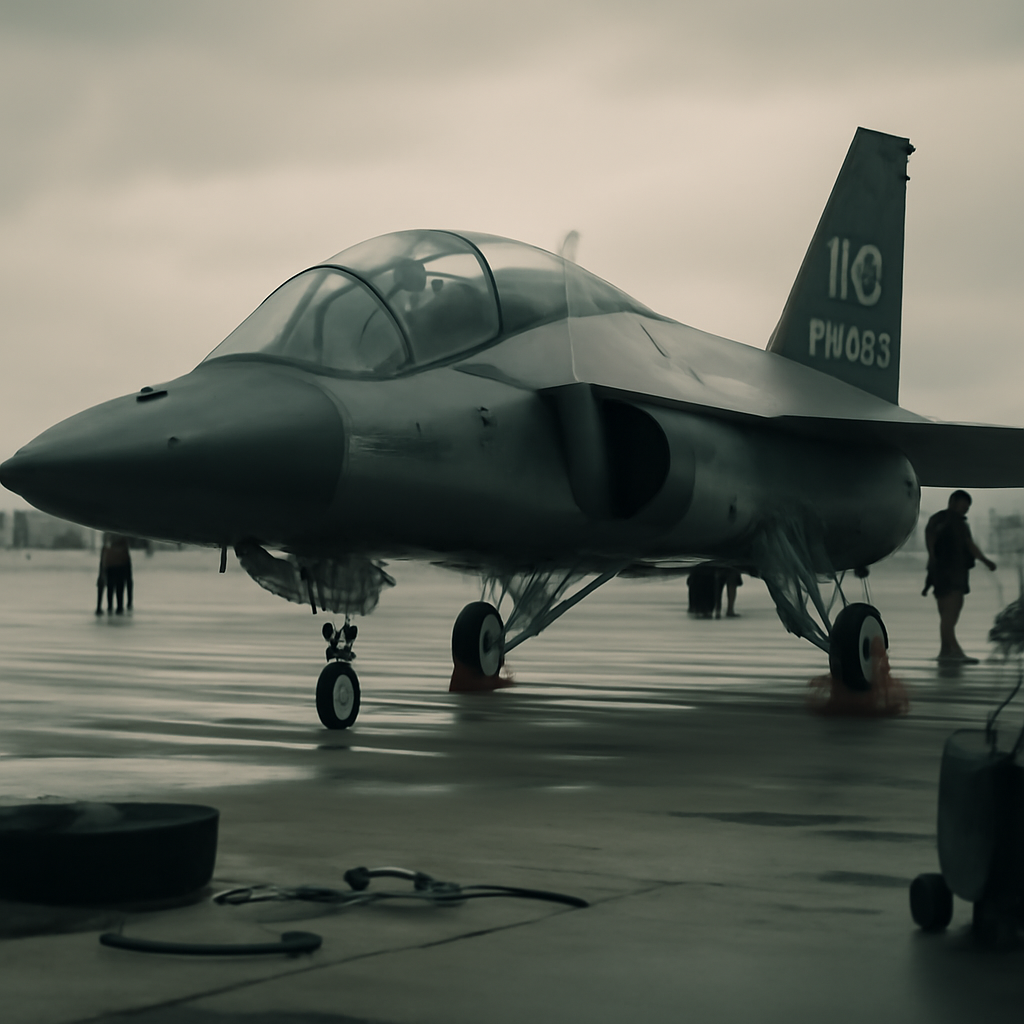
Breaking Defense reports that internal assessments project the first 82 T-7 Red Hawk jets will enter flight operations carrying a "serious" airworthiness risk. The finding comes from previously unreported documents and interviews conducted for the outlet's three-part investigation by Michael Marrow. Sources familiar with the program told the reporter they are concerned that efforts to speed delivery could raise risks for junior pilots who will be trained on the T-7.
Data-rights dispute and a 'non-compliance' finding
Internal Air Force documents cited by the series say Boeing's failure to provide certain technical data has been judged "non-compliance" by the service. Part two of the investigation focuses on the back-and-forth over data rights between the Air Force and Boeing, and lays out how that dispute could jeopardize sustainment plans. The program office has assessed sustainment as "high risk," according to the reporting.

Audit-ready is a season. It shouldn't be.
Evidence in spreadsheets, controls drifting between audits, frameworks multiplying on flat headcount. Nubivance runs continuous compliance on Rapid7 Cyber GRC - SOC 2, HIPAA, ISO 27001, PCI, CMMC.
End the scrambleOperational constraints: no rain flights and simulator struggles
The reporting catalogs concrete operational limits. The T-7 currently cannot fly in the rain, and the program has struggled with its ground-based simulator. Those technical shortfalls are cited by sources and program documents as part of the airworthiness and sustainment concerns. Air Force and Boeing officials acknowledged challenges during interviews, with the service saying a new "active management" regime will address many issues.
Engine purchase plan, a "horse trade," and up to $1.5 billion in additional cost
Part three of the series reveals a previously unreported agreement under consideration that could reframe procurement of the T-7's engines. Air Force and Boeing officials are reportedly mulling a plan to change how the government buys the engines — a move that could carry an "additional" taxpayer cost of up to $1.5 billion. That potential expenditure is tied to a possible "horse trade" over data rights: in exchange for Boeing providing technical data on its 747-8i jumbo jet, the Air Force might assume the expense of purchasing engines for the T-7. The reporting presents this as a cross-program bargain that would explicitly trade government resources for manufacturer data on a different aircraft.
What this means for the Air Force, Boeing, and trainee pilots
- The Air Force: Faces a sustainment assessment labeled "high risk," internal findings of "non-compliance" by the contractor over data, and operational limits that complicate fielding the trainer on schedule; the service has defended an "active management" posture to fix issues.
- Boeing: Is engaged in negotiations over data rights and told Breaking Defense it is "working with the Air Force on accelerating the path to delivering this critical capability," and that pilot safety is "paramount."
- Trainee pilots and flight instructors: Will be directly affected if early aircraft do arrive with elevated airworthiness risks and operational constraints such as an inability to fly in rain or incomplete simulator fidelity.
The three-part investigation, which totaled roughly 7,000 words, relied on previously unreported documents and interviews with current and former Air Force officials and other sources. For the series, the Air Force made senior program officials available for interviews; Boeing provided a statement emphasizing work to accelerate delivery and the primacy of pilot safety.
The reporting raises a concrete set of trade-offs: accelerate fielding to meet training needs at the cost of elevated airworthiness and sustainment risks, or delay and insist on complete technical data and operational capability before widespread delivery. It also documents an unusual cross-program negotiation — the proposed engine-buying arrangement tied to technical data on an unrelated Boeing airliner — that would shift both money and information between the government and a contractor.
Michael Marrow wrote the series for Breaking Defense. The outlet provided secure contact options for readers with additional information. Read the full investigation here: Inside the T-7 Red Hawk: Read our three-part investigation.