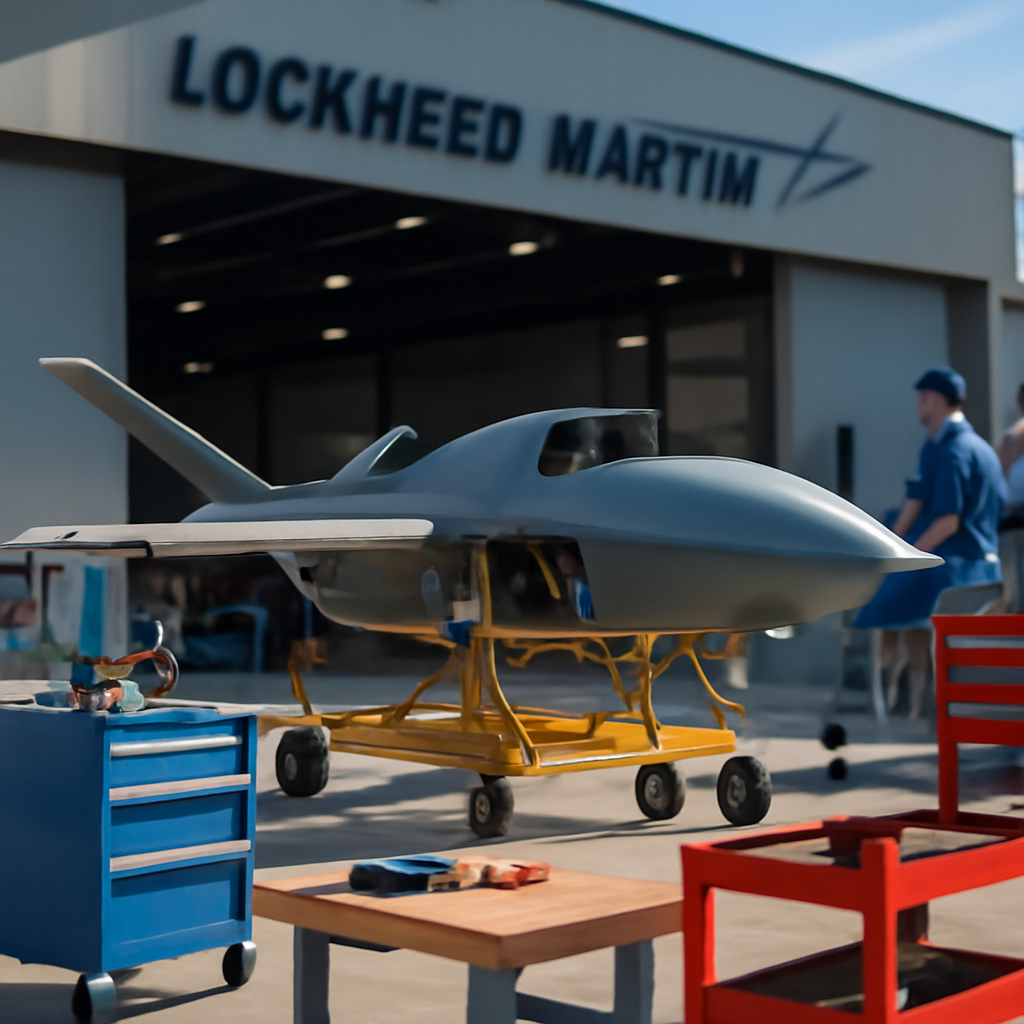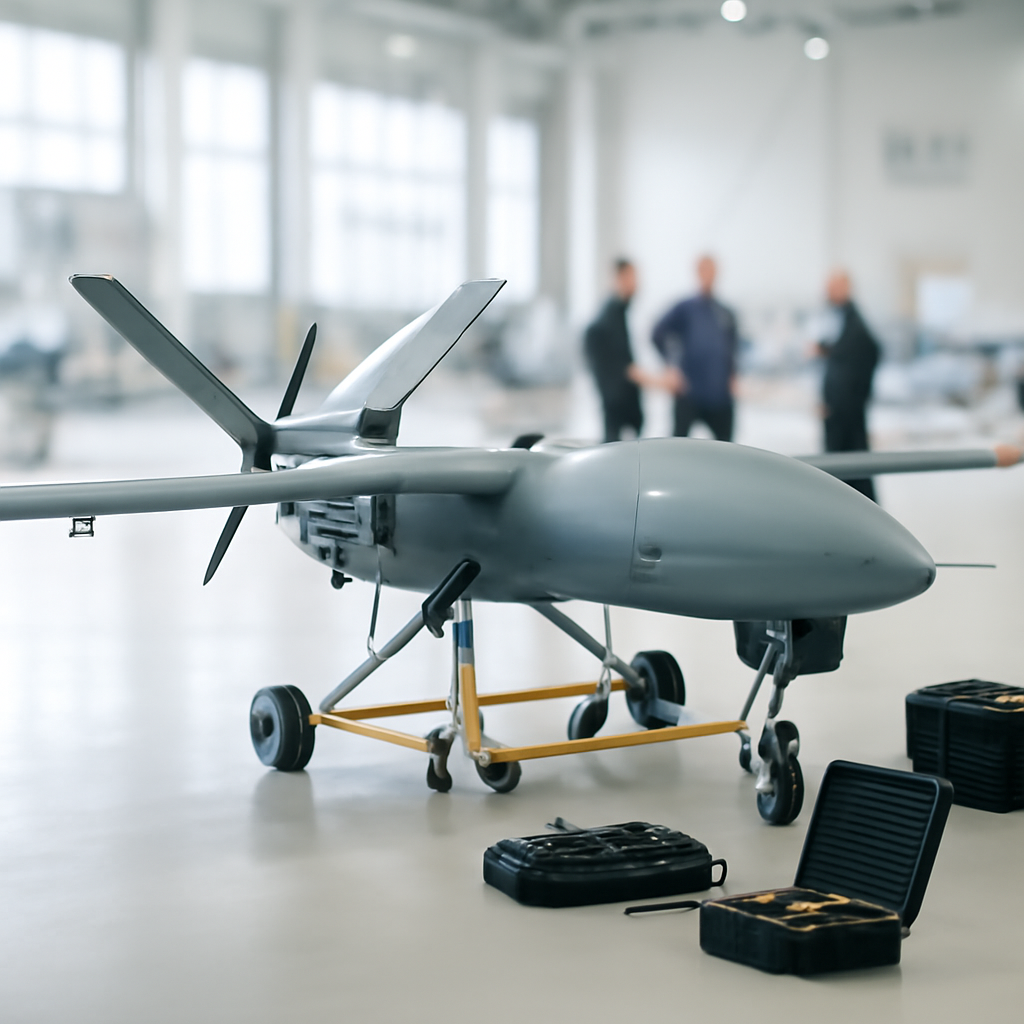
“What we’ve done cuts against the conventional wisdom,” Oliver Palmer, co‑founder and chief revenue officer of Swarm Aero, said in an interview, describing a new unmanned aircraft the company designed not to be stealthy but to fly farther and cheaper.
Gamera’s unusual shape and published performance figures
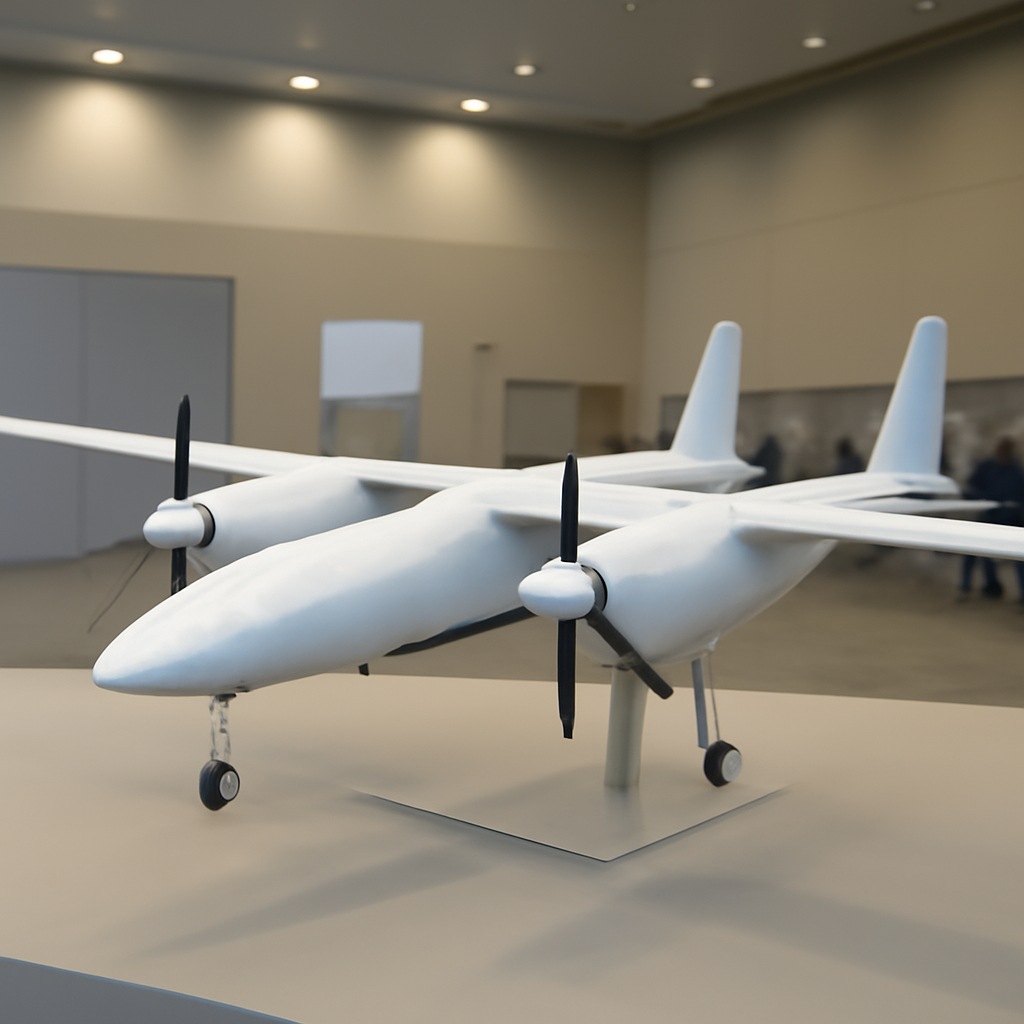
Swarm Aero unveiled a full‑scale model of its Gamera unmanned aircraft at the Air and Space Forces Association conference in National Harbor, Maryland. The company describes the Gamera as a dual‑hull, turboprop design with two parallel, oblong fuselages offset from the center rather than a single central fuselage. Swarm says the aircraft will have a 72‑foot wingspan, seven hardpoints for munitions, and an unrefueled range of 9,000 nautical miles (10,357 miles).
Swarm executives framed the airframe as optimized for extreme range rather than signature reduction. “What we’ve done instead is create a very simple, non‑stealthy aircraft that’s optimized for extreme range,” Palmer told Breaking Defense. CEO Peter Kalogiannis and Palmer say the design is modular, allowing payload swaps and iterative hardware and software updates to meet multirole demands.
Payload, tradeoffs, and the Pentagon’s MMA requirement
The Pentagon’s Massed Modular Aircraft (MMA) solicitation — led by the Defense Innovation Unit and the Air Force — sets a specified payload capacity of at least 2,800 pounds. Swarm says the Gamera “meets the payload at range numbers for the 2,800 [lbs requirement]” and that the design can trade range for payload or reduce payload to extend range depending on mission needs.
Swarm framed those tradeoffs as a conscious design choice to prioritize range and modularity over low observable features. Kalogiannis emphasized that the right balance will likely be “a mix” of older and newer technologies rather than simply chasing cutting‑edge systems.

The cyber insurance questionnaire just landed. Now what?
SOC 2, HIPAA, insurance renewals - someone has to own security strategy. Nubivance provides fractional CISO leadership without the full-time salary.
Get a security leadCost targets, competition, and program context
The MMA effort is explicitly aimed at producing a cheaper, more attrition‑tolerant replacement for the MQ‑9A Reaper; the program’s urgency increased after significant MQ‑9A losses “amid conflict with Iran,” the company noted. Swarm highlighted the cost differential in public comments: the MQ‑9A “can cost up to $50 million depending on its configuration,” while Air Force officials set an aspirational unit cost for the MMA air vehicle of $10 million in a briefing with reporters on Sept. 3 and directed teams to accelerate the program’s fielding.
Swarm and at least one incumbent have already put forward candidates. General Atomics — the MQ‑9A manufacturer — revealed its own MMA contender, Wildfire. Swarm executives asserted they “can beat” the $10 million target and will be “very competitive” on pricing; Kalogiannis added that “there’s no silver bullet” to cut cost, calling cost reduction “a concerted effort to drive cost out of the system at every design point.”
Propulsion, autonomy, production timeline, and partnerships
For propulsion, Swarm has partnered with Honeywell to use the TPE331 turboprop engine. The company also sells an autonomy suite called Legion and was one of three vendors selected by the Defense Innovation Unit for the Replicator program to prototype command‑and‑control solutions for controlling drone swarms.
Swarm says the Gamera program has been in development since 2022 and that the company is currently building the aircraft with a target first flight “later next year” — meaning a flight campaign planned for 2027. Palmer said Swarm’s “years of investment and preparation on manufacturing” position the firm to “be able to volume produce these in a very accelerated timeline.”
What this means for the Pentagon, the Defense Innovation Unit, and General Atomics
- Pentagon (MMA program managers): will receive a proposal that prioritizes extreme range and modular payload flexibility over low observability, tied to a claimed path to aggressive unit‑cost reduction and accelerated production.
- Defense Innovation Unit and Air Force: now evaluating candidates that include Swarm’s non‑stealthy, long‑range Gamera alongside incumbent firms’ entries (General Atomics’ Wildfire), with program requirements that include at least 2,800 pounds of payload at range and a stated $10 million unit‑cost target.
- General Atomics (MQ‑9A OEM): faces a new, cost‑focused entrant competing directly for the MMA requirement and for a role as the Reaper’s attrition‑tolerant successor.
Swarm’s Gamera stakes out a clear proposition: reject stealth as the primary means of survivability in favor of an aircraft designed to go farther, carry defined payloads, and be cheaper to buy and replace. The company has tied that technical choice to partnerships (Honeywell), autonomy work (Legion and Replicator), and a production timeline that aims to convert a model on a trade show floor into a flying demonstrator in 2027. Whether the Pentagon’s push for a $10 million MMA air vehicle will reward those tradeoffs — and how competitors will respond — will be tested as prototypes emerge and the program moves toward fielding.