"We guaranteed the president 300 feet anywhere in the world traveling at 2,200 miles an hour," Adelbert “Buz” Carpenter told the interviewer, a compact summary of the SR‑71’s mission and the confidence its crews were trained to deliver.
Training and the SR‑71 program
Carpenter describes selection and training as exacting and rare. Candidates submitted detailed flight and medical records, underwent a modified astronaut physical, and flew in the T‑38 companion trainer. At any one time there were only 11 pilots qualified to fly the SR‑71; 85 pilots ever flew operational missions, and Carpenter himself flew 230 missions across nearly 800 flight hours. His first SR‑71 flight came on July 16, 1976, and the program relied heavily on a then‑advanced computer flight simulator that “flew exactly like the airplane.”
Pressure suit, life support and refueling procedures
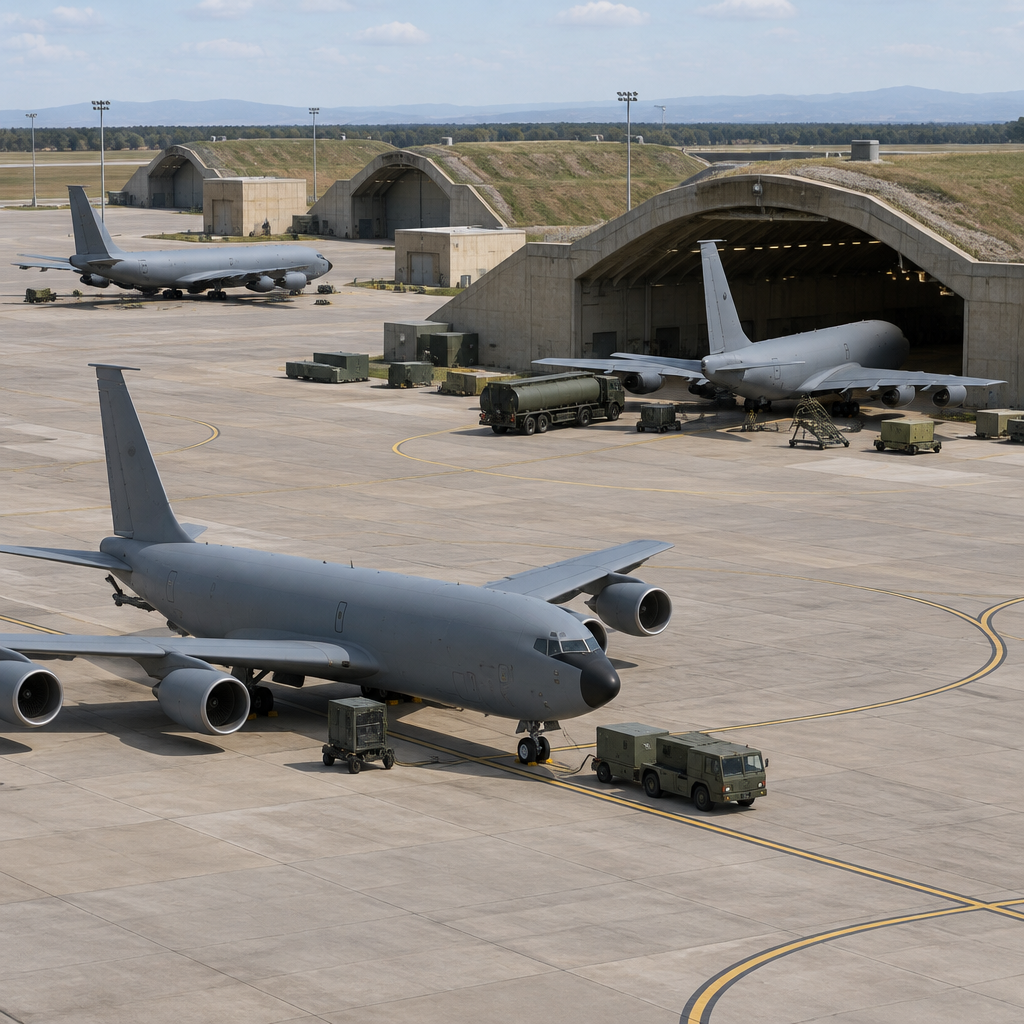
Crews wore a modified Gemini pressure suit — roughly 40 pounds with a helmet ring and face seal — and prebreathed 100% oxygen for more than an hour before takeoff to avoid decompression sickness because cabin pressure was held at the equivalent of 26,000 feet. Missions used KC‑135Q tankers for aerial refueling at about 25,000 feet; early SR‑71 operations deliberately took off with reduced fuel (about 40,000 pounds instead of a full load) to shorten the interval before having sufficient airflow over flight controls in the event of an engine failure.

Audit-ready is a season. It shouldn't be.
Evidence in spreadsheets, controls drifting between audits, frameworks multiplying on flat headcount. Nubivance runs continuous compliance on Rapid7 Cyber GRC - SOC 2, HIPAA, ISO 27001, PCI, CMMC.
End the scrambleSensors, navigation and operational missions
Navigation used an astroinertial tracker tied to a catalog of stars; Carpenter said it took about an hour and 45 minutes to load a mission and that the system — nicknamed “R2‑D2” — provided the program’s tight navigational guarantee. Payloads included side and nose cameras (the nose camera could image a 72‑mile‑wide swath with two‑to‑four‑inch center resolution), electronic sensors with ranges of roughly 350 miles, and ground‑mapping radar for night or cloudy conditions. Carpenter’s first operational mission flew from Kadena in March 1977 and typically involved refueling, runs along the Korean Demilitarized Zone, and return to base.
Survivability: speed, stealth, and the missile record
Carpenter credited a combination of reduced radar signature, extreme speed and altitude, and electronic countermeasures for the SR‑71’s survivability. He noted the aircraft’s operational ceiling — commonly above 80,000 feet — and its cruise regime, where “the faster we go, the less fuel we burn” owing to inlet and bypass behavior. He rejected claims that the Blackbirds evaded about 4,000 missiles, calling that figure inaccurate and estimating the number at “probably no more than 100.” Across test and operational flying there were 12 ejections total and, he emphasized, “there was never a USAF SR‑71 crew member ever killed flying this aircraft.”
Tail 844, NASA and the debate over a testbed
Speculation has circulated about NASA returning Tail 844 to flight. Former NASA engineer Tim Connors suggested using the aircraft as a high‑speed engine testbed; Carpenter was skeptical. He argued the SR‑71 record supplies extensive Mach‑3 data, modern wind tunnels and test chambers can reproduce high‑Mach conditions, and the program lacks spare engines because many J‑58 engines were scrapped when the fleet was broken up. Carpenter said the SR‑71 could be flown subsonically and that NASA’s likely motive includes inspiration: he believes NASA wants a “dream generator” for new X‑plane work such as the X‑59, which aims to reduce sonic‑boom impact for future supersonic transport. He judged the odds against Tail 844 returning to full flight but allowed a subsonic flying display was conceivable; the SR‑71 simulator, he added, sits in a Texas museum and is not operable.
What this means for NASA, test pilots, and engineers
- NASA: Carpenter frames NASA’s interest as partly inspirational and partly exploratory, but he doubts a simple, cost‑effective case exists to reactivate the SR for high‑Mach engine testing given existing data and test facilities.
- Test pilots: Without an operable SR‑71 simulator, Carpenter warned, flying a restored airframe would be “challenging” because crews would lack rehearsal for the aircraft’s unique unstart and inlet failure modes.
- Engineers: Carpenter highlighted practical constraints — decades‑exposed airframes, scarce spares, and unknown engine serviceability — that will drive any feasibility assessment and limit options beyond museum or limited demonstration flying.
Carpenter’s record and recollections underline a central tension: the SR‑71 remains a powerful symbol and a unique data source, but the practical barriers to restoring its original Mach‑3 operating capability are substantial. Whether NASA will treat Tail 844 as a flying inspiration, a subsonic demonstrator, or a testbed depends on choices about restoration cost, engine availability and what modern hypersonic work requires — questions Carpenter believes leave the odds “against it” flying again at full speed.