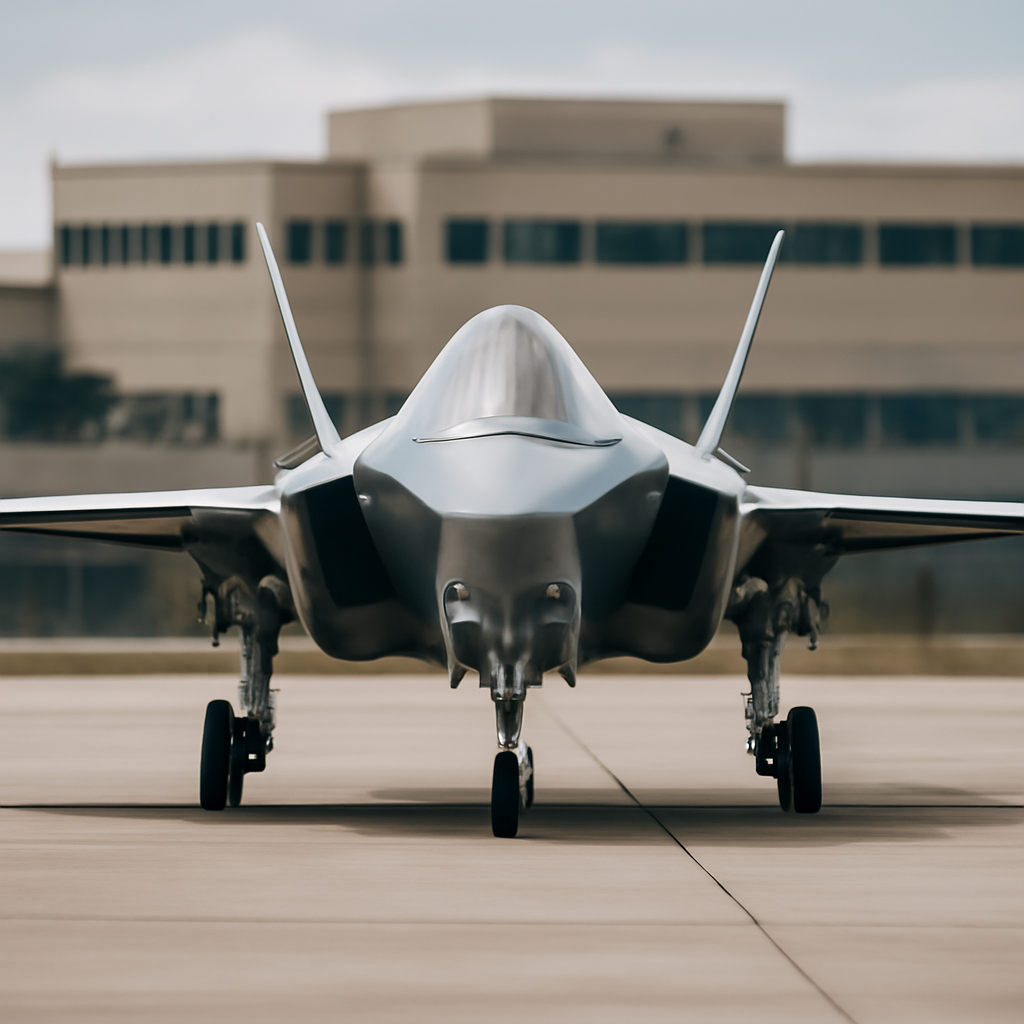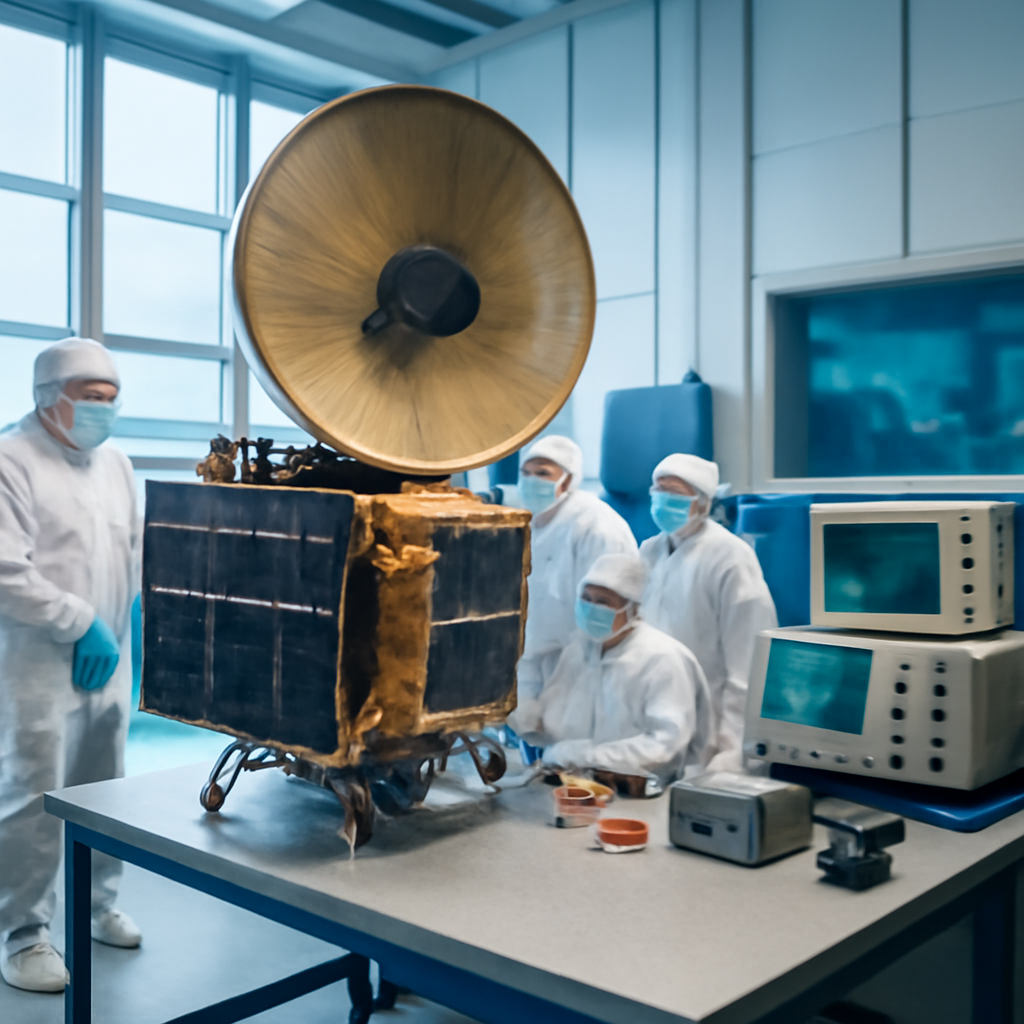
"The Resilient Radar System-Ground, or RRS-G, program will go up in the next two years," Space Force Lt. Gen. Gregory Gagnon told reporters at the Air & Space Forces Association conference, announcing a named effort to put ground-moving-target indicator capability into orbit.
What Gagnon announced: RRS-G and the 77th Surveillance Squadron
At National Harbor, Md., Lt. Gen. Gregory Gagnon, commander of the Space Force’s Combat Forces Command, disclosed that the new satellite effort — formally named the Resilient Radar System-Ground (RRS-G) — will be launched “in the next two years.” He identified Northrop Grumman as the prime contractor building the satellites.
Gagnon also said the service established its first “space-based sensing and tracking unit,” the 77th Surveillance Squadron, last month to “start the process of ground moving target indicator [missions], which is from the RRS-G constellation.”
How RRS-G fits with GMTI and AMTI plans
The RRS-G program is explicitly aimed at providing space-based Ground Moving Target Indicator (GMTI) capability — a mission the Space Force and the National Reconnaissance Office (NRO) have partnered on. Officials had previously discussed getting GMTI-capable satellites on orbit by 2028, but until this announcement the program name and prime contractor had not been disclosed.
The Space Force is pursuing a parallel mission for airborne tracking, known as AMTI. Air Force Secretary Troy Meink said on Monday that the first among many AMTI satellites “will be launched this month,” and the service plans to have an initial AMTI constellation working by 2028 following a multibillion-dollar award in May to SpaceX. The timeline for a fully operational GMTI constellation, however, “is not clear,” the reporting notes.

Audit-ready is a season. It shouldn't be.
Evidence in spreadsheets, controls drifting between audits, frameworks multiplying on flat headcount. Nubivance runs continuous compliance on Rapid7 Cyber GRC - SOC 2, HIPAA, ISO 27001, PCI, CMMC.
End the scrambleBudgets, procurement, and industrial roles
The Space Force’s fiscal 2027 baseline budget request includes $1.02 billion for GMTI procurement. Separately, the service asked for more than $7 billion in reconciliation funds for the AMTI mission. The reporting also notes roughly $1.1 billion requested for a separate research-and-development effort, using combined baseline and reconciliation funding.
Northrop Grumman provided a brief statement quoted at the conference: “We have a deep, operational understanding of the threats our warfighters face and are focused on delivering capability at the speed and scale required to stay ahead of them. Any questions on specific programs are best directed to the Space Force.”
US Space Command coordination and operational intent
Gen. Stephen Whiting, commander of US Space Command, told attendees at the AMOS conference in Maui that he recently met with NRO officials to coordinate on moving-target-indicator operations for both air and ground. “I think we have a good plan with the Space Force and across the department to bring those capabilities to fruition at US Space Command,” he said, adding that when systems are ready they “will be presented to us, and we will be responsible for their oversight and defense of those capabilities.”
Whiting noted that concepts of operations are being developed “in partnership with the other combatant commands and elements of the intelligence community that have equities there as well.”
Col. Timothy Trimailo on CASR and commercial space domain awareness
Separately, Col. Timothy Trimailo, head of the Space Force’s Commercial Space Office, said the service will soon put commercial vendors on contract to provide space domain awareness (SDA) services under the Commercial Augmentation Space Reserve (CASR) construct. The Space Force awarded pilot contracts to four companies last year for SDA work under CASR, and Trimailo described the “first step” as doling out contracts for operational SDA work — contracts he said will be awarded “very soon.”
Trimailo added that officials are “looking across a wide range of missions” for potential CASR arrangements beyond SDA given “a lot of demand” for similar commercial augmentation in other areas.
What this means for the Space Force, Northrop Grumman, and US Space Command
- Space Force: Will transition GMTI mission work from airborne platforms toward a dedicated space-based constellation, stood up the 77th Surveillance Squadron to begin operational processes, and is tying procurement plans to fiscal 2027 and reconciliation funding requests.
- Northrop Grumman: Identified as the prime for RRS-G, the company will be central to building the GMTI-capable satellites and will need to respond to Space Force direction as program details and delivery schedules are refined.
- US Space Command: Will take responsibility for oversight and defense of the capabilities once they are presented as operational, while continuing to develop concepts of operations with other combatant commands and intelligence partners.
The declaration of RRS-G and the naming of a prime mark a concrete step from concept to contract for space-based GMTI. Key near-term milestones to watch in the reporting: launches of AMTI satellites beginning “this month,” the Space Force’s award of CASR SDA contracts “very soon,” and how — and when — the RRS-G launches translate into an operational GMTI constellation. The timeline for a fully operational GMTI capability remains unspecified even as procurement dollars and organizational units are being put in place.