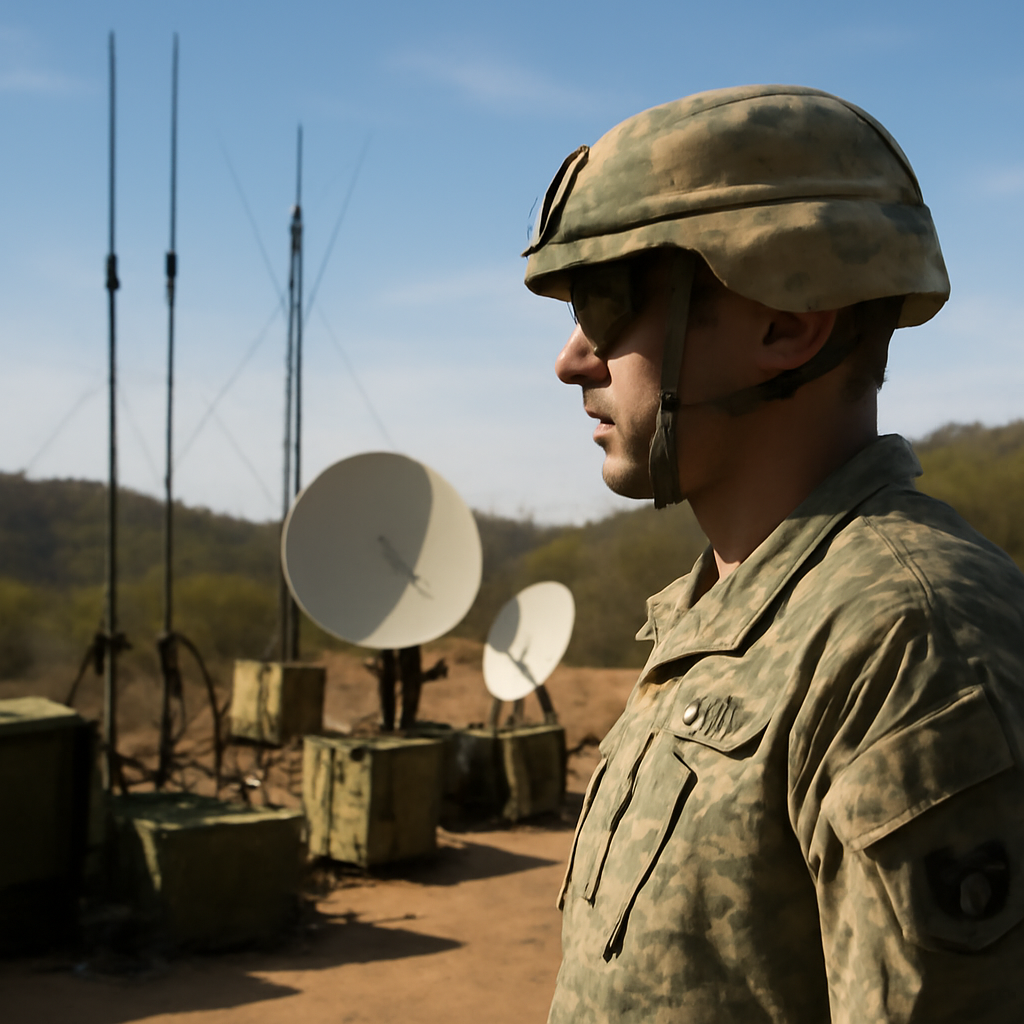
"We must frame our choices around how to have military advantage, and for better or worse, the path we choose will make all the difference," Gen. Chance Saltzman told international military leaders in London — a line he used while announcing he will retire next month.
Gen. Chance Saltzman’s final public address and retirement
Gen. Chance Saltzman, the chief of space operations, made his retirement public during remarks at the Global Air and Space Chiefs’ Conference in London. Saltzman has led the U.S. Space Force since his confirmation in September 2022. In his speech he urged unity among allies, saying, "We are stronger as a team of nations than any one of us as an individual," and he framed military leadership as a stabilizing force in polarized political environments: "military leadership, serves as the ballast in the ship."
Budget growth under Saltzman and current request
Saltzman highlighted a rapid expansion of the service during his tenure. According to the remarks in London, the Space Force’s budget rose from $26 billion when he took command to a $72 billion request for this year, and the force’s ranks grew to roughly 11,000 guardians. Saltzman said he "stands behind" the requirements and resources the White House requested, calling the request "a dramatic increase in resourcing requests for what I think are vital" space capabilities.

The cyber insurance questionnaire just landed. Now what?
SOC 2, HIPAA, insurance renewals - someone has to own security strategy. Nubivance provides fractional CISO leadership without the full-time salary.
Get a security leadThe White House request and reconciliation funding
The White House asked Congress for $1.15 trillion through the regular defense-appropriations process plus an additional $350 billion to be approved through reconciliation. The source material identifies that the reconciliation portion was intended to fund major Space Force programs, including the Air Moving Target Indicator and the space data network, and to supply the vast majority of funds for the Golden Dome missile defense program. The reporting notes that reconciliation is a "partisan-controlled budget maneuver rarely used for defense spending before last year."
House Republican leaders’ response and potential shortfall
Despite the White House package, Republican House leaders said they would back only a $60 billion reconciliation bill. The report frames that decision as approving "only a fraction" of the funds the Trump administration requested for major space efforts, and observes lawmakers saying they will not fully comply with the administration’s request to fund important priorities through reconciliation. Saltzman did not explicitly say whether a smaller reconciliation package would harm the service, but he acknowledged that budget decisions are "always negotiations between the executive and the legislature."
What this means for the Space Force, Congress, and allied militaries
- Space Force personnel and leadership: Saltzman publicly defended the service’s budget and requirements and framed military leadership as a stabilizing force amid partisan divisions. His planned retirement next month follows a period of significant growth in personnel and requested resourcing.
- Policymakers and Congress: The split between a $1.15 trillion regular request and a proposed $350 billion reconciliation package — and House leaders’ counteroffer of $60 billion — places the allocation pathway and scale of funding squarely in Congress’s hands, a point Saltzman acknowledged when he said, "now over to Congress to determine what that appropriation looks like."
- Allied militaries and international leaders: Saltzman used his final public speech to press for unity, noting decades of allied cooperation and warning that democratic militaries must "think long-term" and offer experience to decision makers. His remarks echoed the service’s recent public visibility tied to operations in Venezuela and Iran this year.
The immediate calendar point left on the record is the nomination process for Saltzman’s reported successor. The White House tapped Lt. Gen. Douglas Schiess to replace Saltzman, and Schiess is scheduled to appear for a confirmation hearing before the Senate Armed Services Committee on Thursday. Beyond that hearing, the more consequential question remains fiscal: whether Congress will bridge the gap between the White House’s reconciliation ask and the $60 billion figure Republican House leaders have signaled they will support — a choice that the retiring chief framed as central to the Space Force’s future capabilities.
Source: Defense One — Space Force faces budget uncertainty as leader plans exit next month